
The Monkey's Paw
Publication and place in Jacobs’s work
“The Monkey’s Paw” is a supernatural horror short story by the English writer W. W. Jacobs. It first appeared in Harper’s Monthly in September 1902 and was reprinted later that year in Jacobs’s collection The Lady of the Barge. The tale is among the best-known works of early twentieth-century horror. Its compact construction, memorable central object, and carefully withheld final image have helped it remain widely read and repeatedly adapted. Jacobs was especially known for humorous stories about sailors and dockside life, so this stark supernatural tale represents a strikingly different side of his writing.
Plot
On a cold, wet night, the White family—Mr. and Mrs. White and their grown son Herbert—are at home in the secluded Laburnum Villa. Their visitor, Sergeant-Major Morris, tells them about a dried monkey’s paw he brought back from India. It is said to grant its owner three wishes, but Morris warns that it was enchanted to demonstrate that people who interfere with fate may suffer for it. He tries to get rid of the paw, but Mr. White retrieves it. At Herbert’s joking suggestion, his father wishes for two hundred pounds, enough to meet a household financial need.
The following day, a representative of Herbert’s workplace brings news that Herbert has been killed in an accident involving machinery. The family receives two hundred pounds in compensation. The exact fulfillment of the wish makes its cost devastatingly clear. After Herbert’s burial, Mrs. White, overcome by grief, urges her husband to use a second wish to bring their son back. In the middle of the night, they hear a knock at the door. Mr. White fears what might have returned and searches for the paw, while his wife struggles to reach the door. He makes the third wish; the knocking stops. When the door is opened, there is no one outside. The story leaves the precise nature of the return—and the events at the threshold—unshown.
Themes and storytelling
The story’s central concern is the price of trying to bend fate to human desire. The paw offers the appearance of control, but no control over how a wish will be fulfilled or what it will cost. The first wish turns an ordinary hope for money into an unbearable loss; the second arises from grief rather than greed, making the tale’s warning more complicated than a simple lesson against wanting too much. Love cannot undo death, and the longing to reverse loss may expose a family to a different kind of horror. The paw thus becomes a symbol of temptation, the limits of human knowledge, and the danger of treating life as though its consequences could be negotiated in advance.
Jacobs builds suspense by setting the uncanny object against domestic routine. The family’s conversation and familiar surroundings initially make the home feel safe. Morris’s account brings a disturbing possibility into that space, and the story’s measured progression steadily alters its atmosphere. Rather than displaying the horror directly, Jacobs relies on economical dialogue, the characters’ reactions, and the sound at the door. His restrained ending leaves readers to imagine what Mr. White feared and what might have happened if the door had opened sooner. The frame of an English household receiving a mysterious object carried back from India also draws on contemporary ideas of the unfamiliar and the supernatural, while making the threat intimate and domestic.
Reception and legacy
The story was popular with readers and received strong critical attention when it appeared. It has since been included in many anthologies and adapted for stage and screen. Its distinctive combination of a three-wish legend, a domestic setting, escalating suspense, and an unresolved final moment has made it a durable model for supernatural horror. Stephen King has identified the story as an influence on Pet Sematary. Jacobs wrote many more humorous tales than horror stories, but “The Monkey’s Paw” has become his most enduring work and a classic frequently used to introduce readers to the short story form and to the genre’s power to suggest more than it shows.
About the Author
Early life and education
William Wymark Jacobs was born in London on 8 September 1863. His father, William Gage Jacobs, managed a wharf, and the young Jacobs grew up close to the working life of the Thames-side docks. This setting left a lasting mark on his imagination. Many of his stories feature sailors, dock workers, and coastal communities, though they are often set on shore or at the wharves rather than at sea. His detailed sense of these environments came from familiarity with the people and places around him, not simply from a writer’s invention.
Jacobs received an education at Birkbeck. At about sixteen, he began work as a clerk at the Post Office Savings Bank, a position he disliked. He took up writing for his own amusement, and eventually returned to the waterside world that had shaped his childhood. A trip down the Kent coast provided settings, characters, and plot ideas for later stories. These early experiences help explain the grounded speech and everyday detail that distinguish his fiction.
Writing career and major works
Jacobs became a prolific writer of short fiction. His early collections include Many Cargoes (1896) and Sea Urchins (1898), books that draw on sailors’ lives, dockside settings, and coastal communities. A Master of Craft appeared in 1900, followed by Light Freights in 1901. Much of his work is humorous: he was admired for lively dialogue, economical plotting, and stories that often turn on a carefully prepared surprise. During his lifetime, his reputation rested on a broad body of fiction rather than on one story alone.
In 1902 Jacobs published The Lady of the Barge, the collection in which “The Monkey’s Paw” was reprinted after its first appearance in Harper’s Monthly. The supernatural horror tale became far more famous than the majority of his comic writing, but its compactness and precise control of suspense are characteristic of his craftsmanship. Jacobs also wrote novels, including At Sunwich Port (1902) and Dialstone Lane (1903). Other short-story collections include Odd Craft (1903), Sailors’ Knots (1909), and Deep Waters (1911). Across these works, he repeatedly turned ordinary circumstances into comic, suspenseful, or unexpectedly troubling plots, while keeping his prose direct and his characters recognizably human.
Later life and reputation
Jacobs also wrote for the stage, but short fiction remains the foundation of his literary reputation. He died in Islington, London, on 1 September 1943, shortly before his eightieth birthday. His extensive humorous writing is less widely known today than “The Monkey’s Paw,” a story that has been anthologized and adapted for stage and film. The tale’s influence can be traced in later horror fiction: Stephen King has cited it as an influence on Pet Sematary. Jacobs is remembered both as a skilled craftsman of comic and coastal stories and as the author of one of the most enduring supernatural horror stories in English. The contrast between that single dark classic and the largely humorous character of his wider work is an important part of his literary legacy.
StoryFlow
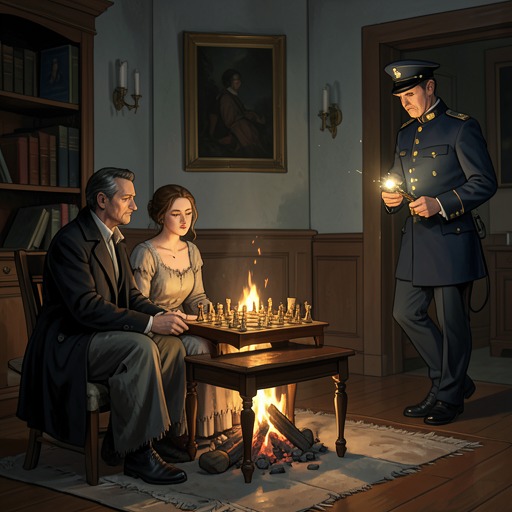
The Paw’s Arrival and First Wish
This thread follows the arrival of the enchanted object into the White household and the family’s apparently modest first wish.

The Cost of Two Hundred Pounds
This thread traces how a seemingly ordinary financial wish is fulfilled through Herbert White’s fatal workplace accident and the company’s compensation.

The White Family’s Three Wishes
This thread follows the family’s progression from curiosity through bereavement to a final attempt to control the supernatural consequences.
