Herbert White’s death
The Monkey's PawHerbert White’s death begins as an accident at the factory and becomes the defining loss of his family: the event that empties their home, turns grief toward an impossible hope of restoration, and exposes the danger of trying to alter what cannot be undone. The story gives the death no spectacle; its force lies in what is reported, what the parents understand from what is left unsaid, and the terrible possibility that follows their attempt to bring Herbert back.
The family before the loss
Before the accident, Herbert belongs to the familiar rhythms of the household. On a cold, wet night, he plays chess with his father in the parlour while his mother knits by the fire. Their game is teasing and companionable: Mr. White puts his king in needless danger, and Herbert answers his father’s effort to distract him by surveying the board and calling check. This domestic ease matters because the loss later changes not just the family’s future but the meaning of its ordinary setting. The warm parlour, the shared game, and the family gathered together become the remembered opposite of the shadowed, silent house in which his parents return after the funeral.
The possibility of a wish interfering with human life has already been introduced through the monkey’s paw. Sergeant-Major Morris describes it as an ordinary dried paw enchanted by a holy man who wanted to demonstrate that fate rules people’s lives and that attempts to interfere bring sorrow. Three people may each receive three wishes. Morris adds that the first possessor used his final wish for death, but does not explain the circumstances or identify that person. The story therefore establishes a warning before the Whites’ loss without making the warning a complete explanation of the later accident: the death is reported as a workplace catastrophe, while the supernatural principle remains a claim whose meaning the family will discover through suffering.
The accident and its confirmation
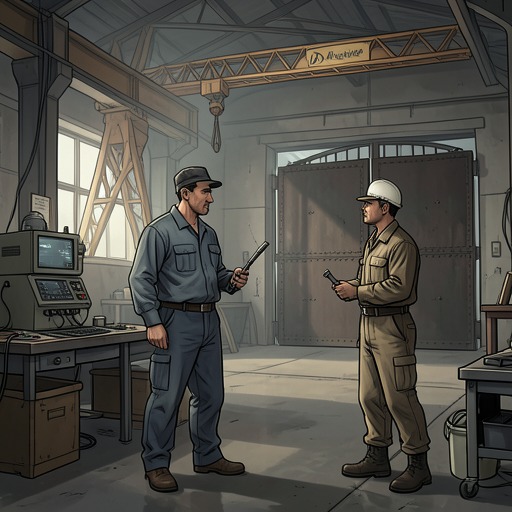
The news reaches the family through a visitor representing Herbert’s employer, Maw and Meggins. When Herbert’s mother asks wildly whether her son is hurt, the visitor confirms that he is badly hurt but says that he is not in pain. For a moment, she takes comfort from the reassurance. Then she recognizes its sinister implication in the visitor’s averted face. The pause between hearing the words and understanding them stages the family’s shock: what sounds like consolation becomes confirmation that Herbert is beyond suffering because he is dead.
The visitor eventually states that Herbert was caught in machinery. Mr. White repeats the words in a dazed fashion and stares blankly toward the window. He takes his wife’s hand and presses it as he used to during their courtship nearly forty years earlier, a small return to an old gesture at the instant their shared life is broken by bereavement. He tells the visitor that Herbert was the only one left to them and that the loss is hard. The employer’s representative conveys the firm’s sincere sympathy but emphasizes that he is merely its servant, obeying orders. The formal message cannot answer the parents’ loss; after it, the mother sits white-faced and staring, while the father bears an expression likened to that of a soldier going into his first action.
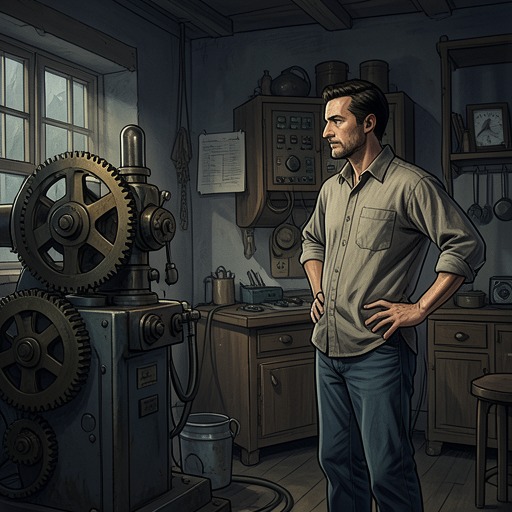
The report makes the manner of death concrete but leaves the accident itself outside the scene. No account is given of how Herbert was caught, and the story does not show his body at the factory. Instead, the family receives news through an intermediary who is conscious of speaking for the firm. This distance keeps the reader, like the parents, facing the fact of death without access to a fuller explanation or a final exchange with Herbert.
Burial and the altered home
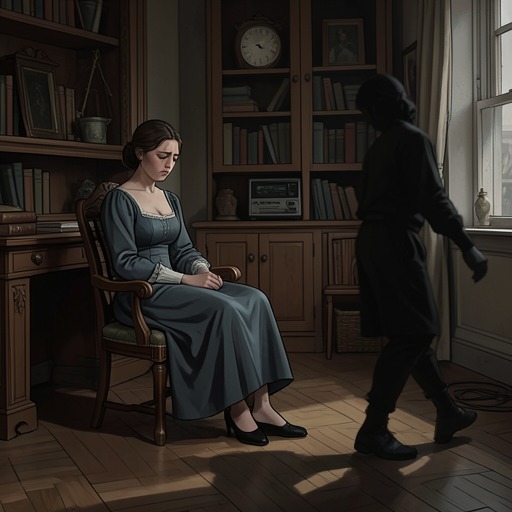
Herbert’s parents bury him in a large new cemetery about two miles away, then return to a house steeped in shadow and silence. The burial is followed not by immediate emotional resolution but by a period in which they can scarcely realize how quickly everything has happened. They remain expectant, as if something might still occur to lighten a burden too heavy for them to bear. Their expectation gives way over the passing days to what the narration calls the hopeless resignation of the old, a condition sometimes mistaken for apathy. They often have little to say to each other, and their days grow long with weariness.
The house that once held a chess game and family conversation becomes a place organized around absence. That change supplies the emotional cause of the later wish: the parents’ attempt to reverse death arises after the burial and a week of grief, not from casual curiosity about the paw. The mourning is quiet and duration-bound. The story registers it through silence, expectation, and the passage of days rather than through a sudden recovery or a consoling explanation.
The wish to undo death
About a week after the burial, Mr. White wakes at night and finds his wife alone, weeping quietly by the window. When she urges him to retrieve the paw and wish, he resists. He tells her that Herbert has been dead ten days and that he could recognize him only by his clothing. The warning is an attempt to make the consequences of death’s physical reality present to her: the son she remembers may not return in a condition she could bear to see. His wife answers that she is not afraid of the child she nursed and drags him toward the door, making maternal attachment the force pressing against his fear.
Mr. White goes down in darkness to the parlour and finds the talisman on the mantelpiece. As he searches his way around the room, he fears that an unspoken wish might bring his mutilated son before he can escape; in the dark he even loses the direction of the door. The object that had been presented as a dry, ordinary paw is now inseparable from the physical horror of the death it might reverse. When he returns, he finds his wife white and expectant, and is afraid of her. Under her repeated demand, he raises his hand and wishes his son alive again.
The paw falls to the floor. Mr. White watches it fearfully, then sinks trembling into a chair while his wife goes to the window and raises the blind. He remains there until the cold reaches him, occasionally looking toward her as she peers out. The candle’s shadows pulse across the ceiling and walls before the flame goes out. Relieved that the wish appears to have failed, Mr. White returns to bed; his wife follows silently and apathetically. Neither speaks. The clock ticks, a stair creaks, and a mouse scurries through the wall: ordinary sounds gather force in a darkness that makes the house feel unfamiliar again.
Death’s afterlife and the final consequence
When Mr. White goes downstairs for a candle, a knock sounds at the front door just as his match goes out. He freezes, drops the matches, and hears the knock repeated before fleeing upstairs. The story does not identify the visitor at the door. It places the sound immediately after the wish and lets the parents’ knowledge of Herbert’s death shape what they fear it means. His mother rushes downstairs to undo the bolt, while his father searches desperately on the floor for the paw. As a barrage of knocks reverberates through the house and his wife moves a chair against the door, Mr. White finds the talisman and breathes his third and last wish.
The knocking stops. His wife opens the door, but the street beyond is quiet and deserted; a street lamp flickers opposite, and a cold wind comes up the staircase. Her loud wail of disappointment and misery follows the opening. The ending offers no sight of Herbert and no explicit description of what the final wish has done. It closes instead on the contrast between the urgent expectation of a return and an empty road. Herbert’s death remains the fact around which the final scene turns, but the family receives neither a reunion nor an explanation of the paw’s operation.
The story’s supernatural warning and its account of industrial death remain in uneasy relation. Morris’s tale says that meddling with fate brings sorrow, but Herbert’s fatal accident is presented as a concrete workplace event, not as a punishment the narrative proves he deserved. The grief that follows is therefore more than a demonstration of a rule: it is an irreversible human loss that presses the parents toward a dangerous wish. The paw converts that ordinary desire to have a dead child back into suspense at a familiar front door, where a son’s remembered place in the family collides with the possibility of an unknown, frightening return.