Laburnam Villa
The Monkey's PawLaburnam Villa is the Whites’ home, a domestic refuge whose parlour, stairs, and front door become the principal spaces through which the monkey’s paw’s menace enters family life. The house’s movement from a brightly heated room to a shadowed, silent home, and finally to a locked door under assault, gives the supernatural threat a familiar household form.
Setting and Domestic Life
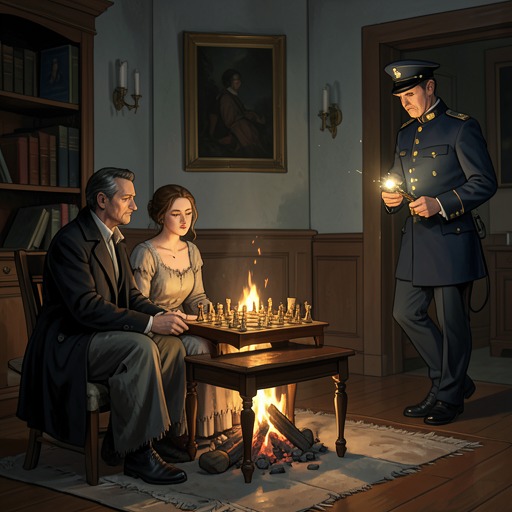
On a cold, wet night, the blinds are drawn and a bright fire warms the small parlour at Laburnam Villa. Mr. White and Herbert White play chess there while Mrs. White knits beside the fire. The game’s relaxed intimacy is already touched by danger: Mr. White puts his king into unnecessary peril, and, after seeing a mistake too late, tries to divert Herbert’s attention by remarking on the wind. The room is at once a place of family ease and a setting where risk is present before anyone understands its cost.
The Parlour and the Monkey’s Paw
The parlour also receives Sergeant-Major Morris, whose visit turns a family evening into a story about distant places and supernatural power. At the third glass, Morris speaks of his travels, and Mr. White recalls that he had left for India as a young warehouse worker twenty-one years earlier. Mr. White expresses a wish to see India, its temples, fakirs, and jugglers; Morris warns that he is better where he is, then produces the paw from his pocket.
The object’s ordinary appearance makes its arrival in the parlour more unsettling. Morris describes it as a small paw, dried to a mummy. Mrs. White recoils, while Herbert examines it and Mr. White takes it from him before placing it on the table. Morris explains that an old fakir enchanted it to demonstrate that fate rules human lives and that interfering with fate brings sorrow: three separate men could each receive three wishes. He also reveals that the first owner used his third wish for death, after which Morris acquired the paw. In the comfort of the family room, this account makes the household the next setting in which the warning may be tested.
A Home Made Over by Loss
The house’s meaning changes after Herbert’s fatal accident. A visitor confirms that Herbert was caught in machinery; Mr. White, dazed, repeats the words, then takes his wife’s hand and presses it as he had during their courtship nearly forty years earlier. The family’s grief is thus registered not only through the news but through a gesture of shared history.
After the funeral, the old couple return from the cemetery to a house steeped in shadow and silence. Their first expectation that something might still lighten their burden gives way, over the passing days, to resignation. They sometimes have little to say to each other, and the long days become wearisome. The home remains the setting of their life together, but its former signs of domestic comfort now frame absence and mourning.
The Stairs and the Front Door
About a week later, the house becomes a route between bereavement and the possibility of a terrible return. Mrs. White urges Mr. White to use the paw to bring Herbert back. He warns that Herbert has been dead ten days and that he could recognize him only by his clothing, making clear why the prospect frightens him. Nevertheless, he goes downstairs through the darkness to the parlour and mantelpiece, where the talisman remains. Afraid that an unspoken wish might bring his mutilated son into the room before he can escape, he loses his sense of direction and gropes along the wall until he reaches the passage with the paw in his hand.
Later, a quiet, stealthy knock sounds at the front door just as Mr. White’s match goes out at the foot of the stairs. The matches fall, and he freezes until the knock comes again; then he flees to the bedroom as a third knock reverberates through the house. The ordinary passage between rooms becomes a threshold of suspense, while the door separates the grieving family from whatever the knocking represents.
As the knocking grows more insistent, Mrs. White breaks free and hurries downstairs, trying to undo the chain and bolt. Her husband searches on his hands and knees for the paw, desperate to find it before the thing outside gets in. The chair scrapes against the passage as Mrs. White braces the door; the bolt begins to draw back just as Mr. White finds the talisman and makes his third and last wish. The knocking stops. When the door opens, a cold wind rushes up the staircase, but the road beyond the gate is quiet and deserted. The house’s final movement—from the parlour to the stairs, passage, and entrance—turns the home’s familiar layout into the machinery of the story’s last, unresolved terror: the threat is gone from the doorway, while the house retains the echoes of what has happened.