Mr. White’s Wish to Revive Herbert
The Monkey's PawMr. White’s Wish to Revive Herbert is the second wish made with the monkey’s paw, a plea to restore the son whom Mr. White and his wife have buried. Its decisive force lies in the conflict between grief’s demand for return and the father’s knowledge of what that return might mean: Herbert has been dead for ten days, and his body was so mutilated that Mr. White recognized him only by his clothing. The wish is spoken, but the story withholds any certain identification of the visitor at the door, leaving the family’s longing suspended between supernatural fulfillment and terror.
Background and the Unused Wishes
The wish becomes possible only after the Whites have buried Herbert and returned to a home made oppressive by absence. The monkey’s paw is an apparently ordinary dried object, described as a small paw dried to a mummy, but Sergeant-Major Morris says that an old fakir put a spell on it. The fakir’s stated purpose was to demonstrate that fate ruled people’s lives and that those who interfered with fate did so to their sorrow. The spell permits three separate men to make three wishes each.
Morris also recounts the paw’s earlier history: its first owner used all three wishes, and the last was for death. Morris does not know what the first two wishes were; he says that this final wish is how he came to possess the paw. That grim precedent makes the Whites’ second wish more than a private effort to undo bereavement. It repeats, in a new form, the danger attached to using the talisman against the limits of ordinary human life.
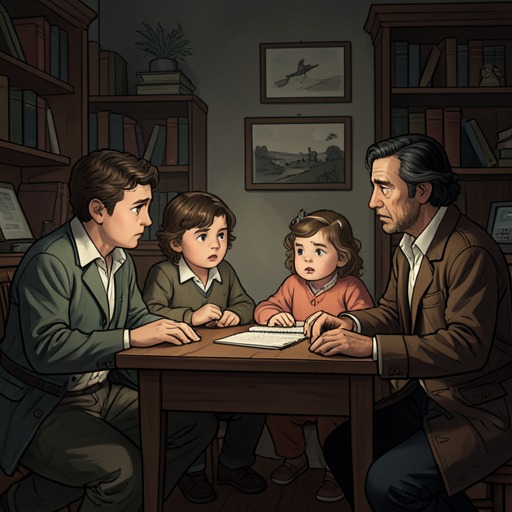
By the time Herbert is dead, the paw has already granted the Whites one wish, and his mother realizes that two wishes remain. She turns that arithmetic into an urgent plan: Mr. White must retrieve the talisman and wish their boy alive again. Her appeal treats the remaining wish as an opportunity to correct what has happened; Mr. White sees it as a possible invitation to bring back a body he fears she cannot bear to see.
The Appeal and the Father’s Warning
Mrs. White’s proposal emerges from bereavement rather than from any assurance that the paw can restore Herbert safely. She calls for the remaining wishes and presses Mr. White to act quickly. Her language is immediate and personal: she wants their son back, not an explanation of the spell or a guarantee about its effects. Her insistence gives grief the force of an imperative, while Mr. White’s response registers the horror that her hope leaves out.
He reminds her that Herbert has been dead for ten days. More frightening still, he tells her that he could identify their son only by his clothing. He had not told her the full extent of this before because Herbert was too terrible for her to see at the time; now he asks her to consider what it could mean to bring him back. His warning supplies the wish with its central uncertainty: even if the paw answers, the returned son might not be restored in a recognizable or bearable form.
Mrs. White refuses that warning as a reason to stop. She says that she does not fear the child she nursed and drags Mr. White toward the door. Their disagreement is not a difference in love for Herbert but a difference in what each believes love requires. She insists on reunion despite the physical consequences; he is caught between his wife’s demand and his knowledge of the mutilation.
The Wish and Its Immediate Aftermath
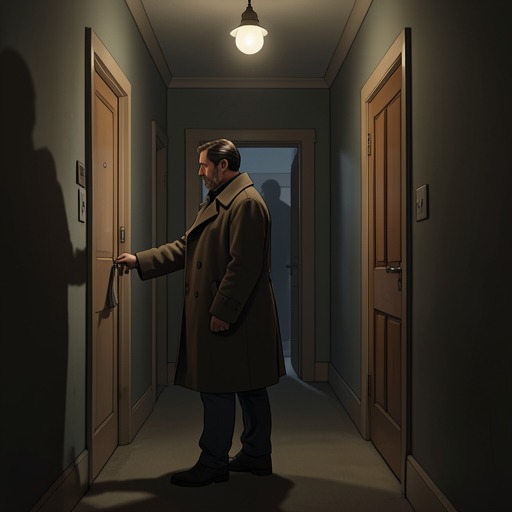
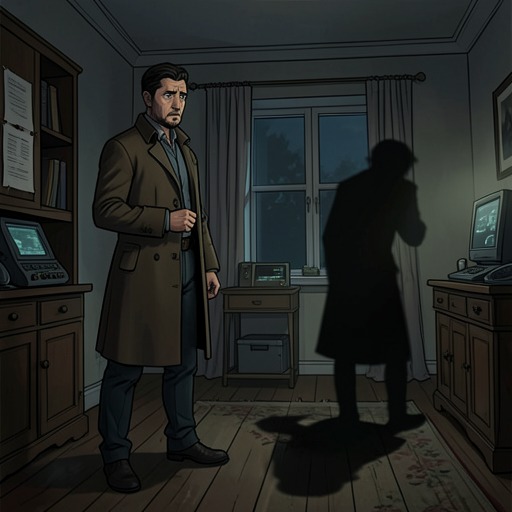
In darkness, Mr. White feels his way through the parlour to the mantelpiece, where the talisman remains. The familiar household route becomes difficult: seized by fear that an unspoken wish might bring his mutilated son before he can escape, he loses his sense of the door’s direction, feels around the table and wall, and reaches the small passage with the paw in his hand. The object’s placement in an ordinary room makes the supernatural threat intimate; the danger is no longer a story told by Morris but a possibility inside the family home.
When Mr. White returns, his wife’s white, expectant face seems unnatural to him, and he is afraid of her. She tells him to wish. He calls the act foolish and wicked, but repeats the command under her pressure. At last he raises his hand and says, “I wish my son alive again.” The spoken wish is the event’s irreversible center: what had been an argument about whether to act becomes an appeal to the paw, framed in the plainest possible terms.
The talisman falls to the floor. Mr. White watches it fearfully and sinks trembling into a chair while Mrs. White goes to the window and raises the blind. He waits in the cold as the candle’s pulsating shadows move across the room and the flame expires. No return is immediately visible. Relieved that the paw appears to have failed, Mr. White creeps back to bed; his wife follows silently and apathetically. Their different responses mark the unresolved cost of the wish: he welcomes the absence of an apparent answer, while the narrative has not yet shown whether her hope is mistaken.
The Knocking and the Wish’s Consequence
The couple lie awake in darkness, listening to the clock. After a stair creaks and a mouse scurries through the wall, Mr. White takes matches and goes downstairs for a candle. At the foot of the stairs, his match goes out just as a quiet, stealthy knock sounds at the front door. The timing gives the wish its first apparent answer, but the story does not identify the knocker. The sound is evidence of an arrival, not proof of who or what has arrived.
Mr. White drops the matches and freezes until the knock comes again; then he runs back upstairs and shuts the bedroom door. A third knock carries through the house. Mrs. White wakes and asks what it is, then breaks free of her husband and hurries downstairs as the knocks continue. She rattles back the chain, struggles with the bottom bolt, and calls to him because she cannot reach it. Mr. White, meanwhile, crawls on his hands and knees across the floor, searching wildly for the paw.
As the knocking becomes a fusillade, Mrs. White puts a chair in the passage against the door. Mr. White finds the talisman at the same moment he hears the bolt being drawn back and frantically makes his third and last wish. The knocking stops suddenly, though its echoes remain in the house. His wife opens the door; a cold wind rushes up the staircase, and her cry is one of disappointment and misery. Mr. White finds courage to go to her and then to the gate, where the street lamp shines on a quiet, deserted road. The ending confirms that the expected visitor is gone, but leaves unstated whether the knock was Herbert and what the final wish did. That withheld answer preserves the horror of the second wish: the family has tried to reverse death, yet cannot know what, if anything, came back.