Mrs. White
The Monkey's PawMrs. White is the warm-hearted mother whose grief drives the final, desperate use of the monkey’s paw. First seen in the family’s comfortable parlour, she becomes the most determined voice for bringing Herbert back after his death; as her hope takes the form of a knocking at the front door, the familiar home and the bond between mother and son become sources of terror as well as comfort.
Identity and the Family Home
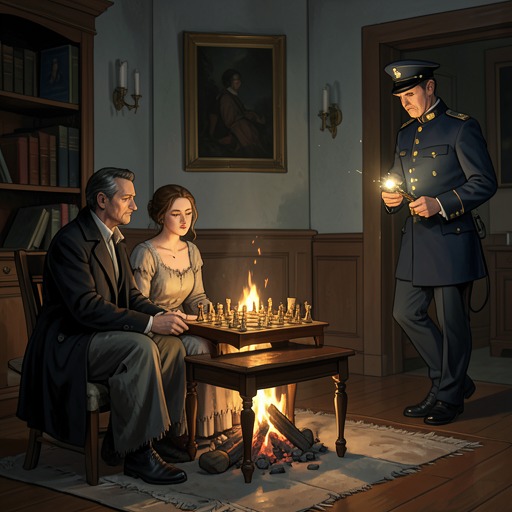
Mrs. White is an older woman who knits placidly beside the fire while her husband and son play chess. Her quiet presence helps establish the domestic ease that the story will later overturn: outside, the night is cold and wet, but the family’s parlour is sheltered and brightly lit. The contrast makes the home seem secure without making it invulnerable.
When her husband complains about their remote, muddy surroundings, she answers soothingly that perhaps he will win the next chess game. Her attempt to soften his frustration is affectionate and gently practical. A knowing glance passes between her and Herbert, and Mr. White hides a guilty grin; the small exchange suggests a family accustomed to teasing and shared understanding before the uncanny intrudes.
The Paw and the First Wish
When Sergeant-Major Morris produces the dried paw, Mrs. White draws back with a grimace, unlike Herbert, who takes it to examine. She is wary of the object from the outset, even as the family listens to the account of its spell: an old fakir meant to demonstrate that fate rules people’s lives and that those who interfere with it suffer. Morris also explains that three separate men can each make three wishes. The story of the first owner, whose third wish was for death, gives the family’s curiosity a warning that they do not fully heed.
Herbert proposes that Mr. White wish for two hundred pounds, saying that the money would clear the house. Mrs. White is present as the family turns a supernatural object into a practical solution to a household need. Her husband makes the wish; the paw moves and falls, provoking his alarm. The sum then returns in a harsher form: the firm where Herbert worked disclaims responsibility for his fatal accident but offers two hundred pounds as compensation. Hearing the amount, Mr. White collapses. The exact fulfillment binds the family’s modest financial wish to the death of their son, making the money an unbearable measure of what it cannot replace.
Grief and the Second Wish
After Herbert is buried in a cemetery some two miles away, Mrs. White and her husband return to a house steeped in shadow and silence. The couple remain in a state of expectation, as if another event might lighten a grief too heavy to bear. About a week later, Mr. White wakes to find her alone by the window, weeping. When he tenderly warns that she will be cold, she answers that it is colder for her son and weeps afresh. Her words reveal how thoroughly mourning has displaced ordinary comfort: even the warmth of the bed cannot answer her sense of Herbert’s absence.
In the night she remembers the two wishes still unused and seizes on them as a means of undoing the loss. She tells her husband to go down, retrieve the paw, and wish their boy alive again. He recoils, calling the idea madness; he knows Herbert has been dead for ten days and says he could recognize him only by his clothing. Mrs. White presses him to bring their son back, insisting that she is not afraid of the child she nursed. Her certainty is rooted in maternal attachment, but it collides with her husband’s knowledge of the mutilation that makes the imagined return frightening.
The Knocking and the Ending
Mr. White goes downstairs in darkness to find the paw at the mantelpiece. He fears that the unspoken wish may bring his mutilated son into the room before he can escape, and he loses his way in the dark as he gropes back through the parlour and passage. When he returns, Mrs. White’s face appears to him white and expectant, even unnatural; she urges him to wish. The tale leaves unclear whether he makes the second wish at this point, but her demand establishes what she wants and the peril her hope ignores.
Later, after the house has fallen quiet, a faint knock sounds at the front door while Mr. White is downstairs. He freezes, drops his matches, and flees upstairs. When the knock grows loud, Mrs. White identifies it as Herbert and runs for the door. Her husband catches her by the arm and asks what she is going to do. She struggles against him, accusing him of being afraid of his own son and calling that she is coming. As the knocks continue, she breaks free, hurries downstairs, and draws back the chain and bottom bolt. The familiar acts of opening a door become the climax’s immediate danger: she is trying to admit a child she believes has returned, while her husband fears what may stand outside.
As Mrs. White calls for help reaching the bolt, Mr. White searches frantically for the paw, hoping to find it before the thing outside gets in. He makes his third and last wish. The knocking stops; the door opens to a cold wind, and Mrs. White gives a long wail of disappointment and misery. Her husband joins her at the door and then goes to the gate, where the street lamp shines on a quiet, deserted road. The ending grants no reunion: her conviction and effort culminate in absence, leaving her grief audible where her hoped-for son is not.
Narrative Role and Significance
Mrs. White’s trajectory turns the paw’s warning about interference with fate into a family conflict. At first she is associated with placid domestic routine and affectionate reassurance; after Herbert’s death, she converts mourning into action, urging her husband to risk a second wish and physically struggling to reach the door. The change does not make her grief less loving. Rather, the love that makes Herbert’s absence unbearable also makes the possibility of his return seem worth any risk.
The story builds its final horror from the transformation of familiar things. The paw is an ordinary-looking dried object with an extraordinary spell; the house that sheltered the family becomes a place where a knock might announce a loved one or something dreadful; and a mother’s instinct to welcome her child becomes a source of danger. Mrs. White stands at the center of that uncertainty. The narrative never shows what is outside the door, so her hope, her husband’s fear, and the empty road remain in unresolved tension.