Mrs. White–Herbert White mother-son relationship
The Monkey's PawThe Mrs. White–Herbert White mother-son relationship is the emotional heart of the story’s domestic horror: a familiar, affectionate family bond survives Herbert’s death as grief, then becomes the force behind Mrs. White’s attempt to restore him. Her insistence that she would not fear the child she had nursed collides with the possibility that the returned son might be physically unrecognizable, turning maternal love into both a source of courage and a perilous demand.
Domestic Familiarity
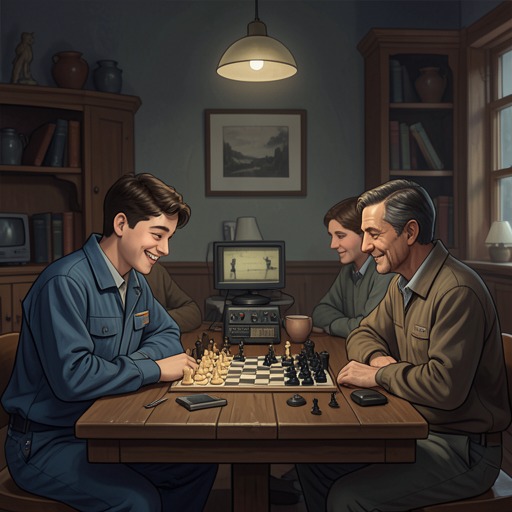
Before tragedy, Herbert belongs to a close household whose ordinary rituals establish their intimacy. In the parlour, he plays chess with his father while Mrs. White knits placidly by the fire. The scene presents family life through shared space and unremarkable companionship rather than declarations of affection; its warmth later stands against the shadow and silence that follow his death.
When the family discusses the monkey’s paw, Herbert handles the dried paw with curiosity, while Mrs. White draws back from it with a grimace. The contrast places a strange object inside a recognizably close family gathering, but it does not suggest distance between mother and son: her aversion is to the talisman, not to Herbert. Later, when his father hesitates over what to wish for, Herbert puts a hand on his shoulder and proposes two hundred pounds, framing the sum as enough to clear the house. Mrs. White is present as the family’s listener when that wish is made, and the wish’s fulfillment will bind their private hopes to the loss that follows.
Death and Grief
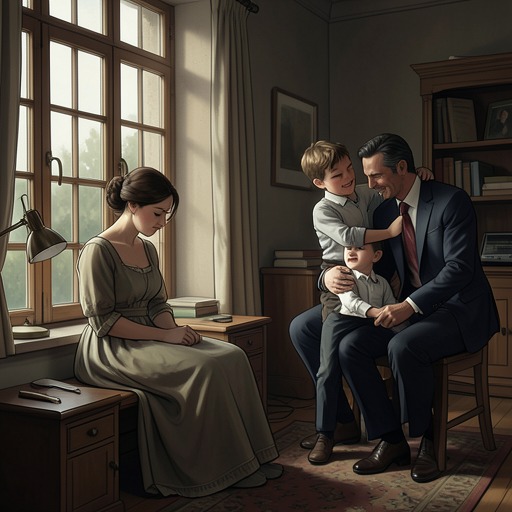
The first wish is granted through catastrophe. A visitor reports that Herbert was caught in machinery, and the news leaves his parents confronting the death of their son. After the burial, the elderly couple return from the cemetery to a house steeped in shadow and silence. Their days become weary and nearly wordless, the absence of the son who had shared their household now shaping the silence between them.
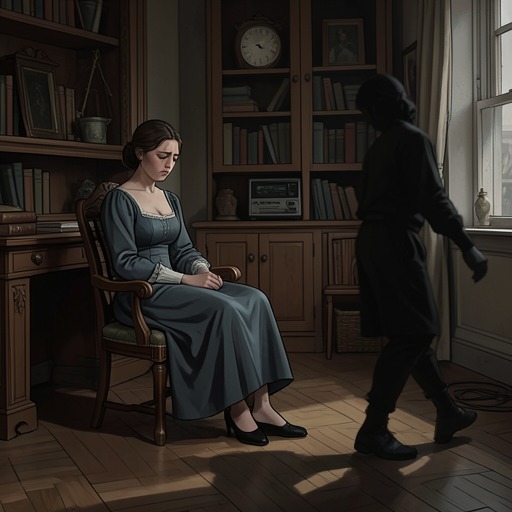
About a week after the burial, Mrs. White wakes in the night and weeps by the window. Her reply to her husband’s tender suggestion that she will be cold is that it is colder for her son. The brief exchange locates her grief in the continuing maternal relation: though Herbert is dead, her concern still turns toward his imagined condition. Her sorrow does not resolve into acceptance; the sudden recollection of the paw redirects it toward the possibility of undoing the loss.
The Demand for His Return
Mrs. White argues that two wishes remain and urges her husband to use one to wish their boy alive again. Her demand is immediate and emphatic, set against his fear and his reminder that Herbert has been dead ten days. He also explains that the damage was so severe he could recognize his son only by his clothing. The story makes the mother’s hope confront a concrete, disturbing uncertainty about what “alive again” might mean.
Her response is not to deny that uncertainty but to assert the authority of her own bond with Herbert: she tells her husband to bring him back and insists that she does not fear the child she nursed. The appeal rests on the history of maternal care, making remembered childhood a counterweight to the husband’s dread of the mutilated body. She drags him toward the door and presses him to act; her love becomes an urgent physical effort as well as an argument.
That conviction brings the household to the threshold of the unknown. Mr. White goes downstairs in darkness to retrieve the paw, afraid that an unspoken wish could bring Herbert before he can escape the room. He finds the talisman and returns to his wife, whose face seems changed to him by its white, expectant look. The scene emphasizes the divergence within their shared grief: Mrs. White waits for the son she hopes to recover, while her husband fears the form in which he may return.
The Door and the Limits of Hope
When a quiet knock sounds at the front door, the possibility Mrs. White has demanded becomes terrifyingly immediate. She breaks free from her husband and hurries downstairs, working the chain and bolt before calling for help with the bolt she cannot reach. Her movement toward the entrance gives her hope a practical objective: to open the door and receive Herbert. The narration does not establish who, or what, is outside; it stages the knock as the frightening confirmation of what the wish may have summoned.
Mr. White, meanwhile, searches frantically on his hands and knees for the paw. As the knocking becomes a fusillade and Mrs. White uses a chair against the door, he finds the talisman and makes his third and last wish. The knocking stops. Mrs. White opens the door, but the street beyond is quiet and deserted; her wail of disappointment and misery replaces the reunion she had sought. The ending leaves her maternal longing intact while making its hoped-for fulfillment inaccessible, and the door becomes the boundary between a son remembered and a return that cannot be confirmed.