The monkey’s paw
The Monkey's PawThe monkey’s paw is a dried, mummified talisman that gives three people three wishes each, but its central significance lies in the danger of treating fate as a mechanism that can be conveniently altered. Brought into the Whites’ parlour by Sergeant-Major Morris, it first seems like an exotic curiosity and then becomes the focus of a wish for money, a son’s death, and a desperate attempt to bring him back. Its power is never demonstrated apart from the devastating circumstances surrounding the wishes, so the object remains both an apparent instrument of supernatural action and a source of dread about what human desire cannot foresee.
Appearance and Origin
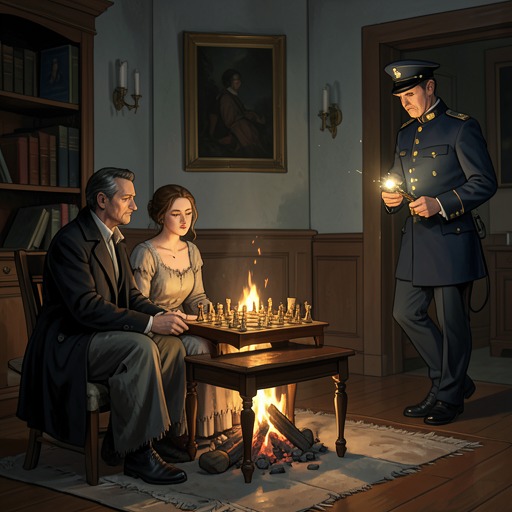
The paw enters the story during an evening at Laburnam Villa, where Sergeant-Major Morris visits Mr. White’s family after twenty-one years away. The family listens as he talks about wars, plagues, and people in distant places. Mr. White, who says he would like to travel to India, recalls Morris’s earlier mention of a monkey’s paw. Morris first tries to dismiss the subject, then describes it as a kind of magic. Its introduction is therefore bound to a domestic contrast: a strange object and its story arrive in the familiar setting of the family parlour.
Morris takes the object from his pocket and explains that it looks like “an ordinary little paw, dried to a mummy.” Mrs. White recoils, while Herbert examines it with curiosity; Mr. White takes it from his son, inspects it, and places it on the table. Its unremarkable, shriveled appearance offers no visible sign of the power attributed to it. The gap between that small physical object and the scale of the wishes it is said to grant helps make the family’s initial laughter possible, even as Morris’s gravity begins to unsettle the room.
Morris says that an old fakir, described as a very holy man, put a spell on the paw to demonstrate that fate ruled people’s lives and that those who interfered with fate would do so to their sorrow. The spell allows three separate men to have three wishes each. The object’s premise thus contains its warning: it offers a means of intervention while presenting suffering as the consequence of that intervention. Morris has used his own three wishes, and says the first man to possess the paw also used all three. He does not know what the first two wishes were; the third was for death, after which Morris obtained the paw. That final wish introduces mortality into the story before the Whites make their first request.
Warnings, Resistance, and the First Wish
Morris’s account does not make the paw a casual gift. When Mr. White asks why he keeps it if his wishes are exhausted, Morris says he does not know; when asked whether he would take another three wishes if offered, he again cannot say. He suddenly throws the paw into the fire. Mr. White cries out, stoops to retrieve it, and keeps it despite Morris’s solemn advice to let it burn. Morris then refuses to give it to him, insisting that he threw it on the fire and warning him not to blame him for what happens if he keeps it. The paw is physically rescued from destruction before its power is tested, making possession itself the Whites’ first consequential choice.
Morris explains the procedure plainly: the holder must raise the paw in the right hand and wish aloud. He also warns of the consequences. The warning sits awkwardly beside the family’s amusement: Mrs. White compares the story to the Arabian Nights and jokes about wishing for four pairs of hands, while the others laugh. When Morris sees Mr. White draw the talisman from his pocket, he grabs his arm with an alarmed look. The scene moves between comedy and apprehension without resolving which attitude the object deserves.
Later, Mr. White says that he does not know what to wish for and has all he wants. Herbert suggests two hundred pounds, enough, he says, to clear the house. His father holds up the paw and distinctly makes that wish while Herbert sits at the piano and strikes a few impressive chords. A crash from the piano is followed by Mr. White’s shuddering cry: the paw has moved and lies on the floor. The modest domestic request thus receives an immediate, physical sign of disturbance, though the object’s movement by itself does not explain what has happened or how the wish will be fulfilled.
Money, Death, and the Wish’s Fulfilment
The two hundred pounds return not as a windfall but as compensation following Herbert’s death. A visitor tells the family that Herbert was caught in machinery. He explains that Maw and Meggins disclaims responsibility and admits no liability, but offers a sum in consideration of Herbert’s services. When Mr. White asks how much, the answer is two hundred pounds—the exact amount he requested from the paw. Unaware of his wife’s shriek, he smiles faintly, reaches out his hands like a sightless man, and collapses unconscious. The matching sum binds the wish to the loss without proving, through any independent explanation, precisely how the paw caused the accident.
The payment cannot function as a substitute for the person whose death it follows. The Whites bury their dead in a new cemetery two miles away, then return to a house steeped in shadow and silence. At first they remain expectant, as if something else might happen to lighten their grief; with the passing days, expectation gives way to resignation. Their conversations dwindle, and the days become weary. Against this aftermath, the compensation is not simply money received: it is the outward fulfilment of the first wish and the measure of how little that fulfilment can repair.
The Second Wish and the Paw’s Return
About a week after the burial, Mr. White wakes in the night and finds his wife alone, weeping by the window. She says that it is colder for her son. After her sobbing fades and Mr. White falls asleep again, a sudden cry wakes him: she remembers the paw and asks for it. Her attention turns from mourning to the possibility of reversing the loss. The object that had been rescued from the fire now re-enters the household as a means of acting against the finality the family has endured.
When Mr. White hesitates, his wife presses him to retrieve the paw and wish. He tries to explain the danger in concrete terms: Herbert has been dead ten days, and Mr. White could recognize him only by his clothing; he asks how she could bear to see him now when he had been too terrible to look at before. She insists that she is not afraid of the child she nursed and drags him toward the door. Her grief turns the wish from a general hope into a confrontation with the likely bodily cost of bringing the dead back.
Mr. White goes downstairs in darkness to find the talisman. On his way through the parlour he fears that an unspoken wish might bring his mutilated son before he can escape, and he momentarily loses his sense of the door’s direction. He finds the paw and returns with it. Calling the act foolish and wicked, he nevertheless raises his hand and wishes that his son were alive again. The paw falls to the floor. His wife goes to the window and raises the blind, while he sits trembling, chilled by the cold and watching her wait. The candle dies; later she comes silently and apathetically beside him. The scene gives the wish no immediate visible fulfilment, but the silence leaves the question of its consequence open.
The Knocking and the Last Wish
The dead son’s return is not established by sight before the final confrontation. Instead, the story makes the paw’s possible fulfilment audible: knocking comes at the door, and Mrs. White breaks free and hurries downstairs. Her husband follows to the landing as she calls for help with the bolt. While she struggles to open the door, Mr. White searches wildly on his hands and knees for the paw. He wants to find it before “the thing outside” gets in. The phrase registers his fear without identifying what is waiting beyond the door.
The knocking becomes a fusillade through the house. Mr. White hears his wife place a chair in the passage against the door and the bolt creak as it is slowly withdrawn. He finds the paw at that moment and frantically makes his third and last wish. The knocking ceases suddenly, although its echoes remain inside the house. His wife opens the door; a cold wind rushes up the staircase, and her loud wail of disappointment and misery gives Mr. White courage to join her and go on to the gate. The street lamp shows a quiet, deserted road.
The ending connects the final wish to the cessation of the knocking, but does not disclose its exact wording or offer a direct view of what was outside. The paw’s last use therefore closes the immediate threat while leaving the reader to infer what the couple has lost at the threshold. Across all three wishes, its pattern is defined by the distance between desire and outcome: money arrives through death, the wish for life brings the parents to the brink of opening the door to an unseen presence, and the last wish leaves only silence, an empty road, and the mother’s grief. The object’s power is inseparable from uncertainty about its workings, while Morris’s warning about interfering with fate becomes the story’s governing danger.