The monkey’s paw’s enchantment
The Monkey's PawThe monkey’s paw’s enchantment is a spell that grants three wishes to each of three separate men, but is framed from the outset as a warning against trying to alter fate. The magic’s operation is simple to state and terrible to live with: a wish may be granted, yet its fulfillment brings consequences that make the desired outcome a source of suffering.
Origin and Stated Purpose
The spell is attributed to an old fakir, described by Sergeant-Major Morris as a very holy man. He supposedly placed it on an ordinary dried paw to demonstrate that fate ruled people’s lives and that those who interfered with fate did so to their sorrow. The power is therefore presented not as a benevolent gift but as an experiment in the danger of human intervention. Morris says that the spell allows three separate men to have three wishes apiece. He has used his own three wishes, and the first man before him also exhausted his allotment. Morris knows neither of that man’s first two wishes; he says the third was for death, and explains that this is how he came to possess the paw. The account gives the enchantment a history of loss without explaining the earlier wishes or identifying the first man.
Form and Conditions
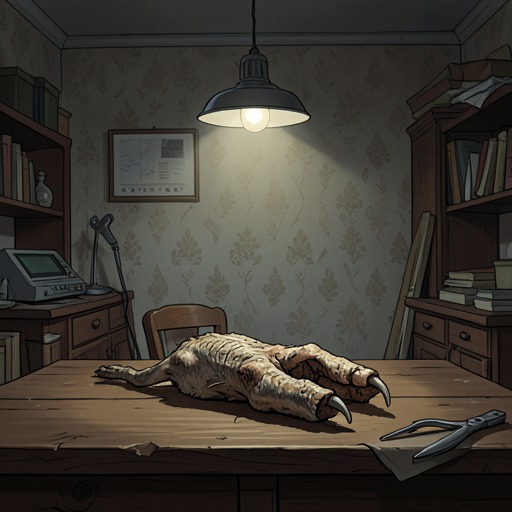
To use the paw, a person must hold it up in the right hand and wish aloud. Morris gives this instruction plainly, but warns of the consequences rather than specifying exactly how the magic works. The mechanism remains sparse: the paw is a small, dried, apparently ordinary object, while the rule attached to it is extraordinary. No fuller account explains how wishes are interpreted, how their effects are produced, or whether the user can control the form their fulfillment takes. That gap between a clear procedure and an unclear outcome is central to the enchantment’s menace. It offers a direct action—hold, speak, wish—without providing any means to judge what the wish will entail. Morris himself has thrown the paw on the fire and urges its new owner to do the same, reinforcing that knowledge of the rule is not equivalent to mastery of the power.
Consequences and Limits
The enchantment’s consequences become legible through the Whites’ experience. After Herbert is caught in machinery at work, the family receives compensation, and the grieving parents confront the death rather than any controlled or consoling operation of magic. The story does not establish that the spell caused the industrial accident; Morris’s account instead supplies a warning about interference with fate, while the reported circumstances of Herbert’s death remain mechanical and humanly recognizable. After Herbert has been buried, his mother urges her husband to use the paw to bring him back. Mr. White resists, recalling that Herbert has been dead for ten days and that he could recognize him only by his clothing. The possibility of the wish is inseparable from the fear that it might bring back his mutilated son. The enchantment thus turns a parent’s longing into a perilous choice, without promising that restored life would restore the son as he was. The final use of the paw is made in terror. As knocking grows into a fusillade and Mrs. White struggles to open the front door, Mr. White searches the floor for the paw and makes his third and last wish. The knocking stops; when the door opens, the road is quiet and deserted. The ending shows the wish’s immediate consequence but does not state its wording or explain precisely what has been prevented. The spell’s power remains effective yet opaque, leaving relief entangled with uncertainty.
Narrative and Thematic Significance
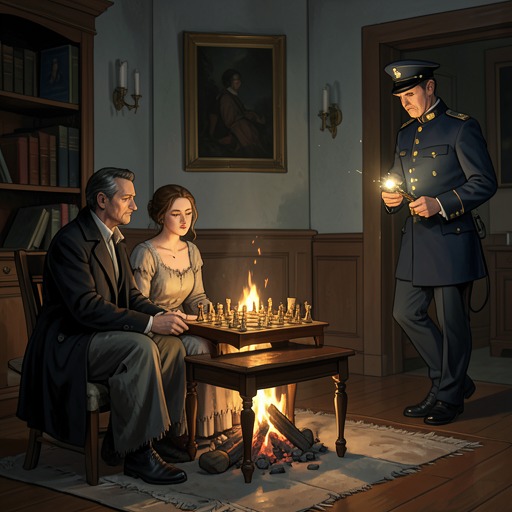
The enchantment first enters the warm domestic setting as a story told by a visitor about distant places, strange peoples, and magic. The Whites’ interest in India and its temples precedes Morris’s account, but the narrative presents the paw’s origin through his report rather than as an independent account of Indian religious practice. Its supernatural authority belongs to the story’s imagined object and its alleged history, not to a verified explanation of real traditions. The paw’s contrast between ordinary appearance and dreadful implication sustains the horror. It can be held, passed between family members, placed on a table, or searched for in darkness; its familiar physical presence gives an unknowable power a place inside the home. Each wish intensifies the tension between desire and consequence, while the story withholds enough information about the spell’s workings to leave its final effects unresolved. Its governing principle is therefore less a predictable system of magic than a warning that an apparently simple wish cannot guarantee control over what follows.