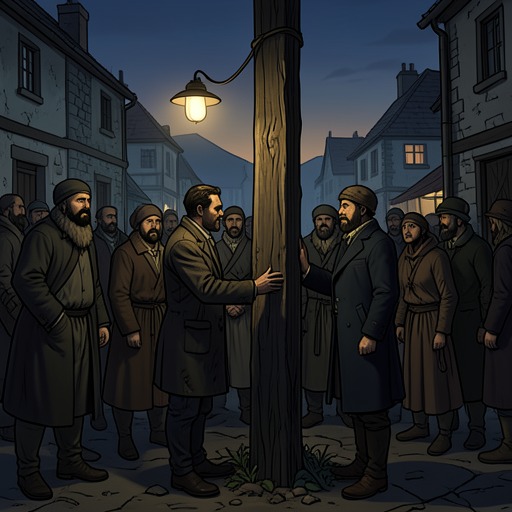
“The truth, however ugly in itself, is always curious and beautiful to the seeker after it.”
The Murder of Roger AckroydThe expression “The truth, however ugly in itself, is always curious and beautiful to the seeker after it.” states Hercule Poirot’s commitment to truth at the moment he renews his determination to solve the case. Its force lies in the contrast between the truth’s possible ugliness and the beauty he assigns to the act of seeking it.
Meaning and Context
Poirot makes the declaration while addressing the assembled company, after Flora has reluctantly agreed to do as he asks and resumed her seat. He acknowledges that he is much aged and that his powers may have diminished, then says that this is probably the last case he will investigate. Against those admissions, the expression gives the search for truth a value independent of success, comfort, or personal advantage.
Rhetorical Force
The sentence turns an abstract investigative principle into a compact paradox: what is ugly in its substance can be beautiful in the pursuit. Poirot’s phrasing presents inquiry as an aesthetic and intellectual commitment, not merely a means of reaching a verdict. The contrast also prepares the company for truths that may wound or embarrass them, while making clear that their unpleasantness will not excuse concealment.
Role in the Investigation
The expression leads directly into Poirot’s emphatic insistence that he will know the truth despite the opposition of those present. His acknowledgment of age makes that insistence more pointed: he frames the case as potentially his last, but refuses to let that prospect end in failure. The declaration thus joins his personal resolve to the investigative conflict, where the truth is contested and those gathered have reasons to resist its discovery.