Ashley Ferrars’s poisoning
The Murder of Roger AckroydAshley Ferrars’s poisoning is the earlier crime whose belated disclosure reshapes the investigation into Roger Ackroyd’s death. What had been dismissed as village gossip becomes a confession known to Ackroyd, while the blackmail connected to that secret establishes a concealed history of pressure and vulnerability behind the later case.
Background and Earlier Suspicion
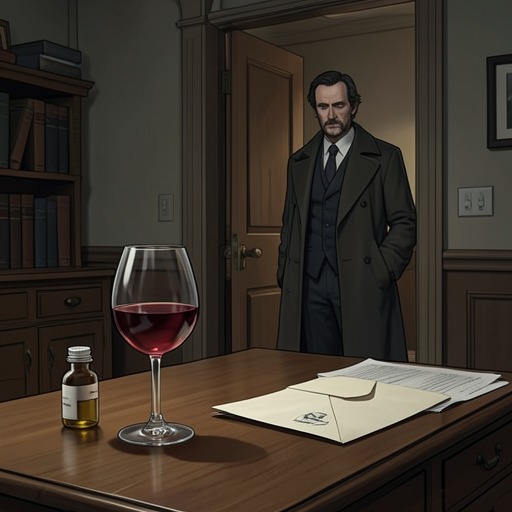
Ashley Ferrars died just over a year before the main events. Dr. James Sheppard had attended him during his last illness and publicly maintained that the cause was acute gastritis, worsened by habitual overindulgence in alcohol. He acknowledged that the symptoms of gastritis and arsenical poisoning could resemble one another, but presented the medical explanation as the cause of death.
That account had not quieted suspicion in King's Abbot. Caroline repeatedly accused Mrs. Ferrars of poisoning her husband, but her claim rested on her own judgment rather than evidence she could demonstrate. Sheppard regarded the accusation as unfounded and treated it as village talk; his later admission to Ackroyd that the gossip had first put the possibility into his mind reveals a distinction between having no proof and never having entertained the suspicion.
Ackroyd Learns the Truth
The poisoning becomes established fact through a conversation between Sheppard and Ackroyd. Ackroyd first asks whether Sheppard attended Ashley Ferrars in his final illness. He then tells the doctor that Ashley was poisoned and identifies his wife as the poisoner. Asked how he knows, Ackroyd answers that Mrs. Ferrars told him herself the previous day.
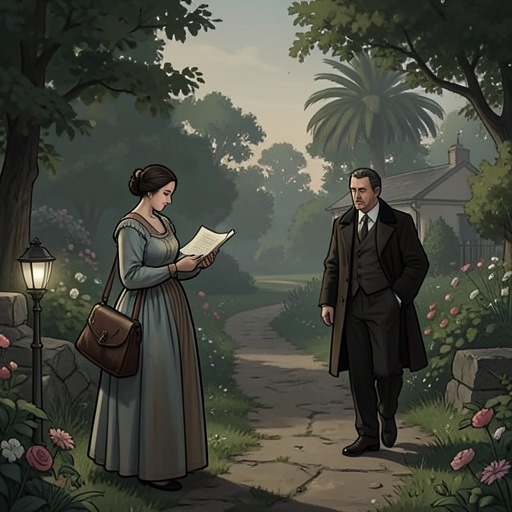
The confession had come during a private disclosure about their relationship. Ackroyd had proposed marriage to Mrs. Ferrars three months earlier; after initially refusing, she accepted, but would not allow the engagement to be announced until her year of mourning had passed. When Ackroyd later pointed out that a year and three weeks had elapsed since Ashley’s death, she unexpectedly broke down and revealed both her hatred of her husband and the means by which she had killed him. The news transformed Ackroyd’s understanding of the woman he had hoped to marry: his reaction was one of horror and repulsion, not a readiness to excuse the crime for the sake of love.
Blackmail and Consequences
Mrs. Ferrars’s confession also revealed that another person had known about the poisoning all along and had been blackmailing her for large sums. Ackroyd understood the sustained pressure as a source of the distress that had nearly driven her to madness. The blackmailer’s identity is not established in the account of the poisoning itself, leaving a consequential secret open at the point when Ackroyd tells Sheppard what he has learned.
The murder thus carries two connected consequences into the later plot: it explains why Mrs. Ferrars had been under prolonged pressure, and it gives Ackroyd knowledge of both the original crime and the continuing blackmail. The private confession had occurred only the day before his conversation with Sheppard. The story therefore places a newly disclosed past crime beside the immediate present of the Ackroyd investigation, making the earlier death more than background: it is part of the concealed history that the inquiry must reckon with.
Evidence and Narrative Function
The available accounts differ in evidentiary status. Sheppard’s diagnosis is the earlier professional explanation, while Caroline’s accusation is presented as unsupported gossip. Ackroyd’s knowledge comes from Mrs. Ferrars’s own confession, but he reports it to Sheppard rather than describing the poisoning as an event he witnessed. That structure marks a shift from speculation to reported admission without supplying independent details of the method or circumstances of Ashley’s death.
The disclosure also makes secrecy itself a central link between the two crimes. The poisoning had remained hidden while Mrs. Ferrars was subjected to blackmail; Ackroyd’s discovery converted the concealed past into urgent knowledge shortly before his own murder. The narrative uses this earlier crime to show how a truth may be known privately, distorted publicly into rumor, and then disclosed in a way that creates new questions rather than resolving every one.