Dictaphone Company
The Murder of Roger AckroydThe Dictaphone Company is the firm that sold Roger Ackroyd the recording machine central to Hercule Poirot’s reconstruction of the murder. Though its representative’s visit initially seems like a minor detail, the company’s confirmation of the sale connects the study’s apparent conversation to a mechanical deception and turns the missing dictaphone into a crucial clue.
The Representative’s Visit
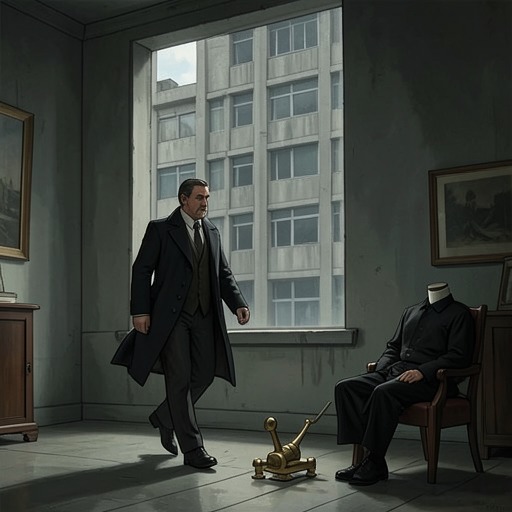
A young man representing the company called at the house on the Wednesday before the murder. Poirot recalls the visit during his final explanation: the visitor himself was not important, but the firm he represented was. His appearance supplies a detail that the assembled investigators had forgotten, and directs attention toward a device Ackroyd had acquired without announcing it to those around him.
The Sale and Ackroyd’s Secrecy
Ackroyd had promised to invest in a dictaphone, and Poirot independently asked the company about the matter. The firm confirmed that Ackroyd had purchased one from its representative. Why Ackroyd kept the purchase to himself remains uncertain; Raymond suggests that Ackroyd may have wanted to surprise him and had kept the machine as a new toy for a while. The company’s confirmation establishes the purchase, while the reason for concealing it is left as an inference rather than a known fact.
The Machine as Evidence
The sale gives Poirot grounds to suspect that a dictaphone was used in the study. Fragments of recorded dictation had reached Blunt, whose subconscious mind led him to think Raymond was with Ackroyd; meanwhile, Blunt’s conscious attention was occupied by a glimpse of a white figure that he fancied was Flora. The machine thus helps account for how an apparent exchange could mislead a witness without requiring the people he imagined to have been present.
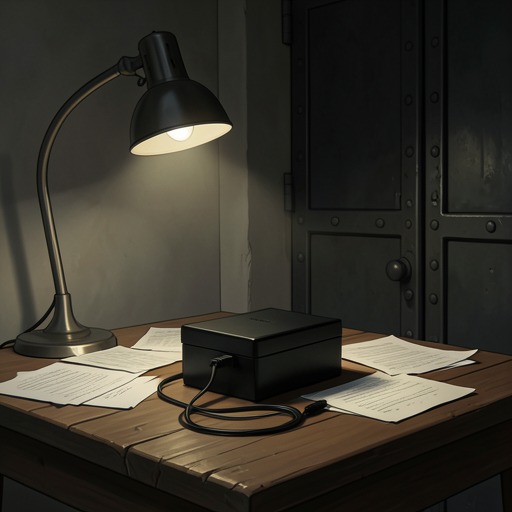
The firm’s information also sharpens Poirot’s question about the missing device. Although a dictaphone had been supplied to Ackroyd, none was found among his effects. Poirot reasons that if something was taken from the table, it could have been the machine. Its bulk meant it could not easily be slipped into a pocket, so whoever removed it would have needed some kind of receptacle. The company does not identify that person or resolve the practical difficulty, but its confirmation makes the machine’s absence a concrete part of the murder’s evidentiary puzzle.
Narrative Significance
The Dictaphone Company matters less as an active participant than as a source of verifiable information. Its sale record turns an overlooked visitor into a lead, distinguishes Ackroyd’s actual purchase from the household’s ignorance of it, and helps Poirot reinterpret the fragments heard in the study. The firm’s brief connection to the case therefore supports a larger reversal: what seemed to be a human conversation may have been a recording, while the absent machine itself becomes evidence that something was removed.