False telephone call to Dr. Sheppard
The Murder of Roger AckroydThe False telephone call to Dr. Sheppard is the fabricated summons that brings Dr. James Sheppard to Fernly Park on the night Roger Ackroyd is found murdered. Its importance lies in the gap between the caller’s authoritative claim and Parker’s immediate denial: the call gets Sheppard to the house, but its supposed source proves false.
The Call and Its Immediate Effect
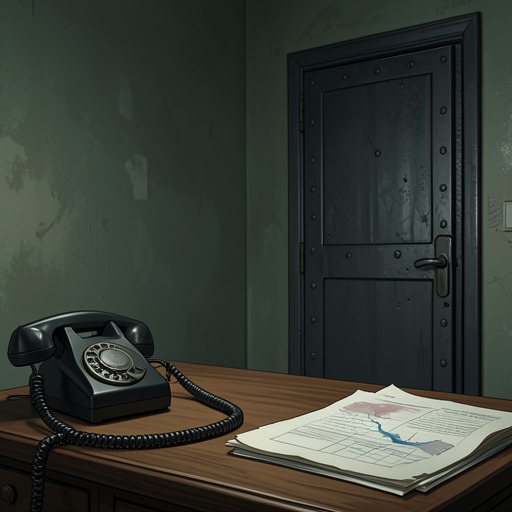
At a quarter past ten, as Sheppard and Caroline were going upstairs, the telephone rang in the hall. Sheppard answered and was told that Roger Ackroyd had been murdered. He hurried to collect his medical bag, adding extra dressings, then drove rapidly to Fernly Park. The call thus transformed an ordinary end to the evening into an urgent journey to the house.
The message presented itself as coming from Parker, the butler, and asked Sheppard to come at once. Sheppard repeated that claim to Caroline before leaving, so the false attribution had already shaped how he understood and reported the emergency. At Fernly Park, he rang impatiently and encountered a delay before Parker opened the door.
The Hoax Exposed
Parker reacted to the news that his master had been murdered with disbelief. Sheppard then asked whether Parker had telephoned him less than five minutes earlier. Parker denied doing so and said that he would not have made such a call. When Sheppard asked whether the report was a hoax and whether anything was actually wrong with Ackroyd, Parker asked if the caller had used his name.
Sheppard supplied the caller’s exact wording: the speaker identified himself as Parker, the butler at Fernly, and said that Ackroyd had been murdered. The two men stared at one another, and Parker described the deception as a wicked joke. The exchange establishes the crucial distinction between the message’s apparent authority and its real source: Parker’s name was used to induce Sheppard to come, but Parker disclaimed the call.
Role in the Murder Plot
The call’s practical consequence is clear: Sheppard reaches Fernly Park after being summoned by news of Ackroyd’s murder. Its stated purpose, however, is false, since Parker did not place it. The scene therefore introduces a deliberate act of deception into the murder narrative and makes the caller’s impersonation, rather than the message’s factual claim alone, central to the mystery.
The revelation is staged through Sheppard’s direct encounter with Parker, not through an explanation of who called or why. The reader learns that the summons was fraudulent, while the caller’s identity and motive remain unresolved in this exchange. That limited disclosure lets the false call function both as the device that brings Sheppard to Fernly Park and as an early sign that appearances surrounding the murder cannot be taken at face value.