Flora Ackroyd’s theft of the forty pounds
The Murder of Roger AckroydFlora Ackroyd’s theft of forty pounds from Roger Ackroyd becomes a crucial false trail in the murder investigation. The money is not the murder’s explanation, but Flora’s effort to conceal taking it makes her appear to be hiding something connected to the crime. Poirot reconstructs how financial pressure, a hurried encounter with Parker, and fear of disgrace turned a comparatively small theft into a persistent lie; when confronted, Flora admits what she did and describes the shame and want that had shaped her life.
Background and Financial Pressure
Poirot places the theft within the strained circumstances of Flora and her mother. Their life, he explains, was not easy: bills accumulated and small sums repeatedly caused trouble. Roger Ackroyd was peculiar about money, and Flora might consequently have been driven to desperation over an amount that was comparatively small. The explanation does not excuse the theft, but it gives it a concrete motive: she needed money in a household where even minor expenses had become a recurring difficulty.
Flora later describes that pressure from within. She says she had been wanting things, scheming for them, lying, cheating, running up bills, and promising to pay. Her confession presents the forty pounds not as an isolated lapse detached from her circumstances, but as the immediate act that brought a longer pattern of financial need and deception into the open. She says she was at her wits’ end for money and accepts responsibility for stealing.
The Theft and the Encounter with Parker
Poirot reconstructs the theft as a sequence of decisions made under the risk of discovery. Flora takes the money and descends the little staircase from her uncle’s bedroom. Halfway down, she hears the chink of glass from the hall and recognizes that Parker is coming toward the study. If Parker sees her on the stairs, Poirot reasons, he will remember it and find her presence suspicious, particularly if the money is later missed.
Flora therefore rushes to the study door and puts her hand on the handle, making it appear that she has just come out as Parker arrives in the doorway. She says the first thing that occurs to her: a repetition of Roger Ackroyd’s earlier orders. She then goes upstairs to her own room. That hurried performance supplies the misleading impression that she had been in the study and explains why her movements and account of the evening could attract attention during the inquiry.
Concealment and the Murder Inquiry
When police arrive and Flora is told there has been a robbery, she assumes the missing money has been discovered. According to Poirot, her immediate instinct is to maintain her story. The news that her uncle is dead makes her panic, but by then admitting the truth about her movements would also mean confessing to the theft. The lie thus persists not because it establishes her involvement in the murder, but because disclosure would expose her to the disgrace she fears.
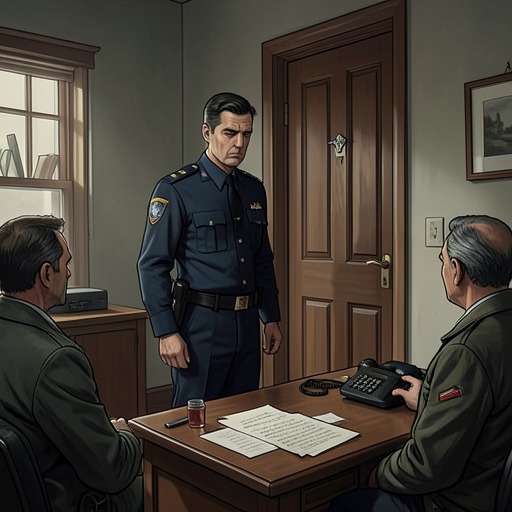
Poirot says he had suspected from the beginning that Flora was concealing something. He had considered the possibility that she had taken the money and made a small experiment, previously described to the others, to satisfy himself. When Inspector Raglan presents Poirot’s reconstruction, he says Flora was not in the study saying goodnight to Roger Ackroyd: she was on the stairs when she heard Parker cross the hall. Poirot then asks her directly whether she took the money. The distinction matters to the investigation: Flora’s secret explains a false account and suspicious conduct, but the theft itself is separate from the murder.
Confession and Consequences
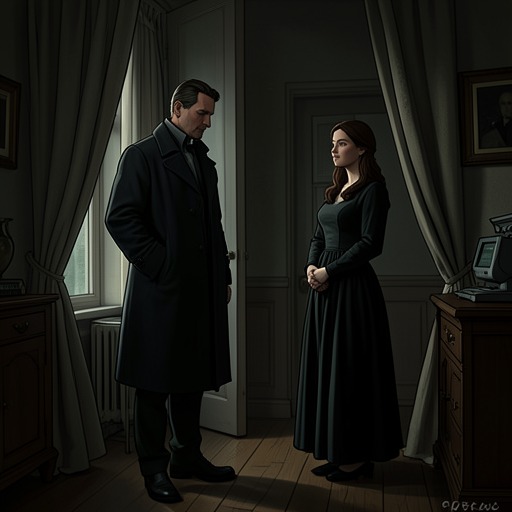
Flora asks Hector Blunt to remain while the inspector speaks to her, preferring that he hear what is said. After a silence, she confirms Poirot’s conclusion and openly calls herself a thief. She says she is glad the truth has come out because the preceding days have been a nightmare. Her admission transforms a concealed suspicion into an established fact, while her sudden collapse and covered face register the humiliation of making that fact public.
Flora connects her conduct to her relationship with Ralph Paton: she says that their shared weakness brought them together, because she understood him and felt sorry for him as someone like herself. When Blunt responds that he sees that it is always Ralph, Flora tells him that he does not understand. She then tells the inspector that she never saw her uncle after he left the dinner table and says the authorities may take whatever steps they choose over the money. She breaks down again and rushes from the room. Her confession clears up the particular deception surrounding the forty pounds, but leaves the emotional cost unmistakable: the theft has become inseparable from Flora’s fear of exposure, self-disgust, and sense of weakness.