James Sheppard’s blackmail of Mrs. Ferrars
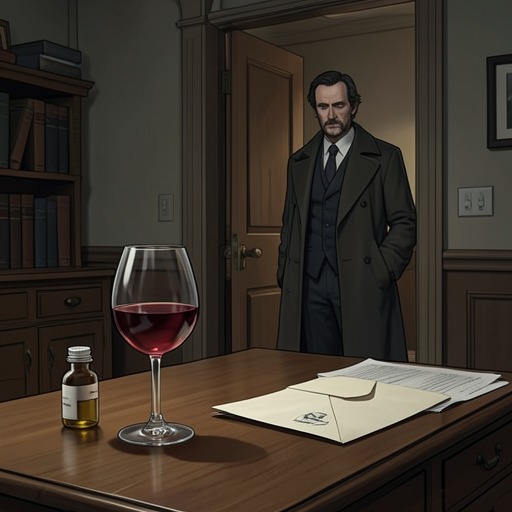
The Murder of Roger AckroydJames Sheppard’s blackmail of Mrs. Ferrars is the concealed financial crime at the heart of the murder investigation: Sheppard exploited his medical knowledge of her husband’s death to take at least £20,000 from her, and the prospect of exposure helped drive him to murder Roger Ackroyd. The crime’s significance lies not only in the money but in the way Sheppard’s apparently helpful account of the case hides the relationship that explains his actions.
Background and Financial Trail
After her husband’s death, Mrs. Ferrars lived quietly, but in the preceding year she sold securities and did not reinvest the proceeds. Her solicitor, Mr. Hammond, had wondered where the money went. When he once asked her about it, she said she had to support poor relations of her late husband; he accepted the explanation and did not pursue the matter. He had supposed that the money might be going to a woman with a claim on Ashley Ferrars, and did not suspect that Mrs. Ferrars herself was being blackmailed.
When Hercule Poirot asks Hammond to estimate the payments, the solicitor puts their total at no less than £20,000. The scale of the sum transforms an unexplained financial pattern into evidence of sustained pressure. Mrs. Ferrars was wealthy, but the payments were large even against that background; in the investigation, they give material form to a secret that had previously survived behind her quiet way of life and a plausible explanation about supporting relatives.
Sheppard’s Leverage and Motive
Poirot identifies Sheppard as the blackmailer and explains why he was positioned to exploit Mrs. Ferrars. As the doctor who attended Ashley Ferrars, Sheppard could know what had caused his death. That knowledge gave him leverage over Mrs. Ferrars, who had poisoned her husband. Poirot also connects the blackmail proceeds to a false account Sheppard had given: Sheppard had mentioned receiving a legacy about a year earlier, but Poirot could find no trace of one. The invented legacy served to explain away the money that had in fact come from Mrs. Ferrars.
According to Poirot’s reconstruction, Sheppard lost most of the money through speculation and pressed Mrs. Ferrars too hard. She then took an unexpected way out, leaving Sheppard fearful that she had disclosed the truth to Ackroyd before her death. If Ackroyd learned that Sheppard had blackmailed her, Poirot argues, Sheppard would be ruined. The threatened exposure thus connects the earlier blackmail to the later murder: Sheppard’s need for safety, not a desire to protect Mrs. Ferrars, becomes the motive Poirot assigns to him.
Rumour, Disclosure, and Investigation
The blackmail story circulates before its true shape is understood. Sheppard himself suggests that Parker could only have heard the word by listening outside a door. Inspector Davis reports that Parker, when questioned about his evening, became nervous and offered a confused account of blackmail. Sheppard then says he is ready to tell Davis everything, presenting himself as a source of disclosure even as the truth of his own involvement remains hidden. In a village where gossip is a central recreation, a fragment of information can travel without revealing who actually possesses the decisive knowledge.
The suspicion also surfaces in casual conversation. Colonel Carter tells Sheppard he has heard the word blackmail connected with Ackroyd’s mysterious death and speculates that a woman is involved. His guess points toward the relevant secret but does not identify the person extracting the money. The contrast is important: the village can repeat the right word and still misunderstand the crime, while Sheppard’s access to the facts allows him to control what he reports.
Concealment and Narrative Reversal
Sheppard’s account of the investigation is itself part of his concealment. When he recounts the case to Poirot, he presents the facts he has previously set down, and Poirot listens without revealing all the inferences he is drawing. Sheppard later recognizes that he has mistaken proximity to the detective for access to his reasoning: Poirot shared discoveries, but withheld the conclusions that mattered. The blackmail is therefore embedded in a narration that looks like a record of inquiry while keeping the narrator’s own crime out of view.
In the final explanation, Poirot links Sheppard’s false legacy, Mrs. Ferrars’s unexplained payments, his medical knowledge of Ashley Ferrars’s death, and his fear that Ackroyd knew the truth. Sheppard’s manuscript then makes the deception explicit. At five in the morning, after finishing the account, he reflects that he had intended it as the history of one of Poirot’s failures. He praises the neatness of his writing and points to the passage describing the interval between the arrival of a letter and his departure from Ackroyd: each sentence was true, but a blank in the account concealed what happened in between. That admission recasts the earlier narrative as deliberate omission and makes the blackmail part of a broader pattern of concealment, in which Sheppard uses accurate statements to disguise the truth they leave out.