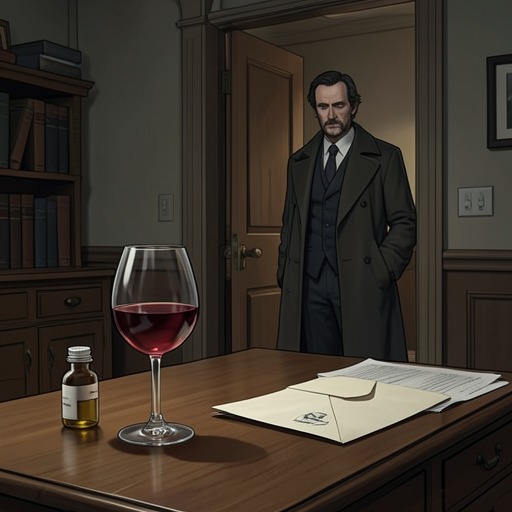
Mrs Ferrars's blue envelope and letter
The Murder of Roger AckroydMrs Ferrars's blue envelope and letter become a disputed piece of evidence in the investigation: their disappearance suggests a possible link between blackmail and murder, but the characters cannot establish who took them or whether they were removed at all. Their uncertain fate keeps several explanations open and helps Hercule Poirot resist the apparent case against Ralph Paton.
The Letter as a Possible Motive
Hercule Poirot identifies the theft of the blue envelope and its contents as one of three apparent motives pointing toward Ralph Paton. He also considers whether Ralph might have blackmailed Mrs Ferrars: Ralph had seemingly not asked his uncle for money, yet was believed to be in financial difficulty and anxious that his uncle might learn of a compromising predicament. Together, these circumstances make the case against Ralph appear strong, but Poirot finds the concentration of three motives suspicious and remains inclined to believe that Ralph is innocent.
Disputed Disappearance
The missing letter does not, in Poirot's reasoning, prove that the murderer took it. Dr. James Sheppard raises the possibility that the blackmailer of Mrs Ferrars and the murderer of Roger Ackroyd were different people. Poirot accepts that distinction as possible and notes that Parker might have removed the letter unnoticed when the body was first found. The possibility complicates the apparent connection between blackmail and murder: possession of the letter, its theft, and the identity of the killer need not point to the same person.
Possible Destruction and Narrative Role
Poirot offers another explanation: after Dr. James Sheppard left him, Roger Ackroyd himself might have changed his mind and burned the letter together with its blue envelope. Sheppard regards this as unlikely, though he acknowledges it could have happened. The object's fate therefore remains open among theft by a suspect, unnoticed removal by Parker, and destruction by Ackroyd. As an unresolved clue, the letter sustains competing interpretations rather than confirming a single motive or culprit, while exposing how readily an apparent piece of evidence can mislead when its disappearance is treated as proof.