Poirot’s final revelation of the murderer
The Murder of Roger AckroydHercule Poirot’s final revelation of the murderer takes place at The Larches, where a deliberately arranged meeting becomes the culmination of the investigation and a direct confrontation with its concealed narrator. Poirot reconstructs the case from its scattered clues, dismantles the apparent case against Ralph Paton, and names Dr. James Sheppard as the killer of Roger Ackroyd. The decisive reversal is not simply that a new suspect emerges: the trusted account of the investigation has itself been shaped by the murderer.
The Gathering at The Larches
Poirot prepares the sitting room at The Larches with deliberate care. Chairs are gathered on one side, while the lamps illuminate that group and leave the opposite end, where he expects to sit, comparatively dim. The arrangement makes the meeting feel less like an informal conversation than a controlled examination. When Parker and the housekeeper arrive, Poirot announces that everyone is present; uneasiness passes across the assembled faces, as if the room has become a trap that has closed around them.
He explains that the list he has read is a list of suspects, and that each person present had the opportunity to kill Roger Ackroyd. Mrs. Ackroyd tries to leave, but Poirot insists that she remain to hear him. His procedure is public and sequential: rather than offer a bare accusation, he begins at the start of his inquiry and shows how observations that seemed to point in different directions can be fitted together.
The event also follows an earlier account of the investigation that Dr. James Sheppard had presented to Poirot. Sheppard says that his careful narrative reaches the previous night’s departure from Fernly Park, and Flora asks him to tell Poirot about Ralph as well. Later, Sheppard reflects that the inquiry had entered a different phase after Monday: he had once accompanied Poirot and tried to read his mind, but Poirot kept his decisive impressions to himself. His comparison of himself to Watson beside Poirot’s Sherlock gives way to the admission that Poirot alone could assemble the separate contributions into their correct places. The gathering makes that difference visible: the narrator who thought he had followed the case is now its subject.
Reassembling the Clues
Poirot’s review begins with the summerhouse. In his account, he finds a scrap of starched cambric and an empty goose quill there. The scrap suggests a maid’s apron and draws attention to Ursula Bourne, whose account places her in her bedroom from half past nine until ten, without a real alibi. The goose quill, meanwhile, suggests someone who uses drugs. The American-accented stranger whom Sheppard encountered near the gate seems at first to fit that clue and to have come to meet Ursula.
The times upset that simple explanation. Ursula could not have reached the summerhouse before half past nine, whereas the stranger must have arrived only a few minutes after nine. Poirot considers whether the stranger waited, then recognizes that two separate meetings offer a better fit. Miss Russell, the housekeeper, had visited Sheppard that morning and shown interest in remedies for drug addiction; Poirot consequently infers that the stranger came to meet her, not Ursula. The gap between the two appointments points him toward a second, concealed encounter rather than a single meeting stretched to cover the evidence.
The footprints and the wedding ring redirect suspicion away from the apparent solution. The police have grounds to suspect Ralph: he left around nine, was seen near Fernly Park around half past nine, has not been seen since, and is believed to be in serious financial difficulty. Inspector Raglan has Ralph’s rubber-studded shoes and intends to compare them with the marks at the study window. Yet Poirot’s reconstruction of the separate summerhouse meeting establishes that Ralph and Ursula were together there as husband and wife. It follows, he argues, that Ralph could not also have been in Roger Ackroyd’s study at half past nine.
Poirot then turns the question of the supposed visitor in the study against the assumptions on which the case has rested. Geoffrey Raymond reports hearing someone ask Roger for money and Roger refuse; Hector Blunt also heard voices from outside, though not the words. But Poirot distinguishes between evidence that voices were heard and proof that another person was present. He challenges the claim that Roger was still alive at a quarter to ten by examining Flora’s evidence that she had said goodnight to her uncle. Parker, he points out, saw Flora outside the study with her hand on the handle; he did not see her come out of the room. The detail narrows what the witness actually establishes and leaves open the possibility that Flora had been on the stairs.
Other physical evidence is similarly open to more than one interpretation. Inspector Raglan displays enlarged photographs of fingerprints and has taken the prints of everyone in the household. Poirot agrees that the marks on the dagger were made by someone who had been in the house, but proposes testing whether they are Roger’s own. In that case, he reasons, the murderer could have worn gloves or covered a hand, then placed the victim’s hand around the dagger handle after the killing. The fingerprint therefore need not identify an attacker; it may have been made to misdirect the inquiry.
From Suspicion to Accusation
Before naming the murderer, Poirot lays out the requirements implied by the case. The killer had to have been at the Three Boars earlier that day, to know that Roger had bought a Dictaphone, to have a mechanical turn of mind, and to have had the opportunity to take the dagger from the silver display table before Flora arrived. The person also needed a container capable of concealing the Dictaphone, such as a black bag, and a few minutes alone in the study after the murder was discovered, while Parker telephoned the police. Poirot’s list is a chain of converging circumstances, not a reliance on one isolated clue.
The foundation of his reasoning is a discrepancy in Sheppard’s account of time. Sheppard and Parker both place his departure from the house at ten minutes to nine, yet Parker places him passing through the lodge gates at nine. The walk normally takes five minutes, or less by the shortcut to the terrace. Poirot asks what Sheppard did with the extra time. More importantly, he observes that the assertion that the study window was fastened rests on Sheppard’s word: Roger asked whether it had been secured, but did not check it himself.
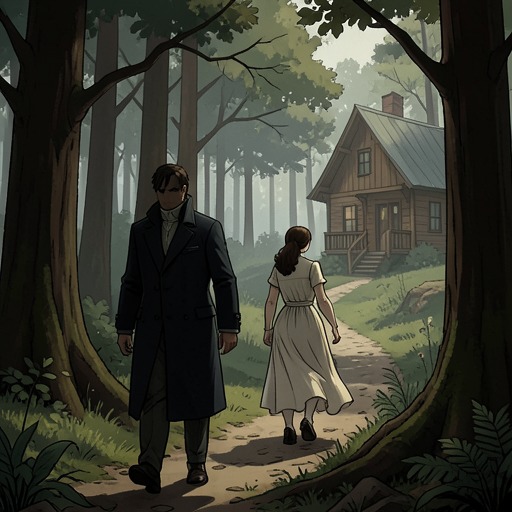
Poirot has tested the practical possibility behind his reconstruction. Sheppard could have killed Roger while standing beside his chair, left through the front door, gone to the summerhouse for Ralph’s shoes, and worn them through the mud to make the study-window prints. He could then have entered through the window, locked the study door from inside, returned to the summerhouse, changed back into his own shoes, and reached the lodge gate. Poirot says that he repeated comparable actions while Sheppard was with Mrs. Ackroyd, and that the sequence took exactly ten minutes. The false trail of footprints and the timing of the departure thus become parts of the same explanation.
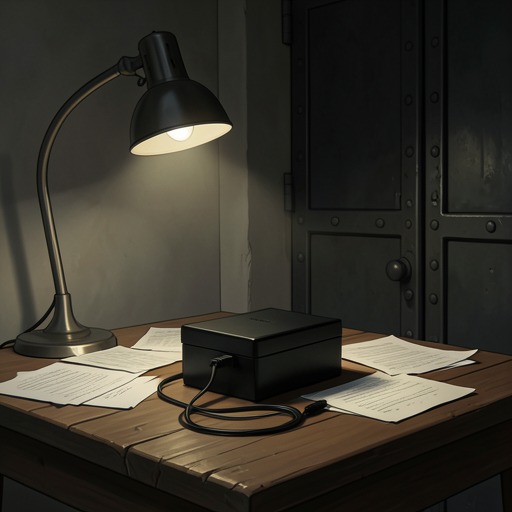
The Dictaphone completes the timing device. Poirot says that Sheppard’s telephone call was genuine, and that his sister saw him take it, but only Sheppard could attest to what was actually said. By timing the machine for half past nine, the murderer could make it seem that Roger was speaking after Sheppard had left Fernly Park. The call supplied a real event that concealed a false account of its contents, turning the apparent alibi into another piece of narration controlled by Sheppard.
Exposure and Its Consequences
When Poirot names him, Sheppard laughs and calls Poirot mad. He challenges the proposed motive, asking what he could have gained by killing Roger, but Poirot does not retreat from the evidence. His response recalls the small difference in timing that first drew his attention to Sheppard and insists that the truth will be delivered to Inspector Raglan in the morning. In the next chapter, titled “The Whole Truth,” Sheppard admits that he had not understood the full force of Poirot’s meeting. He had suspected theatrical display and thought Poirot mistaken, even while recognizing a serious menace beneath the performance.
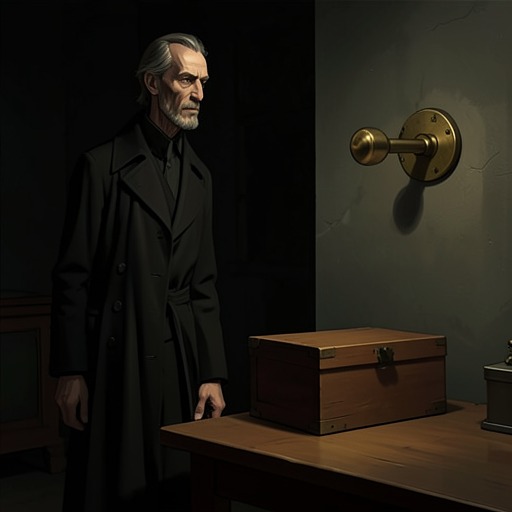
Poirot tells Sheppard that he cannot escape and that there is only one way out, a way that does not lead to freedom. He then offers an alternative to public exposure: Sheppard might take an overdose of sleeping draught, while Ralph must be cleared. The proposal places the suspected murderer’s fate beside the investigation’s necessary correction. Poirot also urges Sheppard to finish his manuscript, but to abandon his earlier reticence, and warns him not to try to silence Poirot as he silenced Roger.
The revelation resolves the central misdirection by changing the status of the evidence and of the person who presented it. Ralph’s absence, financial difficulties, and matching shoes had encouraged the police to build a coherent accusation against him; Poirot’s reconstruction shows how the shoes could have been used to manufacture that appearance. Sheppard’s own account had appeared to be the record against which the clues could be checked. At The Larches, its omissions, timings, and assertions become evidence against its author. The meeting exposes not only who committed the murder, but how a narrator could make an investigation seem to lead away from himself.