Ralph Paton
The Murder of Roger AckroydRalph Paton is the handsome, impulsive stepson of Roger Ackroyd, whose disappearance after Ackroyd’s murder makes him appear to have a motive and no alibi. The apparent case against him rests on real vulnerabilities—his debts, his troubled history with his stepfather, and his concealed marriage—but his account and Hercule Poirot’s inquiries reveal a man hiding to protect his wife, not a murderer.
Identity and Background
Ralph is the son of Ackroyd’s first wife, a widow who had a child from her earlier marriage. Ackroyd married her when he was twenty-one; she died four years later after drinking herself to death. Ralph was seven at the time. Ackroyd never treated him merely as a stepchild: he regarded him as his own son and raised him accordingly. Yet Ralph’s upbringing did not prevent a persistent strain of conflict between them. As an adult, he had become a continuing source of worry and trouble to Ackroyd.
The people of King’s Abbot know Ralph as a familiar, much-liked figure, and their fondness for him coexists with a more serious judgment of his character. Dr. James Sheppard, who says he knew Ralph better than anyone else in the village, connects his temperament to his mother’s example while distinguishing him from her: Ralph did not inherit her fatal propensity for drink, but Sheppard sees in him a strain of weakness. He is self-indulgent and extravagant, with little reverence for convention or authority, yet remains lovable enough that his friends are devoted to him.
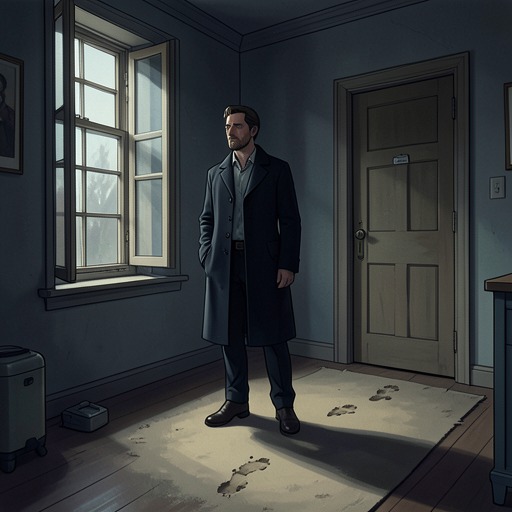
Ralph’s physical presence helps explain his social ease. Nearly six feet tall and proportioned like an athlete, he is dark like his mother, sunburnt, and handsome, with a smile that seems ready to appear. The narrative presents his charm not as an achievement but as an effortless gift. That appeal complicates the village’s suspicion of him: even when the circumstances look damaging, those who know him have difficulty separating the evidence from their affection.
Marriage and Private Difficulties
Ralph’s private life is more precarious than his familiar public image suggests. By the time Ackroyd is killed, Ralph has serious money difficulties. In the investigation, that financial pressure becomes part of the case against him: he stands to inherit a great fortune from Ackroyd, giving him an apparent motive as well as need. Poirot calls the inheritance one motive, leaving open that the case may contain others.
The central secret behind Ralph’s conduct is his marriage to Ursula Bourne. Poirot reveals at the final gathering that she is Mrs. Ralph Paton and that they married the previous March. The disclosure overturns the assumptions around Ralph’s personal life and explains why the marriage had been kept from the people around them. The evidence establishes the secrecy and its later importance, even as the public revelation arrives before Ralph himself gives his account of the days surrounding the murder.
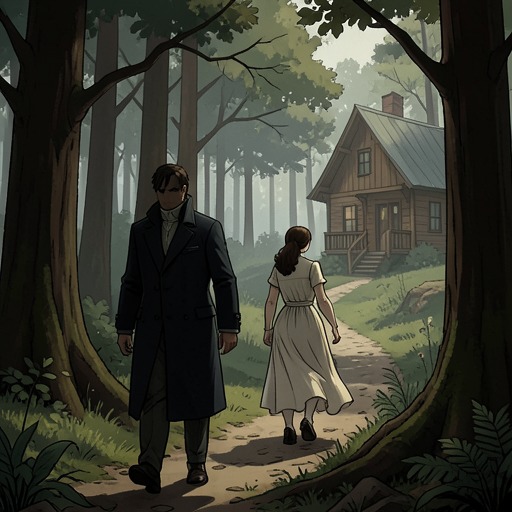
Ralph eventually says that he met Ursula in the summerhouse and left it at about 9:45, then walked about the lanes trying to decide what to do next. He admits that he has no alibi. He insists, however, that he never went to the study and never saw Ackroyd, alive or dead. His movements are therefore both a source of suspicion and, in his own account, the consequence of indecision after the secret marriage and the crisis that followed.
Disappearance and Suspicion
The police evidence initially makes Ralph’s absence difficult to dismiss. He went out just before nine on the night of the murder, was seen near Fernly Park at about 9:30, and had not been seen since. He was also believed to be in serious financial difficulty. Investigators possess a pair of his rubber-studded shoes and intend to compare them with the marks found near the house. The combination of a missing suspect, financial need, proximity to the scene, and footwear that can be tested against tracks gives the inquiry concrete grounds for suspicion.
Sheppard acknowledges the same inference in conversation with Poirot: Ralph inherits a great fortune on Ackroyd’s death. But an apparent motive is not proof of presence in the study. Ralph later gives Poirot’s assembled company his solemn word that he did not go there and did not see his stepfather that night. He knows the public will judge the absence of an alibi harshly, and asks the people present to believe him despite what the world may think. Raymond recognizes that the lack of an alibi remains damaging even while saying he believes Ralph.
The village’s appetite for gossip makes an absence especially potent. In King’s Abbot, where recreation can be reduced to gossip, a few sightings and an unexplained disappearance quickly become a story about guilt. Colonel Carter’s speculation that blackmail is involved and that a woman must be part of the affair reflects the community’s tendency to turn incomplete facts into confident theories. Ralph is caught inside that network of interpretation before he can publicly explain either his marriage or his movements.
Concealment and Protection
Ralph does not simply vanish without assistance. Poirot reasons that if Sheppard is concealing the young man, he would choose somewhere nearby rather than a hotel or ordinary lodgings. He tests the idea by inventing a nephew with mental trouble and asking Caroline for the names of suitable homes. She gives him two near Cranchester to which her brother has sent patients. Poirot makes inquiries and learns that a patient was brought to one of them by Sheppard early on Saturday morning. Though registered under another name, the patient is Ralph.
The discovery establishes the practical extent of Sheppard’s protection: he personally brought Ralph to the institution and kept his location from the police. Poirot later brings Ralph away after the necessary formalities, and Ralph arrives at Poirot’s house in the early hours of the previous morning. What first looks like a fugitive’s disappearance is thus also the consequence of another person’s deliberate concealment. The nursing home is not an incidental hiding place; it is the link that turns Sheppard’s otherwise unexplained conduct into evidence of his connection to Ralph.
At the final gathering, Poirot explains that Sheppard had gone to the Three Boars hoping to find Ralph, after coming from the scene of the crime. Poirot had suspected that the two friends might have met in the street instead. Sheppard then admits that he visited Ralph that afternoon, that Ralph initially refused to confide in him, and that he later disclosed both his marriage and his predicament. When the murder was discovered, Sheppard recognized that suspicion would fall on Ralph or on Ursula. Ralph feared that giving evidence might incriminate his wife; Sheppard agreed to help, and succeeded in hiding him from the police.
Return and Narrative Significance
Ralph’s return at the gathering changes the meaning of his absence without supplying the conventional reassurance of an alibi. He stands by the account that he left the summerhouse at about 9:45, wandered through the lanes, and never entered the study. The investigators and the assembled company must distinguish the shame and danger of a concealed marriage, the real pressure of debt, and his unexplained movements from proof that he committed the murder. His situation shows how facts that are individually true can accumulate into a persuasive but incomplete accusation.
Ralph also serves as the person around whom Sheppard’s concealed actions become legible. The relationship between the two men is not merely a history of friendship: in the crisis after the murder, Sheppard uses his medical and local knowledge to hide Ralph, while Poirot reconstructs that protection through the nursing-home inquiries. Ralph’s wish to shield Ursula helps explain why he accepts concealment, but the arrangement also makes him appear more incriminated. His return therefore exposes the cost of protecting someone in a case shaped by secrecy: the person shielded becomes more suspicious, and the protector’s role becomes a clue to the truth.