Ralph Paton and Ursula Bourne's secret marriage
The Murder of Roger AckroydRalph Paton and Ursula Bourne's secret marriage is the hidden relationship behind the public engagement between Ralph and Flora Ackroyd. It begins as a plan to protect a marriage from Roger Ackroyd’s disapproval, but Ralph’s debts and his dependence on his stepfather turn concealment into a damaging double arrangement. When Ursula decides to disclose the truth, the secret becomes central to the household’s suspicions and to Hercule Poirot’s reconstruction of the night of the murder.
Background and Secret Marriage
Ursula Bourne came from an impoverished Irish family of seven children. After her father’s death, she chose work as a parlour maid rather than becoming a nursery governess, and proved capable and successful at Fernly Park. Her relationship with Ralph Paton culminated in marriage, though she was initially reluctant to keep it secret. Ralph persuaded her that Roger Ackroyd would not consent to his marrying a penniless woman, and urged them to marry privately until he could find work and become independent.
The plan rested on a promise of future stability: Ralph intended to pay his debts, secure employment, and tell his stepfather once he could support Ursula. But he did not make a clean break with his old dependence. He hoped that Roger, unaware of the marriage, would pay his liabilities and put him back on his feet. The concealment therefore began not only as protection for the couple but as a means of preserving Ralph’s access to financial help.
The Public Engagement and the Break in Secrecy
When Roger learned the extent of Ralph’s debts, he was angered and refused assistance. Some months later he summoned Ralph to Fernly and plainly expressed his wish that Ralph marry Flora. Ralph and Flora accepted the proposed engagement as a practical arrangement rather than a love match: Flora saw a chance for greater freedom and money, while Ralph saw the possibility of having his debts paid and starting again. He vaguely expected the engagement to end after a suitable interval, but he did not tell Ursula about it. He understood that her honesty and dislike of duplicity made her unlikely to accept his plan.
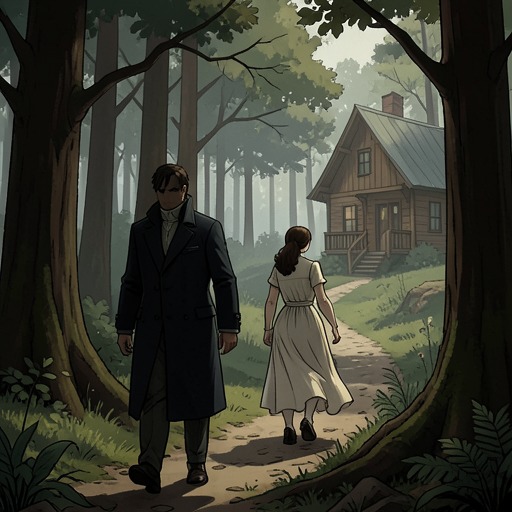
Roger then decided to announce the engagement without telling Ralph, informing Flora alone. Flora raised no objection, but the announcement struck Ursula with the force of a shock. Ralph hurried down from town after she summoned him, and they met in the wood, where part of their conversation was overheard by Dr. James Sheppard’s sister, Caroline. Ralph asked Ursula to remain silent a little longer; Ursula was determined to end the concealment. They parted acrimoniously, with the marriage now in direct conflict with Ralph’s attempt to secure a new financial arrangement.
Ursula sought Roger out that afternoon and told him the truth. Their interview was stormy. Roger resented the deception, directing most of his anger at Ralph but also accusing Ursula, in effect, of having tried to entrap a wealthy man’s adopted son. The disclosure did not reconcile the couple or settle the consequences of their marriage. That evening they met again by appointment in the small summerhouse, after Ursula slipped out through a side door. Their conversation consisted of mutual reproaches: Ralph blamed her revelation for ruining his prospects, while she condemned his duplicity.
Discovery and the Murder Inquiry
The marriage initially remained unknown to the people investigating Roger’s death. In the atmosphere of King’s Abbot, where gossip was a principal recreation, the word blackmail circulated readily. Colonel Carter repeated the suspicion that blackmail was involved and speculated that a woman might be connected to it. Such talk did not identify the secret marriage, but it shows how quickly fragments of information could become village theories without establishing what had actually happened.
Poirot reconstructed the summerhouse meetings by distinguishing two visitors who might otherwise have been confused. A goose quill suggested that one visitor was a drug user; the timing did not fit Ursula, who could not have arrived before half past nine, whereas the stranger was there shortly after nine. Poirot concluded that there had been two separate meetings. The earlier visitor was connected to Miss Russell, while Ursula’s later rendezvous was with Ralph. The wedding ring inscribed “From R.” and a date, Ralph’s reported appearance on the path at twenty-five minutes past nine, and the afternoon conversation in the wood fitted together as evidence of a secret marriage and its immediate crisis.
That reconstruction also changed the significance of the couple’s movements. Both Ralph and Ursula had strong reasons to wish Roger out of the way, but the chronology established that Ralph could not have been the man with Roger in the study at half past nine. The secret therefore generated suspicion while also helping to eliminate one apparent possibility. Its importance to the inquiry lies in this double effect: it supplied a motive and a concealed meeting, but careful attention to the meeting’s timing prevented the marriage from being mistaken for proof that Ralph committed the murder.
Public Revelation and Consequences
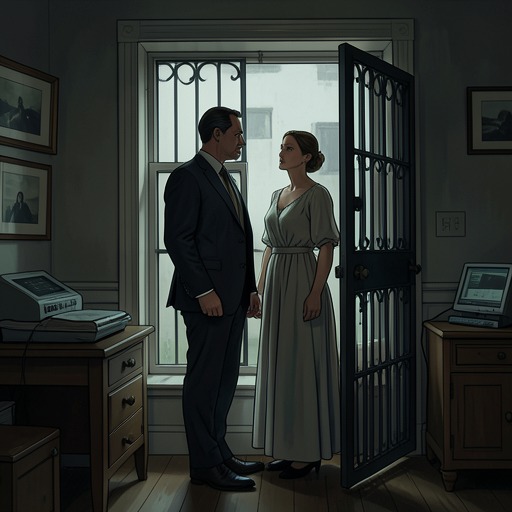
At the final gathering, Poirot took Ursula’s hand and introduced her as Mrs. Ralph Paton, saying that she had married Captain Paton the previous March. Mrs. Ackroyd reacted with disbelief and surprise; the household had not known that Ralph was already married. Flora moved quickly to Ursula’s side and told her she was glad to learn the truth. Ursula acknowledged that Ralph had behaved badly, particularly toward Flora, while Flora replied that Ralph had been cornered and that she might have acted similarly, though she wished he had trusted her with the secret.
The revelation recast the engagement as a public arrangement made over a concealed marriage, rather than the beginning of Ralph’s ordinary courtship of Flora. It also gave the women distinct positions in the aftermath: Ursula’s insistence on truth had exposed the deception, while Flora responded not with anger but with sympathy and regret that Ralph had not confided in her. Poirot’s disclosure restores Ursula’s actual status to the group and makes intelligible the summerhouse appointment that had helped shape the investigation.
Concealment and Narrative Significance
The marriage’s secrecy is sustained by more than a single decision. Ralph’s need for money leads him to preserve the appearance that he remains available to marry Flora; his fear of Ursula’s response keeps her outside that scheme; and Roger’s unilateral announcement makes the conflict public before Ralph has disclosed the truth. Each concealment changes what another person can know and therefore what they can infer from the couple’s actions.
The village’s appetite for gossip forms a revealing contrast with the couple’s privacy. King’s Abbot has a railway station and post office, but its social life is summed up by gossip; Caroline’s unsuccessful efforts to learn about the foreign newcomer at The Larches demonstrate how eagerly personal information is pursued. Yet the secret marriage resists that network until Ursula’s disclosure and Poirot’s final announcement. The plot turns on the difference between rumor, which multiplies suspicion, and verified information, which gives the scattered details—the ring, the two appointments, and the quarrel in the wood—a coherent order.