Ralph Paton's boots
The Murder of Roger AckroydRalph Paton's boots are a key piece of physical evidence in Hercule Poirot's reconstruction of the murder of Roger Ackroyd. Initially disguised as a question about color, the inquiry into whether the boots were black or brown establishes that Ralph had another pair of footwear beyond the shoes already known to the investigators. Poirot later uses that distinction to explain how the murderer planted footprints on the study window ledge and directed suspicion toward Ralph.
Identification and Inquiry
Poirot asks Caroline to discover whether a pair of boots Ralph had taken to the Three Boars was black or brown. The question sounds like a minor detail, but Caroline treats it with unusual solemnity: Poirot wants the color of the boots, not of the brown shoes Dr. James Sheppard has already seen. Sheppard fails to grasp the distinction or why it matters. Caroline arranges the inquiry through Annie's friend Clara, a maid who is walking out with the Boots at the Three Boars; Miss Gannett cooperates by giving Clara leave to help.
At lunch, Caroline reports that the boots are black and that Poirot's expectation that they were brown was wrong. Her announcement carries the satisfaction of having corrected him, while Sheppard remains puzzled by the relevance of the answer. The investigation's quiet, almost domestic route—through a maid's friendship and a leave of absence—contrasts with the importance Poirot has assigned to the detail. The color question is a deliberate cover: Poirot later admits that he stressed it to obscure his real reason for asking.
The Footprints and Competing Explanations
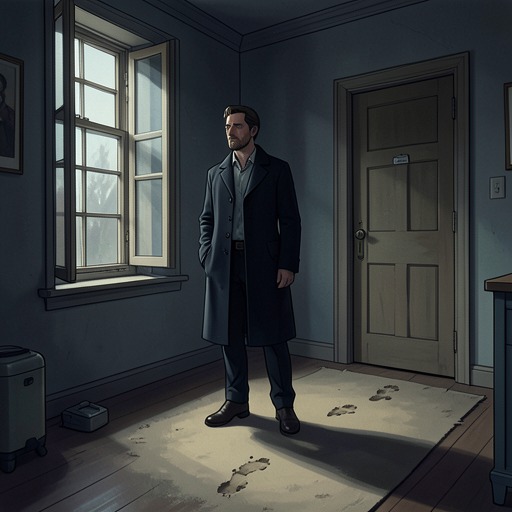
The boots matter because footprints on the study window ledge appear to implicate Ralph. Poirot considers three explanations: Ralph himself may have made them after returning to the house; someone else may coincidentally have worn shoes with the same studs; or someone deliberately used Ralph's footwear to frame him. The second explanation seems unlikely to Poirot because the household's shoes were soled with crepe rubber, while the boots worn by Charles Kent were described by the Dog and Whistle's barmaid as badly worn. The prints therefore invite suspicion of Ralph, but their apparent clarity is not proof that he made them.
The police had obtained one pair of Ralph's shoes from the Three Boars. Those shoes were downstairs being cleaned that evening, so neither Ralph nor anyone else could have worn them at the time. The police theory held that Ralph wore a second pair of the same kind. Poirot confirms that Ralph did have two pairs of shoes, but the existence of the black boots points to a further possibility: if the murderer wore Ralph's shoes to make the prints, Ralph himself must have worn another kind of footwear. Poirot reasons that a third identical pair would be improbable and that boots were the likelier alternative. When Ralph came to Poirot's house, Poirot asked what he had worn on the fatal night; Ralph immediately answered that he had worn boots and was still wearing them because he had nothing else to put on.
From Clue to Reconstruction
The inquiry transforms the boots from an incidental item of clothing into a link in the chain of access and opportunity. Poirot's conclusion is that the murderer had an opportunity to take Ralph's shoes from the Three Boars, use them to create the misleading prints, and leave Ralph's boots as the footwear Ralph actually wore. The footprints thus become evidence of deliberate staging rather than reliable identification of the person who crossed the ledge.
This explanation forms part of Poirot's larger reconstruction of Sheppard's movements. Poirot points to a discrepancy in time: Sheppard said he left the house at ten minutes to nine, but reached the lodge gates at nine, although the walk ordinarily took five minutes or less by the shortcut. In Poirot's account, Sheppard had time to kill Ackroyd before leaving, go to the summerhouse for Ralph's shoes from a bag he had brought that night, wear them through the mud and leave prints at the window, then enter the study, lock its door from inside, return to the summerhouse, change back into his own shoes, and reach the gate. Poirot says that repeating similar actions had taken exactly ten minutes. The boots are crucial to this reconstruction because Ralph's own account of wearing them supplies the alternative footwear needed to make the planted footprints compatible with the murderer's use of Ralph's shoes.
Evidentiary and Narrative Significance
The boots demonstrate why a physical trace cannot be interpreted apart from its origin and circumstances. A footprint may establish that a particular kind of shoe left a mark without establishing who wore it; the question of who could access Ralph's shoes, and what Ralph wore instead, changes the meaning of the trace. Poirot's method depends on distinguishing the shoes found at the inn, the second pair accepted by the police theory, and the black boots discovered through Caroline's inquiry.
Their introduction also lets the narrative make a revealing contrast between Sheppard's apparent bafflement and the clue's actual purpose. He records Caroline's report but says he cannot see what the color has to do with the case; Poirot later explains that the question was designed to disguise its significance. The boots therefore serve both as a practical element in the false-footprint scheme and as a test of how easily a seemingly ordinary detail can conceal the structure of a staged alibi. Their importance does not come from color alone, but from the distinction between what Ralph wore and what the murderer needed him to appear to have worn.