Ursula Bourne
The Murder of Roger AckroydUrsula Bourne, a parlour maid at Fernly Park, enters the investigation first through her sudden decision to leave and later through a marked gap in the police’s account of the household’s movements. The contrast between her reputation as a quiet, capable worker and the absence of confirmation for her alibi makes her an unresolved presence in the evidence presented to Hercule Poirot.
Identity and Introduction
Miss Russell describes Ursula as quiet, ladylike, and an excellent worker. She explains that Roger Ackroyd had been annoyed with Ursula the previous afternoon because, while doing her duty in the study, Ursula had disarranged some papers on his desk. According to Miss Russell, Ursula gave notice after he found fault with her. The account reaches the investigators secondhand: Miss Russell says it is what she understood from Ursula, leaving the precise circumstances of the disagreement unverified.
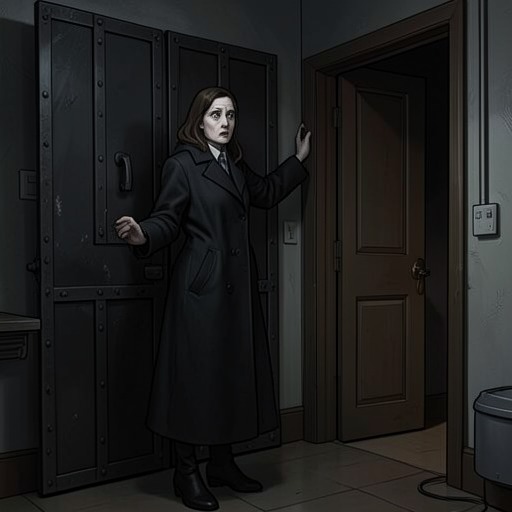
When summoned, Ursula stands straight before the inspector and answers that she is the person he has asked for. The narration also distinguishes her by her height, the brown hair rolled tightly away at the back of her neck, and her steady grey eyes. These concrete details give her a composed, visible presence, while the explanation for her departure remains qualified and indirect.
Departure from Fernly Park
The disagreement over the study papers supplies a practical reason for Ursula’s notice, but it also connects her directly to the room at the center of the inquiry. Ackroyd’s annoyance followed the disturbance of papers on his desk; the evidence does not establish that the incident was more than a household dispute. Its importance lies in placing Ursula’s work and impending departure within the investigators’ scrutiny of Fernly Park.
Her departure is not presented as proof of wrongdoing. Miss Russell emphasizes that the fault was not hers, and characterizes Ursula as a good worker. The discrepancy between that favorable assessment and the circumstances attracting police attention preserves the distinction between suspicion and demonstrated guilt.
The Unconfirmed Alibi
Poirot later directs Dr. James Sheppard to the inspector’s list of alibis, which had been given to Poirot that morning. A small pencil cross appears beside Ursula’s name. Poirot explains that one person on the list had an alibi with no confirmation: Ursula. The mark turns an otherwise administrative record into a clue, identifying a specific gap rather than establishing where Ursula was or what she did.
The uncertainty is sharpened by the earlier account of her notice. Ursula was already connected to the study through her work there and to a recent dispute with Ackroyd; now her whereabouts lack independent confirmation. The evidence provided does not resolve that gap or disclose the eventual significance of the cross, so her position remains one of suspicion without a confirmed explanation.
Narrative Significance
Ursula’s limited appearance demonstrates how the investigation builds uncertainty from ordinary household details: a maid’s notice, papers moved on a desk, and a pencil mark beside a name. Her introduction offers no direct account of her motives or movements, and the explanation for her departure is filtered through Miss Russell. The resulting portrait is deliberately incomplete: Ursula is described as composed and capable, yet her alibi cannot be corroborated in the material presented here.