Alfred Inglethorp
The Mysterious Affair at StylesAlfred Inglethorp is Emily Inglethorp’s much younger husband and the apparent beneficiary of a chain of suspicious evidence surrounding her death. His conspicuous appearance, financial interest, and apparent connection to a purchase of strychnine make him an easy target for suspicion; his actual guilt is established only when Hercule Poirot connects the poisoning’s delayed mechanism to Alfred’s conspiracy with Evelyn Howard and produces a letter that exposes their plan.
Identity and Introduction
Alfred enters the household as a supposed second cousin of Evelyn Howard, though Evelyn does not appear eager to acknowledge the relationship. John Cavendish describes him as an outsider with a conspicuously large black beard and patent-leather boots, and says Emily quickly took him on as her secretary. The war had expanded Emily’s many charitable activities, making the secretary useful to her; three months before Hastings’s arrival, the family was astonished when she announced her engagement to a man at least twenty years younger. John interprets the match as fortune hunting, but Emily is independent and marries him.
Hastings’s first meeting with Alfred confirms the impression of a man who stands out. Emily introduces him as her husband; Hastings notices the long black beard, gold-rimmed pince-nez, impassive expression, and deep, unctuous voice. Alfred’s manner appears deferential, but his conspicuous appearance makes him seem out of place in the household. The contrast between the family’s hostility and Emily’s affectionate greeting establishes both the marriage’s social tension and Alfred’s position at its center.
Marriage, Money, and Suspicion
The household’s financial arrangements give Alfred a plausible motive while also complicating the apparent inheritance story. Emily’s will, dated the previous August, left her entire fortune to her stepson John, apart from smaller legacies to servants. Under the terms of John and Lawrence Cavendish’s father’s will, John inherited the property, while Lawrence was due a substantial sum at Emily’s death; the arrangement was understood as providing for the upkeep of Styles. Poirot points out that Emily’s remarriage automatically revoked her earlier will under English law. The change means the document that seemed to direct her estate to John could not, by itself, settle who would inherit after her death.
The will’s later history adds another layer of uncertainty. After a quarrel with John, Emily made a new will and summoned servants to witness it, having them sign beneath her signature while a sheet of blotting paper covered the text. The prosecution would later argue that the destroyed document favored Alfred, while the defense stressed that he already knew the earlier will in his favor had been revoked by the marriage. Poirot ultimately identifies the burning of the will as Emily’s own act, after she learned of her husband’s betrayal. Thus the document that appears to make Alfred’s financial interest obvious is part of a sequence of concealment and misdirection, not a straightforward explanation of the crime.
The Poisoning and the False Trail
The post-mortem establishes that Emily died from strychnine poisoning, with an estimated dose of at least three-quarters of a grain and probably a grain or slightly more. The medical evidence distinguishes the possible routes: the after-dinner coffee, taken at about eight, appears too early for the symptoms that began in the early morning, while a tested sample of Emily’s bedtime cocoa contained no strychnine. This timing makes the household’s medicines and the handling of doses more important than the most obvious drinks.
The evidence nonetheless turns sharply against Alfred at the inquest when Albert Mace says he sold strychnine to Mr. Inglethorp. Alfred remains seated as attention fixes on him, and the accusation seems especially damaging because Emily’s death appears to leave her husband with a financial advantage. Yet the purchase is a constructed false trail: Poirot later establishes that the person who entered the chemist’s shop was not Alfred. At six o’clock on the relevant Monday, Alfred was escorting Mrs. Raikes from a neighboring farm, and Poirot says he can produce five witnesses who saw them together. The alibi clears Alfred of the purchase, not of the murder.
The trial gives the mistaken case against John Cavendish a more complete public shape. The prosecution depicts John as a financially desperate stepson who quarreled with Emily, bought poison in disguise, and stood to benefit from her death. It also points to the destroyed will and suggests that the new document had favored Alfred. The defense answers that John had been summoned to Marston’s Spinney by an anonymous, blackmailing note on the day of the alleged purchase, and argues that other evidence, including evidence concerning Lawrence, deserves attention. Against that courtroom account, Poirot’s conclusion is more unsettling: Alfred’s alibi is genuine, but the assumption that it proves his innocence is not.
The Conspiracy and Its Exposure
Poirot’s reconstruction links Alfred to Evelyn Howard rather than to the chemist’s purchase itself. The case contains what Poirot calls too much strychnine: it appears in Emily’s tonic, in the village purchase attributed to Alfred, and again in material handled within the household. The crucial distinction is between detecting strychnine in a sample and testing that sample for a narcotic. A safe but effective narcotic had been administered to Emily and Cynthia, while the decisive poisoning was engineered through Emily’s medicine.
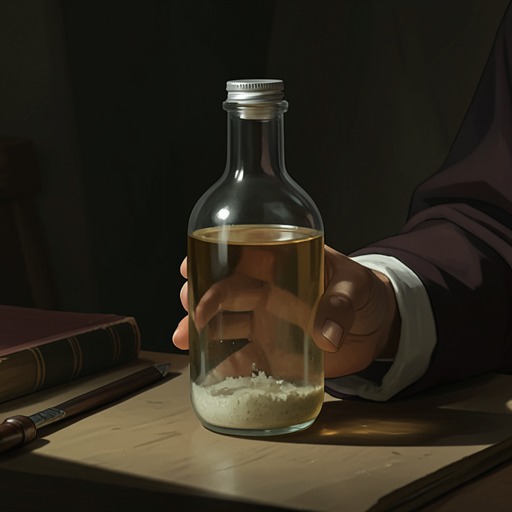
Poirot explains that bromide powders could make strychnine separate from a mixture and settle as crystals. If the bottle was not shaken, the poison accumulated in the sediment; the last dose could then contain nearly all of it. The plot was meant to kill Emily on Monday evening, when her bell wire had been cut and Cynthia was away, leaving Emily isolated in the right wing. Emily’s failure to take her medicine that evening, followed by her absence from home at lunch the next day, delayed the fatal dose by twenty-four hours. That delay, rather than frustrating the investigation, preserves the final proof Poirot needs.
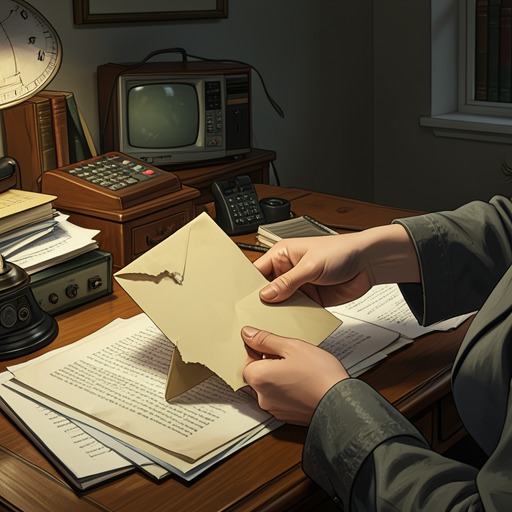
The decisive evidence is a letter addressed to Evelyn. Its writer says the plan will happen that night rather than the previous night, celebrates Evelyn’s idea about bromides, and anticipates that the crime cannot be traced back to him. Poirot identifies the handwriting as Alfred’s. Alfred reacts violently to the exposure, but Poirot quickly restrains him and presents him as the murderer. The letter turns the bromide mechanism from a technical possibility into evidence of an intentional partnership.
Knowledge, Deception, and Narrative Role
Poirot later explains that he suspected Alfred’s importance from the beginning because Emily’s husband stood to benefit most from her death. But suspicion did not make the evidence simple: Poirot initially lacked a clear account of how the crime had been committed, and the mass of apparent evidence against Alfred made him doubt that Alfred was the killer. The story’s misdirection depends on that distinction. The chemist’s testimony, the apparent inheritance motive, and Alfred’s conspicuous presence all invite a direct accusation, while the alibi and the letter reveal how the evidence has been arranged to point in conflicting directions.
Emily’s destruction of the will and her decision to keep the incriminating letter complete the chain. After discovering her husband’s disloyalty with Evelyn, she recognized that she was in danger, wrote to her solicitor, and destroyed the will she had just made, but the bromide reference did not alert her to the specific method. Alfred later forced the lock of the despatch-case to retrieve the letter; as Poirot observes, the risk of that act demonstrates how important the document was to him. The letter was the one piece of evidence that connected Alfred to the crime, and its survival exposes the murderer whom the rest of the case had made so easy to suspect—and so difficult to prove guilty.