Arrest of Dr. Bauerstein
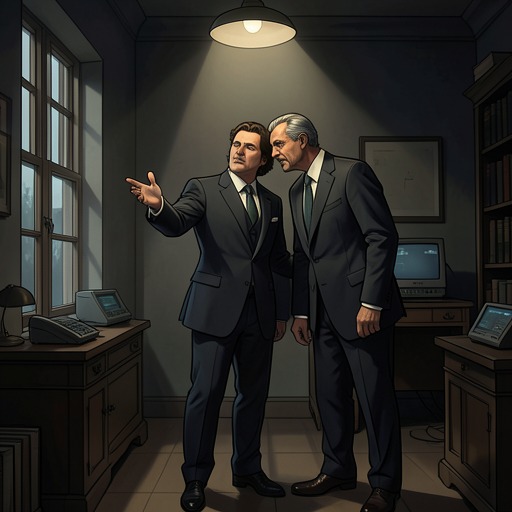
The Mysterious Affair at StylesDr. Bauerstein’s arrest is a misleading turn in the investigation of Emily Inglethorp’s death: Arthur Hastings takes it for a breakthrough in the poisoning case, but Hercule Poirot explains that the police have arrested Bauerstein for espionage. The arrest therefore redirects suspicion without resolving the murder, separating a genuine police action from Hastings’s assumptions about what it means.
Report of the Arrest
The news reaches Hastings through a village report that Bauerstein has been “took by the perlice.” Hastings immediately understands this to mean that the police have arrested him and hurries to find Poirot. The report supplies the fact of custody, but not its grounds; in that gap, Hastings’s expectations about the poisoning investigation rush in to fill the explanation.
When Hastings raises the arrest, Poirot initially says that he does not know what Hastings is talking about. On hearing that the subject is Bauerstein, Poirot acknowledges that the arrest does not surprise him, noting that Styles is only four miles from the coast. That detail makes espionage a plausible separate context for police interest, but Poirot does not initially connect the arrest to the murder case.
Espionage, Not the Murder Charge Hastings Assumes
Hastings treats the arrest as if it confirms his suspicions about Bauerstein’s place in the poisoning case. Poirot rejects that inference and identifies espionage as the reason for the arrest. Hastings’s surprise is a structural reversal: the arrest is real, but its meaning is different from the one he has assigned to it. Bauerstein’s police custody cannot, on this evidence, be treated as proof that he poisoned Emily Inglethorp.
The episode also exposes the limits of Hastings’s confidence as an interpreter. He is quick to convert a fragment of village news into a conclusion, while Poirot distinguishes the fact of an arrest from the charge behind it. The coast’s proximity supports the espionage explanation in their exchange; it does not establish details of the alleged activity, nor does the episode provide a fuller account of the arrest procedure or its outcome.
The Inquest and the Separate Poisoning Evidence
The arrest’s significance is sharpened by the inquest, held on Friday at the Stylites Arms in the village. Poirot and Hastings attend but are not required to give evidence. John Cavendish identifies the body and describes his awakening and the circumstances of his mother’s death. The medical evidence then establishes the cause of death: Emily Inglethorp died of strychnine poisoning. The specialist estimates that she took at least three-quarters of a grain, probably one grain or slightly more, and considers accidental ingestion very unlikely because strychnine is not used for domestic purposes and its sale is restricted.
The proceedings supply a distinct evidentiary track from the espionage arrest. At the inquest, pharmacist Albert Mace acknowledges that he has sold strychnine to an unauthorized person. Later, he identifies the phial presented in court as the one sold to “Mr. Inglethorp,” while admitting that he knew Alfred Inglethorp only by sight and had never spoken to him. Alfred denies purchasing the poison and denies quarrelling with his wife; witnesses support the accuracy of those statements. These details show why the arrest of Bauerstein cannot simply be folded into the case against any one suspect: the poisoning inquiry depends on its own contested testimony and physical evidence.
Evidence, Suspicion, and the Limits of Inference
The later court evidence further demonstrates how evidence can point in different directions without making every suspicion equivalent. Police searching a prisoner’s room find gold-rimmed pince-nez resembling those worn by Alfred Inglethorp, a phial containing strychnine hydrochloride, and, in Emily’s cheque book, nearly new blotting paper whose reversed impression reveals words from a will leaving her possessions to her husband. A charred fragment and a beard found in the attic complete the evidence described by Inspector Japp. These objects belong to the separate evidentiary dispute over Emily’s poisoning and will; they do not explain Bauerstein’s espionage arrest.
The episode’s lasting narrative function is thus a distinction between an event and the story hastily attached to it. Bauerstein really is arrested, but Hastings’s assumption that this must concern the murder is wrong. Poirot’s correction prevents a separate police action from serving as a shortcut to a conclusion about Emily’s death, while the inquest and subsequent proceedings continue to test the poisoning case through testimony, medical findings, and objects whose meanings must be established individually.