Dr. Bauerstein
The Mysterious Affair at StylesDr. Bauerstein is a London specialist in toxicology whose professional authority places him at the center of the inquiry into Emily Inglethorp’s death, while his private espionage makes him a separate source of suspicion. The novel first presents him as a clever doctor and Mary Cavendish’s friend; it later reveals that he is a German-born naturalized British patriot engaged in secret work. His expertise helps establish the cause and timing of the poisoning, but the distinction between what his tests did and did not examine proves crucial to the eventual explanation.
Identity and Introduction
Dr. Bauerstein is staying in the village for a rest cure after a serious nervous breakdown. John Cavendish describes him as a London specialist and one of the greatest living experts on poisons, while Cynthia adds that he is a close friend of Mary. When Arthur Hastings first sees him approaching Styles Court, Mary leaves the group to greet him, a meeting that catches Hastings’s attention and shapes his initial distrust. John’s frown and change of subject leave the nature of the friendship unexplained at this point.
The contrast between Bauerstein’s professional standing and his temporary life in the village makes him conspicuous. Hastings knows him chiefly through reputation and appearance; the villagers’ familiarity with him as a doctor does not reveal the other purpose behind his nighttime movements. The investigation repeatedly tests the gap between a public identity and an interpretation that the available facts seem to invite.
Medical Role in the Investigation
Bauerstein enters Emily’s room during her final crisis and attempts to revive her, issuing instructions to the household. Emily calls out Alfred’s name before becoming motionless. The scene gives Bauerstein direct proximity to the death, but it does not establish that he caused it: he acts as the attending doctor at a point when there is little hope of recovery.
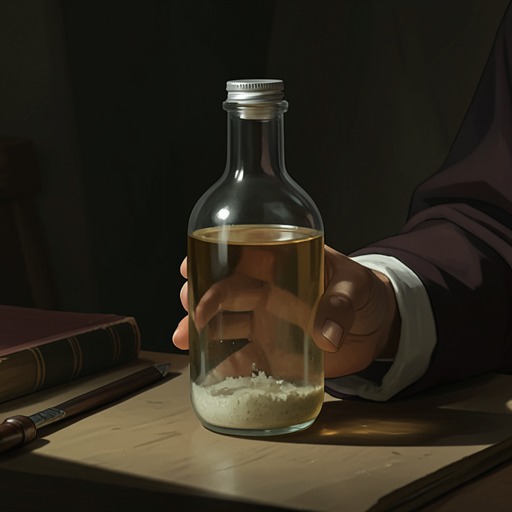
At the inquest, his medical evidence establishes that Emily died of strychnine poisoning. The quantity recovered indicates that she took at least three-quarters of a grain, and probably about one grain or somewhat more. He considers accidental ingestion very unlikely, since strychnine is not a domestic poison and its sale is restricted. His expertise thus turns the household’s fear of foul play into a medically grounded account of the cause of death.
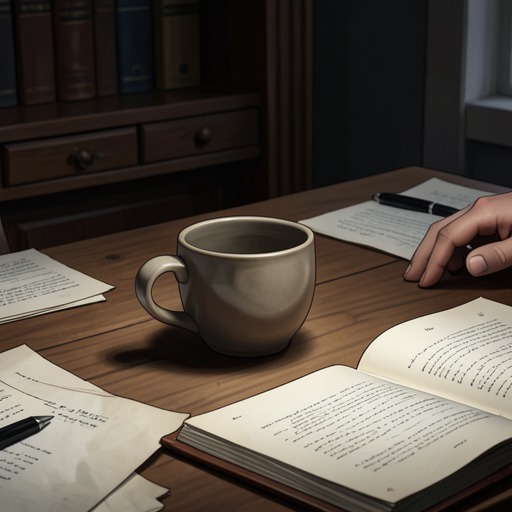
The timing of the symptoms complicates the first theory of how the poison was administered. Bauerstein explains that strychnine usually acts within one to two hours, whereas Emily’s symptoms began in the early hours after she was thought to have taken her after-dinner coffee around eight. That interval points toward a later means of administration. He also rules out the cocoa as a source of strychnine: he sampled what remained in the saucepan and had it tested, with none detected.
That negative result is accurate but incomplete. In the final reconstruction, Poirot distinguishes Bauerstein’s test for strychnine from his own analysis of the cocoa for a narcotic. Bauerstein’s analyst had been asked only whether strychnine was present, not whether a sedative was present. The difference between the questions matters: a test can correctly exclude one substance without establishing that a sample contains nothing relevant to the case.
Suspicion and the Spy Revelation
Bauerstein’s friendship with Mary and his expertise in poisons make him an easy focus for suspicion, while his presence at Emily’s death gives the suspicion a dramatic point of contact. Poirot also challenges the assumption that Alfred’s absence from the house necessarily indicates guilt: if Alfred had known a poisoning was to occur that night, Poirot argues, he would have arranged to be away. The conspicuousness of one suspect’s circumstances is not, by itself, proof of the crime.
Bauerstein is later arrested, but Poirot tells Hastings that the arrest does not surprise him because Styles is only four miles from the coast. Hastings gradually grasps the separate explanation: Bauerstein is a spy. Poirot explains that Bauerstein was born in Germany, practiced in Britain for so long that people regarded him as English, and was naturalized about fifteen years earlier. He is not, in Poirot’s account, a traitor to Britain; he is a patriot who risks losing much through his secret work. The revelation explains why a celebrated doctor might walk about at night fully dressed, but it does not make him Emily’s murderer.
Consequences and Narrative Significance
Bauerstein’s dual role sustains uncertainty without collapsing medical evidence, personal suspicion, and espionage into one explanation. He supplies authoritative evidence about the poison, yet his tests leave an important question unanswered because they were limited to detecting strychnine. Poirot’s later account locates the fatal dose in Emily’s medicine: strychnine prescribed by Dr. Wilkins had settled into the mixture, and bromide powders could precipitate it so that the final dose carried nearly all of it. The cocoa, though connected with a narcotic, was not the source of the strychnine.
The distinction between the two investigations gives Bauerstein’s characterization its lasting function. His expertise helps identify the poison and constrain the likely timing, while the secret that accounts for his arrest belongs to wartime espionage rather than the household murder. He is both an authoritative witness and a misleading apparent suspect: the same public reputation that makes his testimony important also magnifies the suspicion surrounding him, until Poirot separates what the evidence proves from what it merely seems to suggest.