Emily Inglethorp
The Mysterious Affair at StylesEmily Inglethorp is the formidable, wealthy matriarch of Styles Court, a benefactor whose care for her stepsons complicates the financial suspicions surrounding her death. Her household authority and her decisions about marriage, property, and inheritance make her both the emotional center of the family and a pivotal figure in the mystery: a new will appears to redirect her fortune, but its destruction and the legal effect of her remarriage overturn the first assumptions about who stood to gain.
Identity and Background
Before her marriage to Mr. Cavendish, Emily was remembered as a handsome, energetic woman with an autocratic manner and a taste for charitable and social activity. She enjoyed organizing bazaars and assuming the role of a public benefactress, and she possessed a considerable fortune of her own. That combination of social generosity and private authority defines the position she occupies at Styles: she gives freely, but also expects others to fit themselves around her plans.
Mr. Cavendish had purchased Styles Court early in their married life. On his death, he left the estate to Emily for her lifetime and gave her the larger part of his income, an arrangement that disadvantaged his two sons. Yet the financial imbalance did not translate into a cold relationship: the sons were so young when their father remarried that they grew up thinking of Emily as their own mother, and she was consistently generous to them. Her support helped make the estate a family home, while also leaving her with substantial influence over its residents.
By the time of the events at Styles, Emily had married again, becoming Emily Inglethorp. She introduced her new husband, Alfred Inglethorp, to Arthur Hastings as her husband and greeted Hastings warmly after many years apart. The formality of his introduction sits beside the familiar, affectionate way she addresses him, underscoring how closely her private household and public standing are joined.
Property, Wills, and Family Interests
Emily's financial arrangements are central to the competing accounts of motive. Under her late husband's will, John Cavendish inherited the property, while Lawrence Cavendish was due to receive a considerable sum when Emily died. Her own will, dated the previous August, left her entire fortune to John after legacies to servants. The stated rationale was that John would have to maintain Styles; this was presented as a fair distribution rather than a slight against Lawrence.
That will did not remain operative after Emily remarried. In the legal account discussed at the inquest, marriage automatically revoked it, a point confirmed by Mr. Wells. The rule changes the apparent inheritance stakes: although the old document named John as beneficiary, it could not govern Emily's estate after her marriage to Alfred. The distinction between what a will said and whether it remained valid becomes a source of both genuine legal consequence and deliberate misdirection.
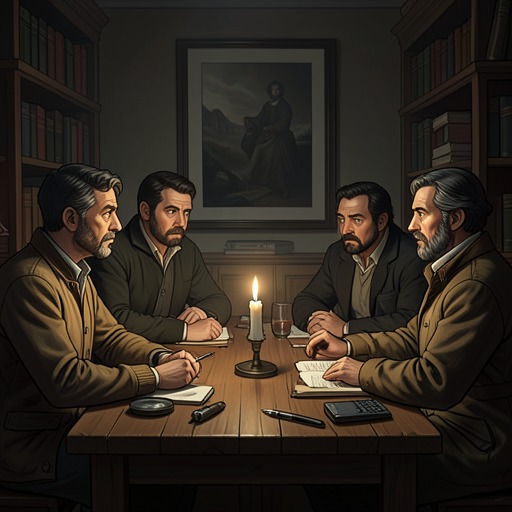
On July 17, following a quarrel with John, Emily made another will in her husband's favour. She summoned the two gardeners, had them sign at the bottom of a long paper beneath her own signature, and covered the text above it with blotting paper so they could not see what it contained. The document was later found destroyed in the grate of her bedroom. At the trial, John's defence argued that, as a former barrister, he knew the earlier will in his favour had already been revoked by Emily's remarriage. The prosecution's interpretation of the destroyed document as evidence of a financial motive therefore depended on a false picture of both the law and John's knowledge of it.
Household Authority and Relationships
Emily's relationship with the Cavendish brothers combines maternal closeness with the unequal power created by money. She had supported John and his wife, Mary, at Styles, and the prosecution later emphasized that her care had made their life there comfortable. But Emily's generosity did not make her a passive benefactor: she controlled the purse strings and liked to make her own plans. That practical authority shaped the brothers' circumstances even when they were adults.
Her relationship with John becomes newly tense in the hours before her death. At four o'clock on July 17, she quarreled with him and threatened to expose something to his wife. Later, she spoke to Dorcas in a different state of mind, distressed by the prospect of scandal between husband and wife. Poirot interpreted the shift as evidence that the later scandal concerned Emily herself, not the earlier dispute with John. He reconstructed a sequence in which Emily first made the will in Alfred's favour, then found a paper in her husband's locked desk and became anxious to destroy the document she had just signed. The paper's contents and Emily's precise understanding of it are presented through Poirot's reconstruction rather than as a fully witnessed scene.
The prosecution also portrayed Emily as a fond and trusting stepmother who had supported John since boyhood, while accusing him of killing the woman who had been more than a mother to him. This account makes her kindness part of the apparent motive: the prosecution used the contrast between her generosity and the alleged crime to characterize John's conduct. The defence, in turn, challenged the case's treatment of the quarrel and the will, showing how Emily's family relationships could be used to support sharply different interpretations.
Death and the Poisoning Evidence
The post-mortem established that Emily died from strychnine poisoning. The quantity recovered indicated that she had taken at least three-quarters of a grain and probably about one grain or slightly more. The medical evidence made accidental ingestion seem unlikely, since strychnine was not an ordinary household substance and its sale was restricted.
The timing of her symptoms complicated the first theories about how the poison was administered. Strychnine ordinarily acted within one to two hours, while Emily's symptoms began in the early hours of the morning. Her after-dinner coffee, brought to her by Alfred, was considered as a possible vehicle, but the interval between the coffee and the symptoms pointed toward a much later dose. Testing also found no strychnine in the cocoa she usually drank during the night. These negative results narrowed the question without immediately identifying the source.
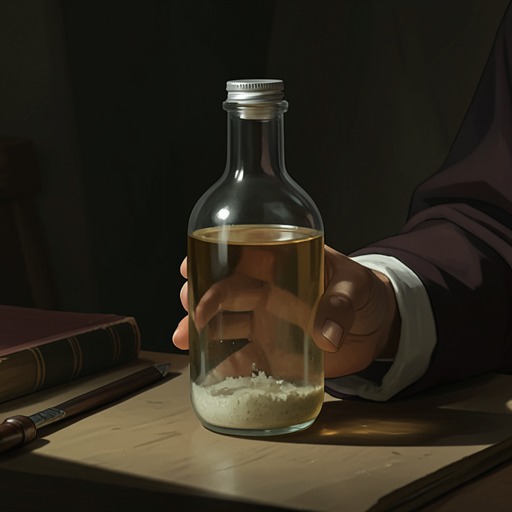
Poirot's reconstruction finally connected the fatal dose to Emily's tonic. The medicine already contained strychnine prescribed by Dr. Wilkins. A reference book at the Red Cross Hospital at Tadminster described how a mixture could deposit most of its strychnine as insoluble bromide crystals; if bromide powders were added to the bottle, the poison would settle and could be concentrated in the final dose. The empty bromide-powder box found in Emily's bedroom supplied a material clue to that process. According to Poirot, the person who usually poured out her medicine carefully avoided shaking the bottle, leaving the sediment undisturbed until the last dose carried nearly all the poison.
Other confusing signs were eventually separated from the cause of death. Poirot found a fragment of green material caught in the bolt of the communicating door between Emily's room and Cynthia's adjoining room, and identified it as part of a gardening armlet. He also established that the cocoa had been tested for the presence of strychnine, but not for a narcotic. Further analysis showed that Mary had given Emily and Cynthia a safe narcotic; the episode explained the missing coffee cup and Mary's panic, but did not explain Emily's fatal poisoning. The distinction between a suspicious object or substance and the actual cause of death is central to the unraveling of the case.
The Will's Destruction and the Case's Reversal
The fire in Emily's bedroom first appeared to support the idea that someone had destroyed her new will. Poirot instead concluded that Emily herself had burned it. On one of the hottest days of the year, with the temperature at 80 degrees in the shade, she had ordered a fire. War economies at Styles meant that waste paper was not thrown away, leaving her without an ordinary way to destroy a thick document. The unusual fire, the charred remains in the grate, and the timing of the day's events together led Poirot to treat the burning as purposeful rather than incidental.
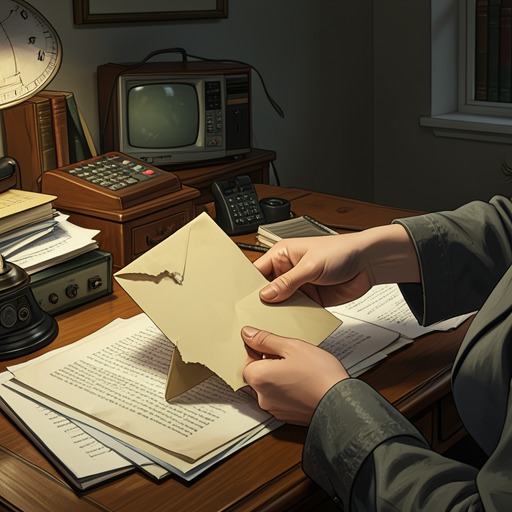
His explanation depends on a change in Emily's intentions. At four o'clock she was angry after the quarrel with John; at four-thirty she made a will for Alfred; by five, she was agitated and spoke of scandal as a dreadful thing. Poirot reasoned that, during that half-hour, Emily had found a paper in Alfred's locked desk that changed her view of the matter. He proposed that she had sought stamps, opened the desk with one of her keys, and discovered a paper never intended for her eyes. The new will and its destruction thus mark opposite impulses in a short span: an effort to provide for her husband, followed by a decision to remove the document.
Emily's death is also tied to a failed earlier plan. The bell wire to her room had been cut on Monday, and Cynthia was away that night, circumstances that would have left Emily isolated if the intended poisoning had occurred then. But Emily forgot her medicine while hurrying to a village entertainment and lunched away from home the next day. The fatal final dose was consequently taken twenty-four hours later than anticipated. In Poirot's account, that delay allowed the evidence to emerge and supplied the last link in the chain; the ordinary disruption of Emily's routine turns the planned concealment into a solvable case.
Emily is therefore more than the victim around whom the household's suspicions gather. Her generosity creates the family obligations invoked at the trial; her control of property gives the wills their stakes; her remarriage changes their legal force; and her changing decisions leave clues in the fire, the papers, and the timing of her medicine. The investigation restores those particulars to their proper order, showing how the assumptions built around her death could be overturned by attending to what she signed, what she burned, and what she took.