First World War
The Mysterious Affair at StylesThe First World War is the surrounding historical condition of the Styles affair, shaping the routines, resources, and public atmosphere in which it takes place. Its presence is registered not only in the distant Front but in the household’s economy, the reduced workforce, charitable duties, and professional service. The novel places domestic life under pressure from a war that is at once far away and materially present.
Wartime setting and the narrator’s return
Arthur Hastings enters the story as a wounded serviceman sent home from the Front. After several months in a convalescent home, he receives a month’s sick leave and, unsure how to spend it, encounters John Cavendish, an acquaintance from his childhood visits to Styles. John invites him to the family home, giving Hastings’s return from military service the immediate narrative consequence of bringing him into the household where the case will unfold.
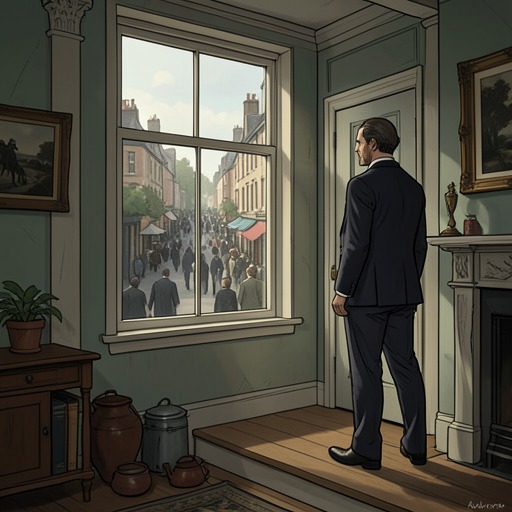
The journey to Styles Court makes the distance between wartime and country life visible. Hastings arrives at Styles St. Mary station in early July, and John drives him through the village and across the flat Essex countryside. The landscape seems peaceful beside the war’s continuing course, and Hastings feels as though he has entered another world. The contrast is not an escape from history so much as a difference in setting: the war remains active beyond the green fields, while its effects are already evident in the household waiting there.
Economy, labor, and domestic change
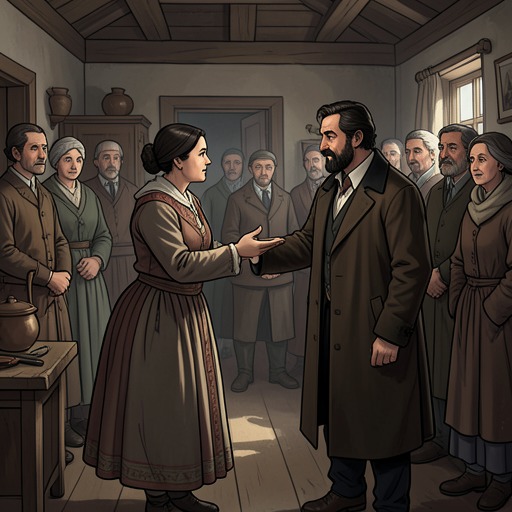
Emily Inglethorp describes the household as a war household and links its routines to the need to set an example of economy. The family has abandoned late dinner, and it saves even waste paper, collecting it in sacks rather than throwing it away. This practice is a concrete measure of wartime thrift; later, it also helps explain why a fire in Emily’s room attracts attention, since ordinary waste paper would not have provided a means to dispose of a substantial document.
War has changed the estate’s staffing as well as its habits. Dorcas recalls that five gardeners were employed before the war, when Styles was maintained as a gentleman’s place; now there are only three: the older gardener Manning, the younger William, and a woman gardener. Her comparison gives economic change a local, visible scale. The altered workforce marks the loss of an older level of domestic provision, while the continued work of the gardeners keeps the estate functioning under reduced conditions.
Public and charitable service
The war also structures the household’s public obligations. On July 16, the day before Emily’s death, the family is occupied with a charity bazaar and an evening entertainment connected with the same cause. Emily is due to recite a war poem, and the household spends the morning arranging and decorating the village hall before resting in the garden. The sequence places her public performance and domestic life within the same day, linking charitable activity to the ordinary timetable of the estate.
Hospital work provides another connection between wartime service and the case’s setting. Evelyn Howard writes to Hastings after leaving Styles that she is working as a nurse at the large hospital in Middlingham. Cynthia Murdoch works in the dispensary at the hospital in Tadminster, where she and a fellow dispenser handle medicines in a professional setting. During a visit, Hastings notices the many bottles in the small dispensary room; Cynthia responds that visitors habitually remark on them. The hospital and dispensary bring specialized medical work into the novel’s network of places and people, although the evidence does not make every medical detail a direct consequence of the war.
War and the case’s public life
The war’s public tempo affects how the murder is received. In the period after the tragedy, the newspapers seize on the case during what Hastings calls a slack time, when the war is momentarily inactive. Headlines, biographies of the household, and persistent innuendo turn the murder into a fashionable crime story. Reporters besiege Styles, wait in the village and grounds with cameras, and seek opportunities to photograph members of the family; meanwhile, Scotland Yard officers come and go to examine and question them. The temporary lull does not end the war, but it helps explain why public attention settles so intensely on the case.
The court proceedings continue this overlap between war and domestic crisis. By September, Hastings has a job at the War Office and can see John and Mary Cavendish regularly in London. The setting of his new employment contrasts with the strain of the case: John has been committed for trial, and the prosecution presents the killing as a deliberate poisoning by a financially troubled stepson. The trial’s allegations place household money, family dependence, and wartime-era public attention in the foreground, while the resolution of the case remains a legal and personal matter rather than a military one.
Significance in the novel
The war gives the Styles story its historical texture through specific pressures rather than through battlefield scenes. Hastings’s return from the Front brings him into the household; scarcity reshapes meals, paper disposal, and estate labor; charitable work and hospital service occupy the characters’ days; and the pause in wartime news helps the press magnify the murder. These strands show how a large public conflict enters private life through routine, work, resources, and attention.
That material setting also affects the mystery’s evidence. The household’s paper-saving practice makes the disposal of a thick document unusual enough to matter, while the village and hospital contexts place medicine within everyday social life. The war is therefore both a backdrop and a set of conditions: it alters what the household does, what it can retain, and how the public turns its private tragedy into a spectacle.