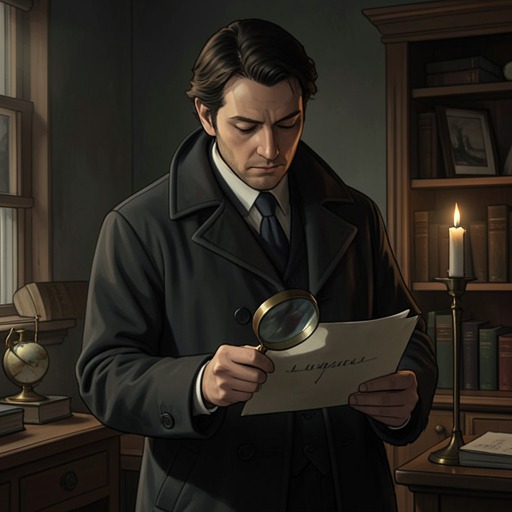
Forced entry into Emily Inglethorp’s despatch-case
The Mysterious Affair at StylesThe forced entry into Emily Inglethorp’s despatch-case is a pivotal act of attempted evidence destruction: an intruder breaks into the locked room and forces open the case, apparently to remove a clue that could connect the murderer with Emily’s death. The breach transforms a container for family papers into evidence in its own right, and makes the identity of the missing document a new problem for Hercule Poirot and the household.
The papers and their legal stakes
The despatch-case matters because Emily kept most of her important papers in it. Before the break-in is discovered, John Cavendish explains that, under Emily’s will from August of the previous year, she left her entire fortune to him after making smaller legacies to servants. He regards the arrangement as fair because his father’s will had already provided Lawrence Cavendish with a considerable sum on Emily’s death, while John, as the heir to the property, would have to maintain Styles Court. This earlier will supplies a visible financial context for the family’s competing interests, but it is not the operative settlement: Poirot points out that English law automatically revoked it when Emily remarried, and the lawyer confirms that it is null and void.
A later document complicates that history. Emily summoned two household workers, who signed their names at the bottom of a long paper beneath her signature; blotting paper covered the writing above. Their testimony establishes that a new document was executed, but not what it said. The distinction between a witnessed signature and unread contents leaves its purpose uncertain, while the old will’s automatic revocation means that the timing and terms of any later will could have serious consequences for inheritance.
At John’s trial, the prosecution connects those legal and financial facts to its accusation. It presents Emily as a generous stepmother who had supported John since boyhood and argues that her fortune and care made his alleged betrayal especially calculated. The Crown also says Emily made a new will immediately after a quarrel with John on July 17, and that the will was found destroyed in her bedroom grate the next morning. It contends that the new document favored Alfred Inglethorp, while acknowledging that Emily had already made a will in Alfred’s favor before their marriage. The prosecution speculates that she may have forgotten the earlier document or thought it revoked by marriage. These courtroom claims frame the wills as evidence of motive, but the legal status of the earlier instrument and the identity of the person who destroyed the later one remain crucial distinctions.
Discovery of the breach
The break-in comes to light when John unlocks the room and the group enters with the lawyer. The lawyer goes straight to the desk, while John identifies the despatch-case as the place where Emily kept important papers. Poirot produces the small bunch of keys and says he had locked the case that morning as a precaution. John then sees that it is not locked. His observation is followed by Poirot’s astonishment: he has both keys in his pocket, yet the case is open. John lifts the lid, and Poirot concludes that the lock has been forced.
The sequence gives the breach its force. The case was supposed to be secured; Poirot still possesses its keys; nevertheless, it has been opened. The locked room does not establish that no one could enter, since Poirot immediately observes that the door has an ordinary lock and that another door key in the passage would probably fit it. The apparent security of the room is therefore not proof of an impossible entry. Instead, the forced lock shows that someone accepted the risk of leaving a physical sign of access.
Poirot’s reconstruction
Poirot treats the damaged lock not as an isolated irregularity but as evidence of a deliberate purpose. He reasons that something in the case, perhaps slight in itself but sufficient to connect the murderer with the crime, had to be destroyed before it could be found and understood. The intruder, finding the case locked, forced it and thereby betrayed their presence. In Poirot’s reconstruction, the danger of discovery was worth accepting only because the contents were important.
The reasoning narrows the event without identifying the missing item or the intruder. Poirot says that the evidence was probably a document, and considers whether it could have been the scrap of paper Dorcas had seen in Emily’s hand the previous afternoon. That possibility links the damaged case to an earlier, still unexplained piece of paper, but does not settle whether the two are the same. The case’s contents are unknown, and the evidence does not yet reveal exactly what was removed or whether it was destroyed.
Alarm, error, and renewed pursuit
The discovery unsettles the investigators. Although Poirot appears outwardly calm, his hands shake as he mechanically straightens the spill vases on the mantelpiece. He then turns his attention to his own decision to leave the case in the room, condemning himself for failing to take it away. His self-reproach marks a practical reversal: the precaution of locking the case has not protected it, and his earlier confidence in that measure now looks inadequate.
Poirot does not treat the loss as certainly final. He asks whether the suspected document has truly been destroyed and insists that no possibility should be left unexplored. He rushes from the room, leaving the others behind, and is out of sight by the time the narrator reaches the top of the stairs. Mary Cavendish stands at the stair’s branching point, looking down the hall in the direction he has gone. The episode therefore ends not with a solution but with renewed pursuit: the damaged lock has made the missing evidence urgent, and Poirot leaves to search for a remaining chance of recovering it.
The trial’s counter-account
At John’s trial, his defense directly contests the prosecution’s account of motive and access to the evidence. Sir Ernest Heavywether says John knew that Emily’s earlier will in his favor had been automatically revoked by her remarriage. He promises to call evidence identifying the person who destroyed the new will, suggesting that the answer could open a different view of the case. This assertion separates legal knowledge from the Crown’s implication that John might have relied on the old settlement or stood to gain from the new one.
The defense also offers an alternative explanation for the quarrel evidence and for the accusation that John impersonated Alfred to buy strychnine. It says John had been told about a violent quarrel between Emily and Alfred and had no reason to think anyone could mistake his voice for Alfred’s; he therefore supposed Emily had quarrelled twice. It places him at Marston’s Spinney on July 16, summoned by an anonymous blackmailing note, rather than at the village chemist’s shop. Finally, Sir Ernest argues that the evidence against Lawrence is at least as strong as that against John. These are courtroom arguments rather than a neutral account of the forced entry, but they underline why the missing will and the identity of its destroyer matter: in a case built around misleading appearances, the papers in Emily’s case could alter the meaning of both motive and opportunity.