John Cavendish
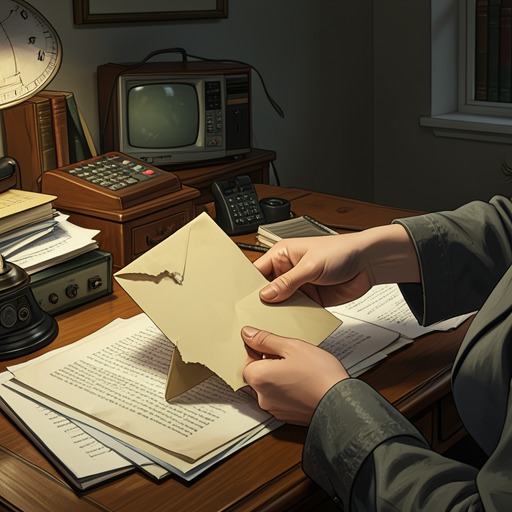
The Mysterious Affair at StylesJohn Cavendish is the elder stepson of Emily Inglethorp, the resident of Styles Court whose murder becomes the novel’s central case. A former barrister turned country squire, he appears both as a beneficiary of the household’s complicated finances and as the prisoner accused of poisoning Emily; the legal changes to her wills make that accusation plausible, but Poirot’s investigation exposes how misleading the apparent case against him is. His fate is shaped not only by evidence and inheritance law but also by Mary Cavendish’s loyalty and Poirot’s decision to delay clearing him.
Identity and Background
John is fifteen years older than Arthur Hastings and had known him since boyhood, when Hastings sometimes stayed at Styles, the Cavendish family home in Essex. The two had not been close in later years, but their chance meeting reconnects them: Hastings, invalided home from the Front and uncertain how to spend his sick leave, accepts John’s invitation to visit. That invitation brings the narrator into the household shortly before its domestic tensions become part of a murder investigation.
John had practiced as a barrister before settling into what the narrative calls the more congenial life of a country squire. He had married Mary two years before Hastings’s visit and brought her to live at Styles. The estate and its income, however, remained bound to decisions made by his father and stepmother. John’s father had left Emily the property for her lifetime and the larger part of his income, an arrangement described as unfair to his two sons. Emily had nevertheless been generous to them, and they had been so young when she married their father that they had regarded her as their mother.
Household and Financial Position
John’s position at Styles combines social standing with dependence. Hastings suspects that John would have preferred Emily to increase his allowance, which might have enabled him and Mary to establish a home of their own. Emily, who liked to make her own plans, retained practical power through control of the purse strings. The household arrangement therefore placed John in a conspicuous but financially constrained position: he lived at the family estate, yet its resources and future were not simply his to command.
The inheritance evidence initially seems to resolve that uncertainty in John’s favor. Emily’s will, dated August of the previous year, left her entire fortune to him after legacies to servants. John explained that his father’s will already provided that he would inherit the property, while Lawrence would receive a considerable sum when Emily died. In John’s view, leaving the money to him was equitable because he would have to maintain Styles. This arrangement made him the apparent principal beneficiary, although its legal force depended on what had happened to Emily’s later wills and on the effect of her remarriage.
Poirot identified the legal complication: under the English law discussed in the inquiry, Emily’s remarriage automatically revoked her previous will. John’s former professional training becomes important to the defense’s account of the case, which says he knew that the earlier will in his favor had been revoked. The existence of a document naming John as beneficiary could therefore not, by itself, establish that he expected to inherit under it. The distinction between a will’s apparent contents and its legal validity becomes one of the case’s central sources of confusion.
Accusation and Trial
Two months after the investigation’s dramatic turn in John’s favor, he was tried for the murder of his stepmother. The prosecution portrayed the killing as deliberate poisoning by a stepson whom Emily had supported and treated with extraordinary generosity. It proposed to show that John was financially desperate, had been involved with Mrs. Raikes, and had quarrelled with Emily after she confronted him about that relationship on the afternoon before her death. In this account, he had bought strychnine at the village chemist’s shop in disguise, hoping to direct suspicion toward Alfred Inglethorp, and had later handed Emily her coffee.
The prosecution also made the destroyed will part of its theory. It argued that Emily had made a fresh will in Alfred’s favor after her quarrel with John, that John later entered her room and destroyed it, and that he believed this would leave the older will in his own favor effective. That argument rested on a mistaken account of John’s legal knowledge. The defense maintained that, as a former barrister, he knew Emily’s remarriage had already revoked the will that named him. It proposed to establish who had actually destroyed the later document, suggesting that the answer would alter the apparent meaning of the evidence.
The defense also challenged the prosecution’s account of the alleged disguise and the chemist’s purchase. It said that on July 16, when the prosecution claimed John had impersonated Alfred at the village shop, John had instead gone to Marston’s Spinney in response to an anonymous, blackmailing note threatening disclosure to Mary. He waited there for half an hour without meeting anyone and had no witness to confirm the journey, though he had kept the note as evidence. The defense further argued that the case against Lawrence was at least as strong as the case against John. These competing accounts showed how the same household circumstances and uncertain evidence could be assembled into sharply different explanations.
Mary, Poirot, and the Outcome
Mary’s concealed movements supplied a fact that helped Poirot reassess the case. She acknowledged that she had not arrived with the others when they gathered outside Emily’s room, and that no one had seen her come from the other wing. Mary explained that she had withheld this information because she did not believe it bore on whether John was guilty. Poirot replied that it had cleared away misconceptions and allowed him to interpret other facts properly. The revelation connects Mary’s private actions to the investigation without making her original silence evidence of John’s guilt.
Mary’s support for John extended beyond the courtroom. During the weeks before the trial she took his side passionately, rejected the idea that he was guilty, and fought for him. Poirot later told Hastings that he could have cleared John before the trial, though doing so might have prevented the real criminals from being convicted. He had kept them uncertain about his position until the last moment. In explaining his decision, he said he had chosen in favor of “a woman's happiness”: the ordeal, he believed, was what had brought the proud couple together again.
John’s narrative role turns on the distance between apparent motive and established guilt. His financial dependence and the will that once favored him give the accusation its shape; the law governing remarriage undermines the prosecution’s account of what he believed; and Mary’s testimony helps Poirot see the surrounding evidence differently. The case places a husband’s freedom and a marriage’s recovery beside the demand to expose the actual murderers. John is brought to trial, but Poirot’s intervention prevents the accusation from becoming a conviction and makes his eventual release part of the emotional resolution as well as the solution to the mystery.