Lawrence Cavendish
The Mysterious Affair at StylesLawrence Cavendish, the younger son of the Cavendish family at Styles Court, is a former doctor whose medical education makes him an object of suspicion in the inquiry into Emily Inglethorp’s death. His story turns on the gap between a clue’s incriminating appearance and its actual meaning: he did visit the hospital’s poison cupboard, but Poirot explains that his fingerprints reflect curiosity, not proof that he poisoned Emily. Lawrence also tries to account for the illness by suggesting that Emily’s tonic might have been responsible, and later evidence identifies his effort to shield Cynthia Murdoch as an expression of his love for her.
Background and Place in the Household
Lawrence is the younger of the two sons of John Cavendish’s father, who married Emily when he was a widower. The boys were so young at the time of their father’s remarriage that they regarded Emily as their mother, and she treated them with generosity despite the financial arrangement that left her in control of Styles Court and much of the family income. Lawrence’s position in the household is therefore shaped by both genuine familial affection and dependence on his stepmother’s resources.
As a young man, Lawrence was delicate. He qualified as a doctor but soon abandoned medicine, remaining at home while pursuing literary ambitions. His verses never achieved marked success. That history gives his former medical training a double significance: it is a concrete part of his background, but it also becomes a potentially incriminating fact once the investigation focuses on poison and Emily’s medicines.
The family’s inheritance arrangements complicate any simple account of Lawrence’s financial position. Under his father’s will, John inherited the property, while Lawrence was to receive a considerable sum when Emily died. Emily’s will of the previous August left her entire fortune to John, whom she understood would need to maintain Styles. Poirot points out that her remarriage automatically revoked that will under English law. The change matters to the family’s finances and to the inquiry’s competing theories, but it does not by itself establish Lawrence’s motives or guilt.
The Night of the Death and the Medical Clue
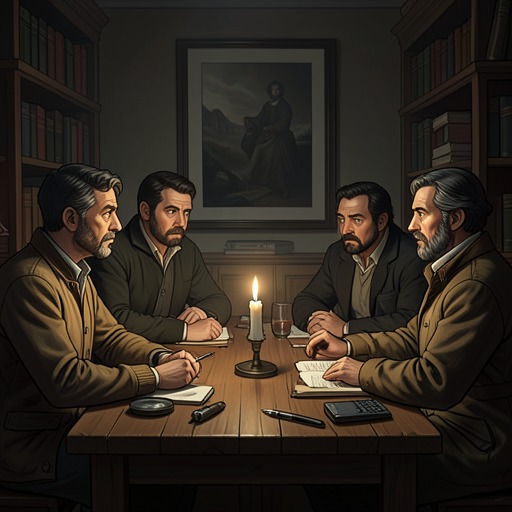
When Emily became gravely ill during the night, Lawrence went to wake Arthur Hastings. He carried a candle, and his agitated expression made clear that something was wrong; he told Hastings that the family feared his mother was having a fit and that she had locked herself in. His response places him among those confronting the emergency, not outside it as a detached observer.
The medical evidence established that Emily had died from strychnine poisoning, with an estimated dose of at least three-quarters of a grain and probably one grain or slightly more. The timing complicated the first suspicion that the poison had been given in her after-dinner coffee: strychnine would usually produce symptoms within one to two hours, whereas Emily’s symptoms appeared much later. The cocoa she habitually drank in the middle of the night was also tested and found to contain no strychnine.
Against this background, Poirot draws attention to Lawrence’s suggestion that Emily might have been accidentally poisoned by the tonic she was taking. The doctors ridiculed the idea, but Hastings initially regarded it as a natural suggestion from a layman. Poirot corrects him: Lawrence was not a layman, since he had studied medicine and taken his degree. His expertise thus makes the suggestion more notable, though the exchange alone does not prove that Lawrence knew how the poisoning occurred.
Suspicion, Fingerprints, and the Dispensary
Lawrence’s presence at the Red Cross Hospital dispensary gives the investigation a further, apparently concrete clue. During John’s trial, the defense asks whether Lawrence had visited the dispensary with another guest on Tuesday, July 17, and whether he had been alone briefly. Poirot later identifies an enlarged fingerprint photograph as showing marks left on a tiny bottle in the top poison cupboard there. Hastings is startled because he believes Lawrence never went near the cupboard on the day they visited; Poirot answers that he did.
The fingerprint evidence is not presented as proof of the poisoning. Poirot offers a specific alternative explanation: Lawrence had studied medicine and had enough time to satisfy a natural curiosity. This interpretation makes the same mark carry a different weight. The bottle and cupboard are real connections to poison, but Lawrence’s medical background also supplies a plausible reason for examining them that does not require him to have taken poison or harmed Emily.
The wider case had already shown how apparently decisive evidence could be manufactured to point toward Alfred Inglethorp. Poirot warns that evidence which is too neat may have been deliberately arranged, and that excessive certainty can defeat the person who constructed it. Lawrence’s fingerprints form another interpretive test: a clue must be assessed in its circumstances, rather than treated as self-explanatory merely because it places a suspect near a poison bottle.
Inheritance, Accusation, and Defense
At the inquest, the family’s financial arrangements surfaced as a possible source of motive. Emily’s will of the previous August left her fortune to John, while Lawrence’s expected inheritance under their father’s will was distinct from that bequest. The evidence also established that Emily’s remarriage had revoked her former will. This legal change is important to understanding the household’s competing interests, but the inquiry’s financial details do not settle which family member caused her death.
At John’s trial, the prosecution presents the brothers’ family history as a stark accusation against John: Emily had been a generous benefactress to him and his wife, and he is charged with deliberately poisoning the woman who had treated him as a son. The defense counters that John knew the earlier will in his favor had been revoked by Emily’s remarriage and says it will show who destroyed the new will. It also draws the jury’s attention to evidence against Lawrence, arguing that the case against the younger brother is at least as strong. Lawrence therefore appears in the courtroom narrative as an alternative suspect, not as a convicted or established culprit.
Relationship with Cynthia and Narrative Significance
The evidence finally gives Lawrence’s connection to Cynthia Murdoch a personal dimension. When Hastings sees him at Styles, Lawrence is walking in the same direction as John and Cynthia after Emily has called Cynthia back to the house. Lawrence’s face appears mastered by violent emotion, but Hastings does not know what has caused it. The scene establishes an unsettled impression rather than explaining it at once.
Later, Poirot interprets Lawrence’s conduct as an effort to shield Cynthia and states that Lawrence is in love with her. Hastings rejects the conclusion, saying that he knows Lawrence positively dislikes her. This disagreement makes Lawrence’s character legible through conflicting readings: outward behavior and Hastings’s confidence appear to contradict Poirot’s explanation, while the eventual account of Lawrence’s protection of Cynthia gives that behavior a different emotional context.
Lawrence’s role in the mystery depends on the tension between expertise and innocence. His abandoned medical career makes his comments about the tonic significant; his hospital visit leaves fingerprints in a poison cupboard; and the trial explicitly presents him as a plausible alternative suspect. Yet Poirot’s explanations distinguish circumstantial association from a demonstrated act, and connect Lawrence’s protective behavior to love for Cynthia. The novel uses him to show why a clue, however specific, must be interpreted alongside a person’s history, the circumstances of the evidence, and the possibility that an apparently suspicious action had another cause.