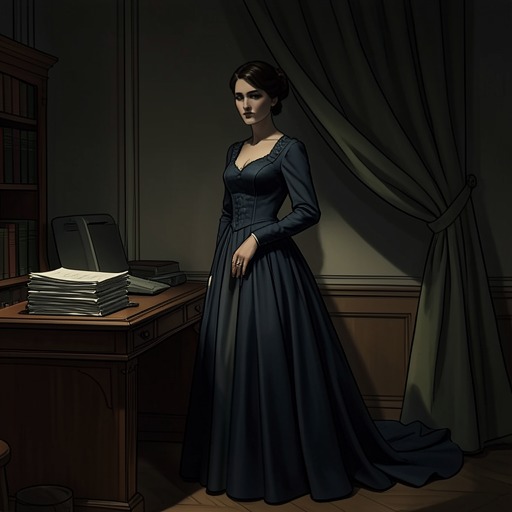
Marriage revocation of a will
The Mysterious Affair at StylesMarriage revocation of a will is the rule, stated in the novel as part of English law, that Emily Inglethorp’s remarriage automatically revoked her earlier will. Its importance lies in the gap between what a will appeared to provide and what remained legally effective: the rule altered the inheritance picture, while the discovery of a later will and its destruction made that legal distinction central to competing accounts of the crime.
The Earlier Will and Its Apparent Distribution
At the inquest, Mr. Wells explained that Emily’s will, dated August of the previous year, made various small legacies to servants and left her entire fortune to her elder stepson, John Cavendish. He described the arrangement as fair because John had inherited the property under his father’s will and would have to maintain Styles, while Lawrence Cavendish was due to receive a considerable sum when his stepmother died. Thus, the old will’s apparent allocation was connected not only to family preference but also to the economic burden of keeping the estate.
Poirot then asked whether English law automatically revoked that will when Emily remarried. Mr. Wells acknowledged the point and said the document was null and void. The exchange distinguishes the will’s contents from its operative status: the instrument that appeared to settle Emily’s fortune in John’s favour no longer did so after her marriage to Alfred Inglethorp.
The Later Will and the Murder Inquiry
A later will entered the story through a different set of circumstances. After a quarrel on July 17, Emily called two gardeners into her room and had them sign their names at the bottom of a long paper beneath her signature. Blotting paper covered the writing above it, so the witnesses could not say what the document contained. Their evidence established the act of signing, but not the will’s beneficiary or terms.
The prosecution later argued that the new will had been drawn up in favour of Alfred and destroyed in Emily’s bedroom grate the following morning. A fresh piece of blotting paper found in her cheque book, when reversed at a mirror, showed words indicating that she left everything she possessed to her beloved husband. Together with a charred fragment recovered from the grate, this evidence placed the destroyed document in the inheritance dispute and appeared to support the prosecution’s account of a new provision for Alfred.
That evidence did not settle who had destroyed the document or why. The defence pointed out that John, who had formerly practised at the Bar, knew the earlier will had already been automatically revoked by Emily’s remarriage. This challenged the suggestion that he needed to destroy the later will to remove a valid testamentary gift to himself: the rule meant that the old instrument could not simply be treated as still governing the estate.
Legal Knowledge and the Competing Case
The rule therefore mattered both as law and as a fact about what the characters knew. In the prosecution’s account, Emily’s new will followed the quarrel with John and favoured Alfred, while its destruction helped frame the financial and circumstantial case against John. The defence used John’s legal background to contest that interpretation, arguing that he understood the earlier will’s revocation and would have known it did not preserve his inheritance after Emily’s remarriage.
The novel presents the rule through a conversation at the inquest and later through opposing courtroom arguments, not as an extended legal exposition. Its narrative force comes from the contrast between the clearly stated legal consequence of remarriage and the uncertainty surrounding the later document: the gardeners witnessed signatures without seeing the text, and the surviving traces of the destroyed will identified its apparent beneficiary without, by themselves, resolving the crime. The rule thus clarifies the inheritance stakes while also exposing how legal knowledge could be used to challenge a seemingly straightforward motive.