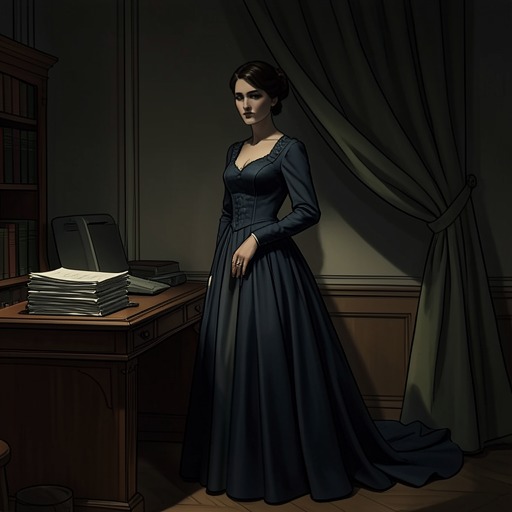
Mr. Wells
The Mysterious Affair at StylesMr. Wells is the family lawyer whose explanations turn the question of inheritance into a crucial part of the investigation into Emily Inglethorp’s death. He identifies John Cavendish as the beneficiary under Emily’s earlier will, confirms that her remarriage had made that will void, and is present when the household’s account of a new will emerges.
Identity and Introduction
Dorcas announces Mr. Wells’s arrival to John Cavendish, and the narrator recognizes him as the lawyer to whom Emily had written the previous night. He is described as a middle-aged man with keen eyes and a lawyer’s characteristic mouth. John introduces him to Hercule Poirot and Arthur Hastings in his study, emphasizing that the conversation is private and that the family still hopes an inquest will not prove necessary. Mr. Wells replies that, without a doctor’s certificate, an inquest is unavoidable.
The Earlier Will and Inheritance
Poirot asks who would inherit Emily’s money if she died. With John’s permission, Mr. Wells explains that her will, dated the previous August, left her entire fortune to her stepson John, apart from smaller legacies to servants. The arrangement had a practical rationale: under their father’s will, John had inherited Styles Court, while Lawrence Cavendish would receive a substantial sum when his stepmother died. Emily’s fortune was therefore intended to help John maintain the estate.
The explanation also distinguishes inheritance of the house from inheritance of Emily’s personal fortune. When Poirot asks whether English law had automatically revoked the earlier will upon Emily’s remarriage, Mr. Wells confirms that it had. The old document could no longer determine who received her estate, despite the apparently settled distribution it had once provided.
The New Will
Mr. Wells’s arrival follows the discovery that Emily had summoned two household workers and asked them to sign a long paper beneath her signature. Blotting paper covered the text, so the witnesses could not say what the document contained. John calls it an extraordinary coincidence that his mother should have made a will on the day she died; Mr. Wells pointedly asks whether he is sure it was a coincidence.
His legal explanation gives that document immediate significance. Since Emily’s previous will had been revoked by her remarriage, the new paper could alter the distribution of her fortune. At John’s trial, the prosecution would argue that the will made after the quarrel with him favored her husband, Alfred Inglethorp, and was found destroyed in the bedroom grate the following morning. The defense, in turn, would maintain that John knew the earlier will was void and would call evidence about who destroyed the new one. These later arguments show how the legal distinction Mr. Wells explains becomes part of the competing interpretations of motive and evidence.
Narrative Role and Significance
Mr. Wells is a brief but consequential figure: he supplies the legal facts against which the family’s assumptions and the later courtroom claims can be measured. His matter-of-fact confirmation that marriage revoked Emily’s earlier will undermines any reading of that document as a current guarantee of inheritance. His dry question about whether the timing of the new will was truly coincidental likewise makes the household’s account newly suspect, without itself resolving who made or destroyed the document.