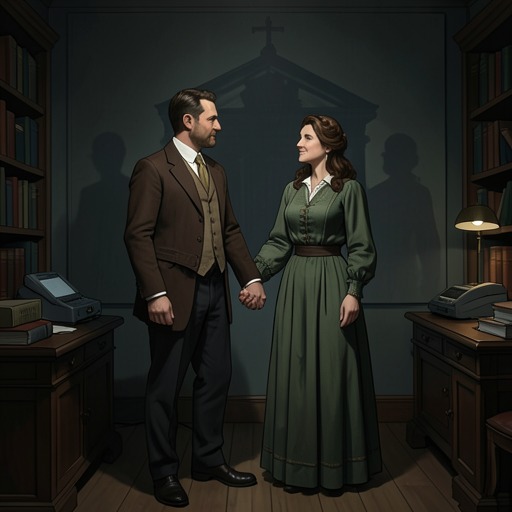
Mrs. Raikes
The Mysterious Affair at StylesMrs. Raikes, a neighbouring farmer’s wife, is a largely offstage figure whose reported association with Alfred Inglethorp shapes suspicion around the murder and helps establish Alfred’s alibi. The same connection appears first as village gossip, then as part of the prosecution’s accusation against John Cavendish, making her a point where apparent evidence and actual inference diverge.
Identity and Introduction
Arthur Hastings sees Mrs. Raikes on a path through the woods bordering Styles Court as she comes through a gate in the opposite direction. He describes her as a pretty young woman of gipsy type; John Cavendish identifies her, then curtly confirms the reference to Miss Howard’s earlier remarks. The encounter gives a name and face to a person already implicated in household talk, but establishes no direct conversation or acquaintance between her and Hastings.
The Rumored Association
Miss Howard’s allegations connect Mrs. Raikes with Alfred, and village gossip lends those allegations a public, financial dimension. When Hastings asks a local man whether gentlemen from the Hall visit the cottage, the man implies that one does and calls him liberal. Hastings takes this as confirmation of Miss Howard’s account and suspects Alfred’s generosity with another woman’s money. The exchange supplies gossip, not independent proof of the relationship or of any role Mrs. Raikes played in the crime.
The suspicion also complicates the apparent motive. The household’s money and inheritance arrangements already invite scrutiny, while the rumor suggests Alfred may have been spending freely in connection with a neighbouring farmer’s wife. Hastings wonders whether the woman or money might lie behind the crime, but that is his conjecture, not an established fact about Mrs. Raikes.
Alibi and Legal Significance
At the inquest, Hercule Poirot states that Alfred did not buy strychnine at the village chemist at six o’clock on Monday: at that time, he was escorting Mrs. Raikes from a neighbouring farm to her home at Abbey Farm. Poirot says five witnesses can place them together at or just after six, and emphasizes that Abbey Farm is at least two and a half miles from the village. Her presence therefore helps exclude Alfred from the chemist’s shop at the crucial time, even as the association itself remains a source of suspicion.
The prosecution later incorporates the alleged intrigue into its case against John. Counsel claims that John, under financial pressure, had been involved with Mrs. Raikes; that Emily Inglethorp learned of it and confronted him; and that the quarrel helped precipitate the new will. This is the prosecution’s theory, not a neutral confirmation of Mrs. Raikes’s part in events. Its account sets her alleged connection with John against Poirot’s earlier use of her as a witness to Alfred’s movements.
Narrative Role
Mrs. Raikes remains outside the narrated household scenes, but her reported appearances and associations carry changing evidentiary weight. Initially she is the subject of gossip that seems to implicate Alfred; at the inquest, her meeting with him supports his alibi; at John’s trial, the alleged relationship is turned into motive against the accused. The novel thus makes her less a developed participant in the investigation than a contested link in competing accounts of money, jealousy, and opportunity. The evidence presented here does not establish her involvement in the poisoning or disclose her own view of the events.