Major Platon Kovaloff and Ivan Yakovlevitch’s Barber–Customer Relationship
The NosePlaton Kovaloff and Ivan Yakovlevitch’s Barber–Customer Relationship is built around a practical intimacy: Ivan shaves Kovaloff every Sunday and Wednesday, handling the face on which Kovaloff’s public identity depends. Their recurring encounters establish a comic contrast between the fastidious customer, who values rank and appearance, and the barber, whose own disheveled habits and cynical familiarity make him at once a service provider and an awkward witness to Kovaloff’s bodily catastrophe.
Identity and Routine
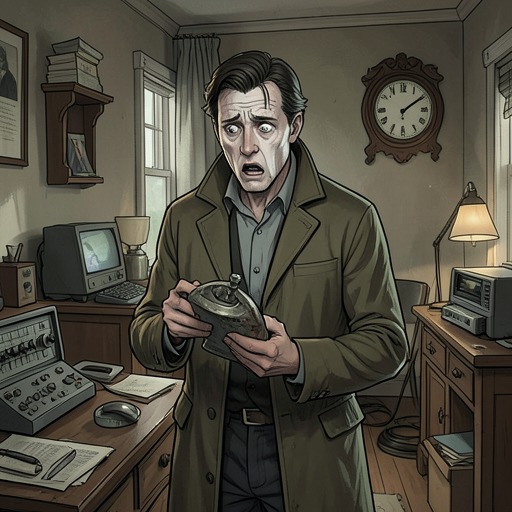
Ivan is a barber who shaves other people daily, though his own face is habitually unshaven. The narrator describes him as a heavy drinker, dressed in a worn coat whose original black has faded to brownish yellow; its collar is shiny, and the buttons are gone, leaving only their threads. Kovaloff, by contrast, is a member of the Municipal Committee who insists on being addressed as Major, a title drawn from his former position as a Caucasian committee-man. Their recurring barber–customer arrangement therefore places a shabby tradesman in close contact with a client who carefully maintains the outward signs of status.
The relationship has a set rhythm: Ivan shaves Kovaloff twice each week, on Sundays and Wednesdays. Kovaloff complains that Ivan’s hands always smell, but Ivan answers with a cynical question about what they smell of. After taking snuff, he retaliates in his own fashion, spreading soap across Kovaloff’s cheek, upper lip, behind his ears, chin, and elsewhere. The exchange is comic, but it also makes their familiarity tangible: Kovaloff’s face is both the object of Ivan’s trade and the site of their repeated banter and minor antagonism.
The Nose and the Breach of Routine
The connection becomes consequential when Ivan discovers a nose in his breakfast bread and recognizes it as Kovaloff’s. His recognition is immediate: he knows the nose can belong to no one else, because Kovaloff is a familiar customer whom he shaves on the same two days every week. What had been an established workaday intimacy suddenly gives Ivan knowledge of a grotesque bodily loss before the customer himself has discovered it.
Ivan’s first response is alarm, while his wife reacts with disgust and demands that he remove the severed nose from their room. He proposes wrapping it in cloth and leaving it in a corner for the time being, but she refuses to have it remain in sight and presses him to take it away. The nose is thus not merely an impossible object between barber and client; it becomes a practical burden that Ivan must hide and dispose of, under pressure from his wife and in fear of the consequences.
Ivan secretly throws the nose, wrapped in a small piece of cloth, into the Neva from the Isaac Bridge. The relief he feels is short-lived: a police inspector on the bridge beckons him over, and Ivan cannot simply leave the episode behind. The attempted disposal shows the relationship’s unequal stakes. Kovaloff’s missing nose threatens his appearance and social life; Ivan, having recognized and discarded it, faces the prospect of being held responsible for the alarming object.
Separation and Administrative Frustration
After the loss, Kovaloff seeks official help to recover the nose, while Ivan’s part in the barber–customer relationship recedes from the immediate search. Kovaloff asks an advertising office to announce a reward for anyone who brings the missing nose to him, but the official refuses, worrying that an advertisement of this kind could compromise the newspaper. He supports his refusal with the story of a previous advertisement about a lost black-haired poodle that was actually a satire on a cashier. The episode underscores the gulf between Kovaloff’s urgent bodily need and the office’s concern about how a notice might be interpreted.
Kovaloff also goes to the police commissary, who receives him coldly and suggests that respectable people do not have their noses stolen. The remark wounds Kovaloff because he is sensitive to implications about his rank and social position; he leaves with dignity rather than continuing the appeal. These failed approaches sharpen the contrast with Ivan’s trade. The barber’s ordinary work depends on direct handling of the face, whereas the institutions Kovaloff approaches treat his extraordinary problem as an inconvenience, a threat to the newspaper’s reputation, or an affront to respectability.
Return to the Barber’s Chair
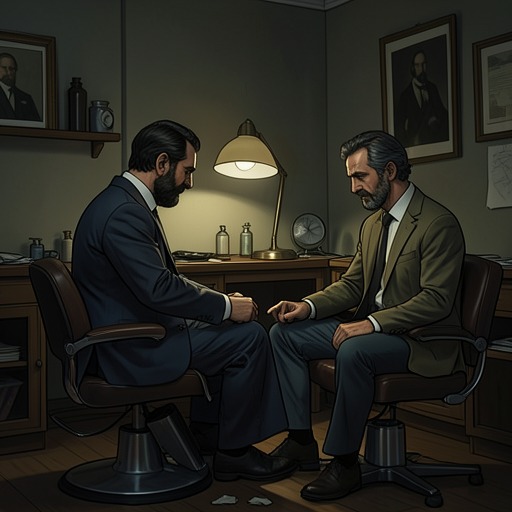
When the nose has returned to Kovaloff’s face, Ivan appears at the door timidly, compared to a cat that has just been beaten for stealing lard. Kovaloff’s first concern is whether Ivan’s hands are clean. Only after Ivan assures him that they are perfectly clean does Kovaloff invite him to proceed. The exchange reverses the earlier pattern: the customer who once complained that the barber’s hands smelled now makes cleanliness an explicit condition of contact, and the barber approaches the familiar task under the shadow of what has happened.
Ivan ties a napkin beneath Kovaloff’s chin and quickly covers his beard and part of his cheeks with creamy lather. Seeing the nose, he recognizes it aloud to himself and starts to reach for its tip in his customary way. Kovaloff warns him to take care. Ivan drops his arm, more embarrassed than he has ever been, and changes his technique: instead of using the nose as a point of support, he braces his wrinkled thumb against Kovaloff’s lower jaw and cheek. Despite the difficulty, he completes the shave safely. The familiar service resumes, but not quite as before; a routine gesture has become dangerous, and the barber must adjust his touch to the customer’s restored but newly precarious face.
Significance of the Relationship
The barber–customer bond gives the story a concrete everyday frame for its impossible premise. Ivan’s repeated access to Kovaloff’s face explains how he recognizes the nose, while the altered shaving procedure shows the bodily consequence of its disappearance and return in the most ordinary terms: where Ivan once relied on the nose for support, he must now work around it with his thumb against the jaw and cheek.
Their encounters also bring social difference into close physical proximity. Kovaloff’s attention to a clean collar, seals, title, and prospects in official life contrasts with Ivan’s worn clothes, drinking, and unshaven face; yet the Major’s rank cannot spare him from dependence on the barber’s hands. After the nose is restored, Kovaloff returns to the same service, and Ivan completes the shave. The relationship endures through its practical routine, but the routine now carries the memory of a loss that neither ordinary professional familiarity nor official procedure could explain.