Moscow Grand Market
The NoseThe Grand Bazar of Moscow is the commercial setting where Platon Kovaloff pursues his missing nose and sees it behaving as an independent, higher-ranking official. Though the bazaar itself is only briefly described, its shopfronts and public traffic make it the scene of a decisive reversal: Kovaloff finds the body part he has lost, but cannot make it acknowledge him as its owner.
Setting and Approach
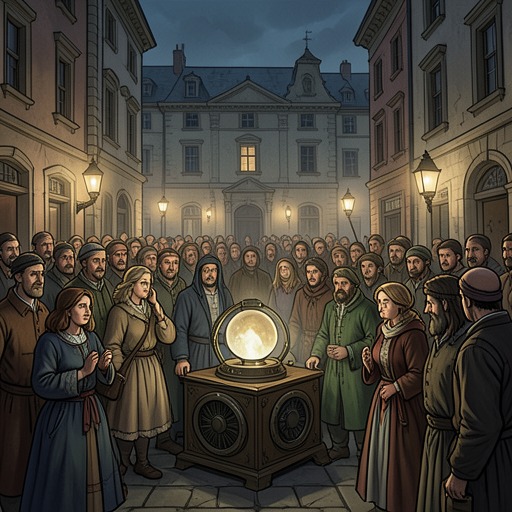
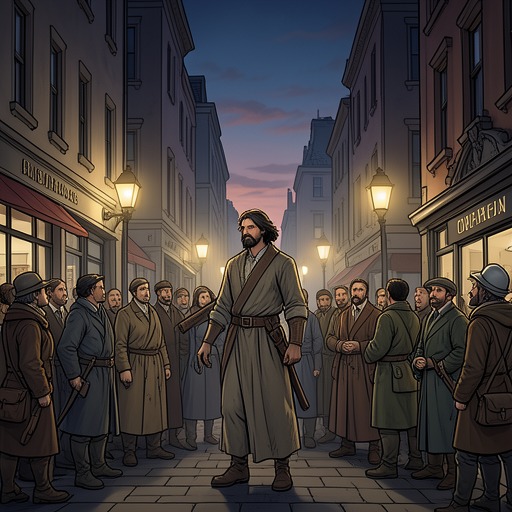
After discovering that his face has become a broad, flat vacancy, Kovaloff sets out on foot because no droshky is available. He follows a carriage carrying the nose, which stops a short way off before the Grand Bazar of Moscow. In his haste to reach it, he presses through a crowd of beggar-women whose faces are bound up, leaving openings only for their eyes—a detail that briefly places his own conspicuous facial absence among other altered faces in the city.
The account offers no extended description of the bazaar’s architecture or layout. Instead, it locates the action through the carriage’s stop and the few people gathered in front of the bazaar. The public commercial threshold gives Kovaloff a place to search and watch, while the surrounding crowd makes his pursuit part of an urban scene rather than a private discovery.
The Nose Before the Shop
Kovaloff is agitated and initially cannot decide where to look. He eventually spots the nose standing before a shop, half-buried in its stiff collar and attentively inspecting the wares on display. The ordinary act of looking at goods sharply contrasts with the absurdity of the visitor: this is the same nose that had been on Kovaloff’s face the previous day, now standing upright in public and conducting itself like a person.
Its dress makes the encounter a contest of appearances before Kovaloff has even spoken. The nose wears a gold-embroidered uniform, a stiff high collar, chamois-leather trousers, and a sword; its plumed hat marks it as a state councillor. Kovaloff reads these insignia as evidence that it is paying official calls. At the bazaar, the nose is not merely visible without its owner: its clothing and bearing announce a social identity of its own.
Encounter and Significance
Kovaloff coughs discreetly beside the shop, hoping to attract the nose’s attention, but it ignores him. When he finally confronts it, the nose denies the relationship and insists on its own separate identity, arguing that their uniform buttons place them in different departments. It then turns away. The bazaar encounter therefore gives bodily separation an administrative form: the nose’s claim to independence is expressed through the language of departmental distinction and rank.
The setting also emphasizes the difference between finding and recovering. Kovaloff has followed the carriage and located the missing part of himself, yet the public meeting does not restore his control over it. The nose soon disappears again, apparently continuing its visits, while Kovaloff is left with the empty space on his face. The bazaar’s brief role is thus consequential: amid shops and passers-by, it makes the story’s strange premise visible as a social performance in which uniform, title, and public conduct seem to outweigh physical origin.