Babcock’s collective consciousness
The Passage (Justin Cronin Edition)Babcock’s collective consciousness is a network of infected minds in which Babcock experiences his followers as extensions of himself and seeks to draw the remaining human population into the same shared existence. It is both a means of power and a claim about identity: its members are told they will not die because they belong to Babcock, yet the collective’s apparent unity depends on suppressing the individual selves that might resist it. The possibility that this arrangement can be undone emerges when another presence begins to draw the Many away.
Formation and Membership
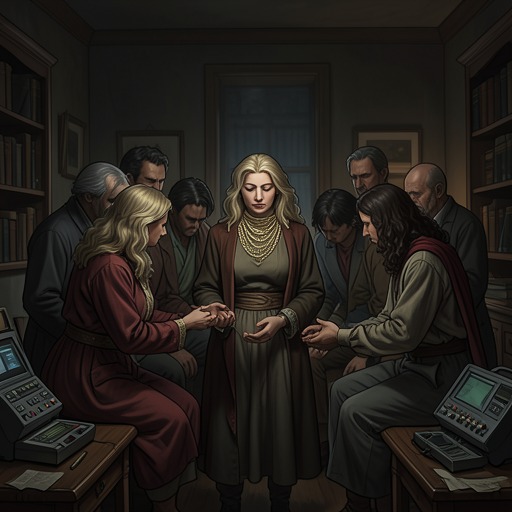
Babcock’s shared mind grows from the infected subjects he has killed or bitten. After his transformation into one of the Twelve and the Other, Zero, he describes taking others into himself: some die, while those he only sips become his own and join him in mind. He calls them his children, the Many, and the We. His collective is therefore not simply a group acting together; it is a hierarchy in which Babcock’s identity and command are extended through infected followers.
The reach of the bond is expressed as a vast multitude scattered across the night, yet joined by the same inward presence. Babcock says that his children move and think as he does, and that an empty space of forgetting in each mind is where he resides. The promise he places there is permanence through belonging: members are told that they will not die because they are part of him, just as he is part of them. This assurance makes the collective’s unity inseparable from Babcock’s claim over its members.
Command and Expansion
The shared mind gives Babcock direct authority over the Many. Their activity becomes his experience: when they eat, he eats; when they sleep, he sleeps. Their collective name, the We, makes the fusion explicit, but the relation is not reciprocal in practice. Babcock commands, and the others carry his intentions into action.
After waking hungry in the place he calls This Place, Babcock hears Zero, called Fanning, announce that they are dying because few people or animals remain. Babcock responds by ordering the Many to bring the last humans to him alive, so they can learn about him and Zero and join the collective. Those brought into his presence are told they will belong to him and must feed him with their blood and bring others from beyond This Place. He also demands that they submit to his will; those who refuse are killed so that the rest will understand what resistance means. The resulting city becomes, in his account, the City of Babcock, the first of its kind in the world.
Memory and the Individual Self
The collective’s force is set against the fragile persistence of individual memory. Babcock remembers his life before becoming infected through small domestic details: sunlight on a carpet, a worn place on a doorstep, rust on a railing, and his mother’s voice. The remembered child is distinct from the expansive being who later absorbs other minds. His account makes the We’s promise of continuity uneasy: Babcock survives, but the individual people he incorporates do so under his authority, not as independent selves.
Auntie’s account of the First Ones offers a contrasting form of survival through remembrance. She writes down the lives and history of the people who came to the Colony, including those who have died or been taken up, because otherwise their names and experiences might disappear. Where Babcock’s collective preserves its members by making them part of him, Auntie’s memory book preserves people by recording them as particular lives. These different forms of continuity clarify what is at stake in the question of whether a person can remain themselves while belonging to something larger.
Resistance and the Threat of Undoing
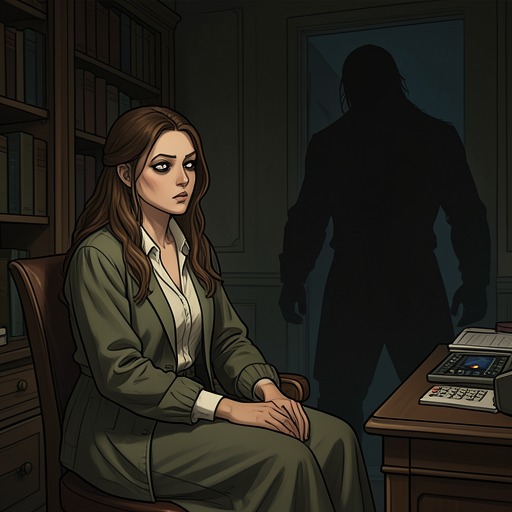
Babcock senses an opposing presence that is neither Zero nor one of the Twelve. He experiences it as a force drawing the Many away, and recognizes that they can sense it too. The disturbance is not only a challenge to his control: it makes the members want to remember and to die, responses that run against his promise that they will persist as part of him.
Babcock understands the danger as a possible reversal of everything he has built. Through this other presence, he believes that what the Many have done and what he has made could be undone. He warns his brothers that she is coming and already there. In this way, the collective consciousness is presented not as a settled condition but as a contested one: Babcock’s authority can bind many minds together, yet the desire for memory and individual death reveals a pull beyond the We. The narrative associates that challenge with Amy, making the shared mind vulnerable to the very capacity for separate identity it tries to absorb.