California Republic
The Passage (Justin Cronin Edition)California Republic is the post-collapse country in which the First Colony is situated and the destination where the children’s evacuation train finally stopped. The name signals that the former California has become a different political place, while the colony’s walls and lights give that new identity a concrete, guarded form.
A New Country and a Refuge
The train’s survivors were told that they had reached California, but not the state they had known: California was now a separate country. Buses carried the children onward to the First Colony, in the San Jacinto Mountains. The account names the colony as a place within California Republic, joining the country’s political designation to the mountain settlement that became home for the evacuees.
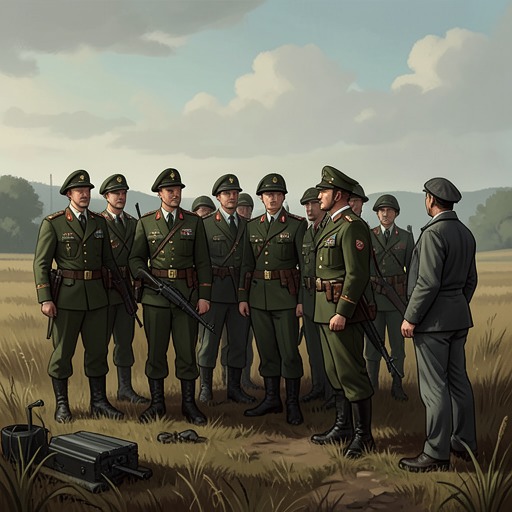
The arrival offered a sharp change of scene: after the train came a desert staging area, with soldiers, buses, helicopters, and cold water; after the bus journey came the colony’s walls, elevated lights, and fresh, cold air. Army personnel and FEMA supplies were also present, including food, weapons, clothing, and livestock. The country is therefore introduced not through a detailed account of its government, but through the military and logistical apparatus surrounding a refuge.
The Evacuation and Its Costs
The train brought children from Philadelphia and nearby counties west of the Delaware River under an order requiring minors in designated safe zones to report to 30th Street Station. Its journey was not secure: cars were detached when infection reached them, and by the time the train arrived only three cars remained, two mostly empty. In the survivors’ recollection, reaching California Republic meant both escape and irreversible loss.
At the desert stop, children feared that the infected had caught up with them until they saw soldiers. The evacuation’s arrival also reunited Ida Jaxon with her cousin Terrence Jaxon, who had been placed in the engine car by his father. Terrence promised to look after her and did so until his death; he became the first Jaxon in the Household, a role subsequently held by a Jaxon. The journey thus helped establish both the colony’s founding population and a lasting family responsibility within it.
A Country Shaped by Emergency
California Republic’s setting belongs to a wider landscape of outbreak, military control, and flight. During the Colorado fever crisis, official reports described a high-fatality illness, outbreaks beyond Colorado, and martial law in major cities. Reports of violence at the borders and the evacuation of sick people circulated alongside government statements, while stranded travelers sought ways home after air travel was halted. Against that background, the evacuation to California reads as a managed movement of children through a collapsing system, rather than an ordinary migration.
The country’s refuge is not insulated from environmental danger. In another episode, wildfire cuts off a route from the mountain, forcing Bradford J. Wolgast and Amy to turn back. Elsewhere, a nuclear blast devastates the region west of them, and a later expedition crosses an exposed desert road lined with more than a thousand abandoned vehicles. These episodes place California Republic within a damaged and dangerous terrain, where routes, shelter, and infrastructure shape the chances of survival.
The Colony Within California Republic
The First Colony is described as a community of ninety-four people living under lights and focused on the day-to-day. Its walls, lighting, and guarded routines distinguish it from the open, dangerous spaces beyond, but the settlement remains vulnerable to internal and external threats. Later, the account of Haven describes a ritual bargain in which four cattle and two people are given at each new moon to keep Babcock’s Many away, underscoring the extent to which isolated communities adapt their lives to perceived danger.
California Republic therefore functions less as a fully mapped political system than as the larger setting that contains the First Colony and the evacuation’s destination. Its name marks the break from the old United States’ geography and order; the colony’s lights offer a limited counter-image to the ruined roads, disease, fire, and displacement beyond its walls.