Colony Lighting System
The Passage (Justin Cronin Edition)The Colony Lighting System makes the First Colony’s enclosed life possible: its lights turn a defended settlement into a place where people can live, while the power network behind them depends on components that cannot be replaced. The system’s eventual failure threatens not merely comfort but the Colony’s security and continued existence.
Founding and Function
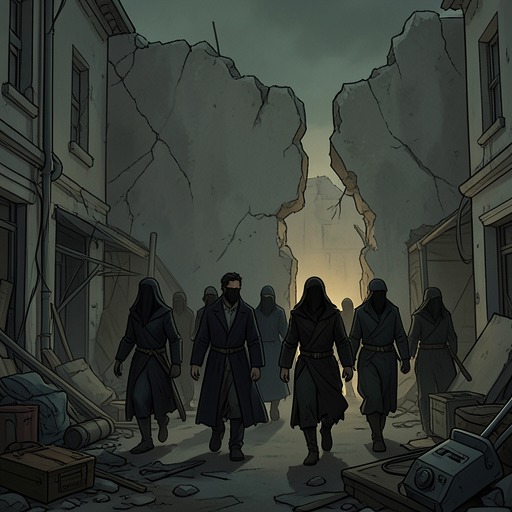
The lights first appear as a defining feature of the Colony’s establishment. After the buses and trucks departed and the gates were sealed, the lights came on so brightly that they blotted out the stars. Auntie remembered that First Night as the moment she and Terrence understood this would be their home. The illumination offered safety, but it also marked a break with the world beyond the walls: for years afterward, she would not see the stars again.
In the later Colony, the lighting system is built into the settlement’s routine and defenses. Its assemblies rise above the Wall, where sodium-vapor bulbs are dimmed at the end of the day. The Wall’s watch platforms and the lighting infrastructure together make night watch possible; Peter stands guard there, ready to lower himself by crane if his brother returns. The lights are therefore both practical protection and part of the Colony’s daily order.
Power, Maintenance, and Decline
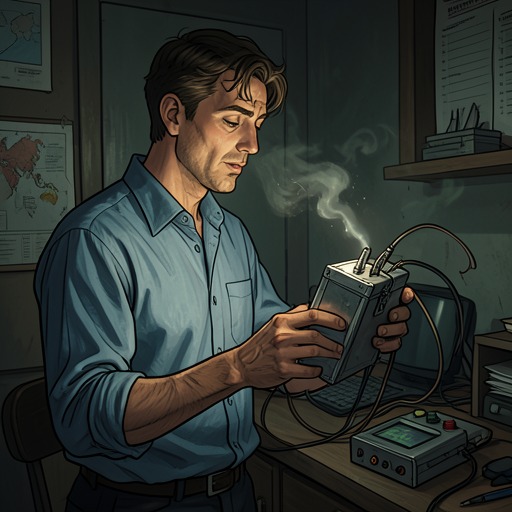
Michael understands the system as a material chain rather than an inexhaustible resource. Wind turbines can keep turning, but batteries must store and regulate the current. The Colony’s battery cells have lasted far beyond their expected service life, and their membranes are failing in ways that cannot be repaired. Cleaning corrosion or rewiring controllers would not restore the damaged membranes; without a replacement battery stack, Michael estimates that the lights may fail within a year or two.
That prognosis makes the system’s apparent permanence deceptive. The old world’s electrical infrastructure is lasting longer than the people who built it, but rust, weather, and time are steadily undoing it. Michael recognizes that the Colony may witness the final lights going out, and that he will have to tell its residents when the failure can no longer be postponed. His work maintaining the system becomes a responsibility to sustain not only power but the community’s ability to remain alive under its protection.
Failure and Consequences
The dependence becomes concrete when the lights suddenly go out. Michael rushes back to the Lighthouse expecting a system crash, but the monitors remain in the green. He finds the main breaker open, closes it, and the lights return. His later report to Ian attributes the interruption to a power surge, though Michael cannot account for it: the system recorded no surge, and no fault appears in the connections. The episode briefly turns a normally dependable utility into an unexplained vulnerability.
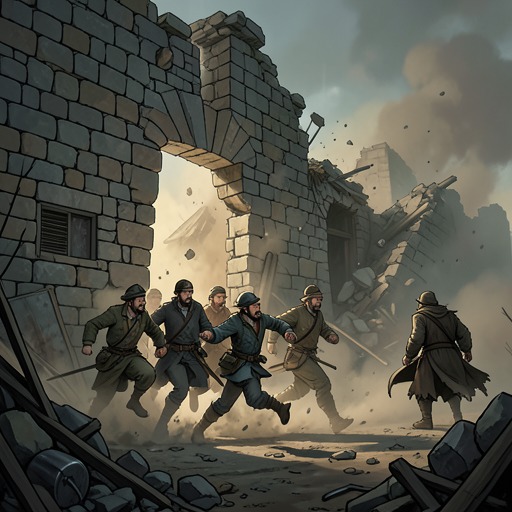
The danger is not abstract. During the confrontation at the Haven, Peter recognizes that the place will catch fire, making the confined space and its combustible conditions an immediate threat. Elsewhere, the train carrying Peter’s party reaches its limit at Caliente after traveling about four hundred kilometers. These episodes place the lighting system within a wider pattern: settlement survival depends on infrastructure whose reach and reliability are finite, even when the lights themselves make safety seem secure.
Narrative Significance
The Colony Lighting System embodies the tension between protection and dependence. It separates the inhabited space from darkness, but its batteries bind the community’s future to aging technology and the expertise of people such as Michael. The lights that once erased the stars now stand as a measure of how long the Colony can preserve its isolated way of life. Their threatened failure makes infrastructure a political and communal concern: survival depends on who can maintain it, what knowledge remains available, and whether replacement parts can ever arrive.