Hollis Wilson
The Passage (Justin Cronin Edition)Hollis Wilson is a Watcher, a skilled defender of the First Colony, and later a guide and comrade on the expedition west. His importance is clearest in the two roles that define his story: at the Sanctuary, he kills the infected Arlo to protect the children; on the road, he helps Peter Jaxon’s group navigate toward the military bunker and builds a life with Sara Fisher. The same steadiness that makes Hollis effective in a crisis leaves him carrying the cost of survival in the form of his brother’s death.
Identity and Place in the Colony
Hollis belongs to the First Colony’s Watch, whose members carry weapons and defend the settlement. He is present on the catwalk while Peter has been keeping vigil for seven nights, and arrives as Peter and Alicia Donadio end their watch. Hollis’s question about whether Peter is standing down makes visible a practical rhythm of shared duty: one person’s vigil ends, and another takes responsibility.
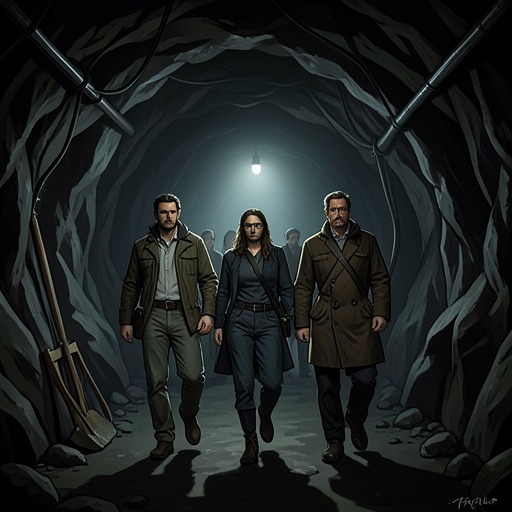
The Colonel’s disappearance becomes part of the larger crisis that reaches the Sanctuary. Hollis is among the first to reach the building when the viral comes through the roof. He enters with a crossbow, expecting danger among the children, and finds the creature standing over Dora’s crib. When it turns toward him, Hollis takes the opening and fires. In that instant, a key visible on the creature’s lanyard and its expression tell him that the viral is Arlo, his brother. The arrow strikes before he can call Arlo’s name; Hollis has saved the children by killing the person he recognizes as his brother.
Arlo and the Cost of the Watch
The shooting is not presented as a victory without remainder. In the aftermath, Hollis appears at the inquest as though he has lost an essential part of himself. Before entering the classroom, he says that he only wants to know that it was not for nothing. His words set the terms of his grief: he cannot undo the killing, and the children’s survival is the reason he needs it to have mattered.
Mausami Patal later sits in the cleaned Big Room, where the smell of spirits remains after the room has been washed down. She thinks of Arlo and of Hollis having to kill his brother, and recognizes that the alternative could have been worse. Her thoughts also place the loss within a broader fear: the virus has taken away the person loved, leaving a body that is no longer the same person. The scene does not resolve Hollis’s grief, but shows how the community understands the act as both necessary protection and intimate bereavement.
Defense, Judgment, and Departure
Hollis remains part of the Watch as the Colony’s crisis deepens. During the violent breakdown of a public meeting, the Watch arrives with weapons drawn and forms a line between the crowd and the table. Hollis is one of the defenders who helps halt the attack. The intervention marks a shift from ordinary communal decision-making to emergency force: Ian declares martial law and a curfew, and Alicia is arrested after drawing the crowd’s anger away from the girl at the center of events. Hollis and Galen Strauss help bring Alicia forward, while the scene shows Hollis operating as part of a collective response rather than as a solitary authority.
Later, when Peter’s group is preparing to reach the bunker, Hollis rides into the settlement with dust on his face and arms. He warns them that at least six people are following and urges them to leave at once. Peter asks how Hollis knew their destination; Hollis answers that he rode with Peter’s father. His past service with Demetrius Jaxon makes him more than an armed escort: he carries firsthand knowledge of the route and the destination.
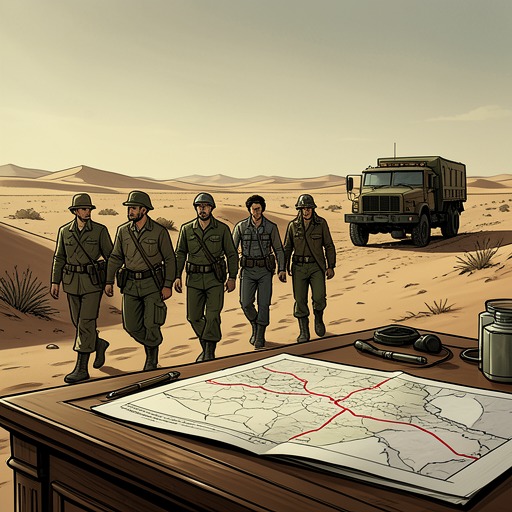
At the maps, Hollis corrects the expected travel time. The bunker had been described as a two-day ride, but he recalls that the earlier trip took closer to three days because the party was hauling carts; on foot, he estimates, the group can manage it in two. He locates them at San Gorgonio Pass and lays out a route north along Route 62, then east through Joshua Valley, where Demo Jaxon had fortified an old fire station and left supplies and a working water pump. From there, the route continues along the Twentynine Palms Highway and across open country to the bunker. Hollis also remembers the bunker as a place containing vehicles and fuel, a military stockpile Peter’s father had called the war chest. His practical memory turns the expedition’s destination from rumor into a route with distances, water, and a possible means of transport.
The Expedition and Sara
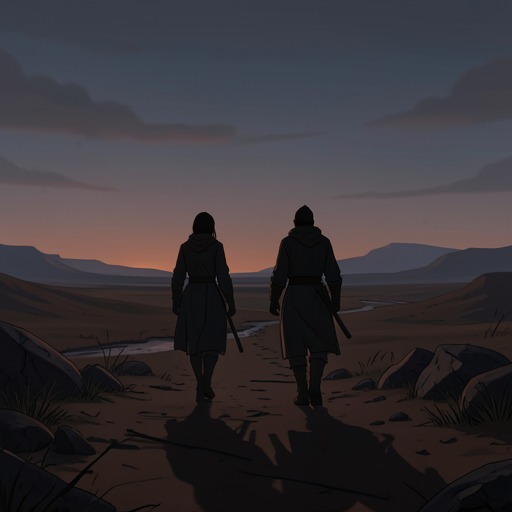
On the road, Hollis’s place in the group is expressed through both action and ordinary conversation. When the group is shaken and Michael’s sister has been taken, Hollis cuts through the noise, says he will get her, and reports that he saw which way the three attackers went. Later, after a night in a school, he shares a watch shift with Sara. They talk about what they miss from home: Sara says soap, and Hollis jokes that he expected her to say the lights. Asked in return, he pauses, then names the Littles—the children of the Sanctuary. The answer links his loss of Arlo to a wider attachment to the children he had helped defend; home is not only infrastructure or safety, but also the people whose voices filled the Sanctuary.
Sara records that she has decided to marry Hollis. The decision gives their relationship a concrete future amid the expedition’s uncertainty. Later, as the party shelters beside a river, Peter recognizes the happiness he feels for Sara and Hollis. He recalls Hollis’s earlier resolve to go after Sara when she was taken, and understands that Hollis loves her and had been willing to risk himself for her. Peter’s recognition closes a separate emotional tension: he accepts that Sara’s future lies with Hollis, whose commitment has already been demonstrated in action.
Change and Significance
Hollis’s journey is not a clean movement from grief to healing. He remains marked by Arlo’s death, yet continues to protect others, guide the expedition, and form new attachments. At one point he is wounded during an attack on the group, though the account gives the injury as a minor gunshot wound to the upper arm and emphasizes that he remains in pain while the travelers wait for dawn. The group knows there is no dependable safety ahead, but Sara’s account records Hollis among the people with whom she would rather face that danger than be elsewhere.
That refusal of passive hope becomes explicit in Sara’s reflection on the Army: after years of waiting for it, they have realized that the Army is themselves. Hollis embodies the change in a particularly grounded form. He is not described as a savior or a commander; he is a Watcher who takes a necessary shot, mourns his brother, remembers roads and supplies, and goes after people who have been taken. His story makes survival an obligation carried between people, rather than a promise that help will arrive from outside.