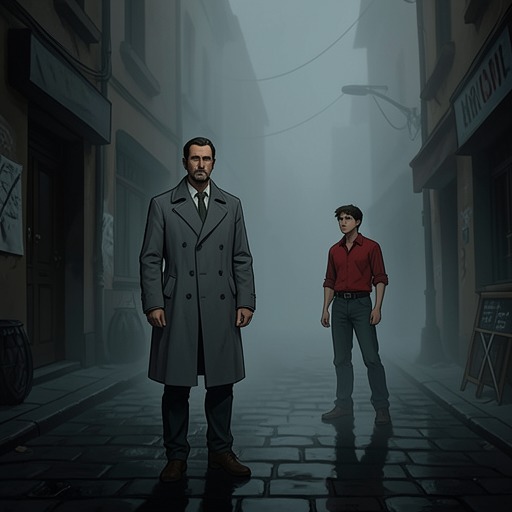
The Project NOAH containment breach
The Passage (Justin Cronin Edition)The Project NOAH containment breach is the facility’s decisive security failure: an alarm announces that Level Four containment has been breached, and Richards finds every subject chamber empty. Within thirty-two minutes, the novel marks one world’s end and another’s beginning. The crisis unfolds through alarms, failing communications, and surveillance screens, as the system built to contain the subjects proves unable to control the violence inside the compound.
Alarm and Discovery
The breach begins abruptly. Richards and Doyle hear the alarm that, by design, was never supposed to sound: a warning of a Level Four containment failure. Richards turns toward the Chalet and realizes Doyle has disappeared, but the emergency leaves no time to pursue him. He runs upstairs, passes a sentry calling out about the elevator, and reaches his office to check the monitors.
The screens make the scale of the failure plain. Zero’s chamber is empty; Babcock’s chamber is empty; then Richards sees that all the chambers are empty. The repeated discovery widens the crisis from the escape of particular subjects to the loss of the facility’s entire contained population. His attempts to get reports from the sentries and main laboratory initially meet silence, leaving the monitors and the alarm as his only immediate signs of what is happening.
Communications Collapse
A terrified voice from the laboratory—possibly Fortes—finally reports that the subjects have been let out. Richards demands to know who released them, but the reply is swallowed by static. The audio feed then carries screams and gunfire, followed by a report that the subjects are loose and that the sweeps let them out. The account identifies the containment failure but does not explain how the sweeps caused it; the gap between the alarm’s formal precision and the confused testimony underscores how quickly the institution loses command of events.
Richards’s view of the sentry post on Level Three supplies a separate, visual account of the collapse. A sentry named Davis is down, and Paulson enters the camera’s field carrying a .45. Behind him, the elevator doors are open. Paulson looks directly into the camera, places grenades in the elevator, and detonates them; after looking once more toward Richards, he kills himself. The surveillance image does not tell Richards why Paulson has acted, but it shows that the crisis has reached the security staff and that the ordinary chain of response has disintegrated.
Destruction of the Facility’s Response
Richards reaches for the switch that would seal the level, but the timing is already lost. The explosion tears through the elevator shaft, the damaged car falls, and the lights go out. His intended response—to isolate the compromised level—cannot take effect before Paulson’s destruction of the elevator. The blackout closes off the visual system on which Richards has relied, while the empty chambers, failed communications, and damaged access route leave the facility without an effective means of restoring containment.
The breach is also experienced from the other side of a sealed door. Wolgast is beside Amy’s bed when the alarm sounds; he tries the door and finds that they are locked in. He calls for Fortes and Sykes to open it, but the scene establishes that he has no control over the security system or the crisis unfolding beyond the room. His immediate confinement contrasts with Richards’s access to the command monitors: both are inside the compound, but neither can make the institution function as intended.
Consequences and Narrative Significance
The novel frames the rupture as a compressed passage between two worlds: thirty-two minutes separate the world that existed before the alarm from the one born in the breach. The moment is therefore not just a failed security procedure. It is the transition from a research program’s managed containment to a catastrophe whose scale exceeds the facility’s controls. The official warning names the security level; the empty chambers, screams, gunfire, and blackout reveal what that administrative language cannot contain.
The breach’s consequences reach beyond the compound. Later, Ian reacts to the attacks on the Colony by blaming the girl who was allowed inside, while Sam Chou publicly connects her arrival and Caleb’s decision to let her in with the deaths and urges the crowd to expel them. The crowd takes up the demand in a growing chant, and Peter senses that the situation is on the verge of violence. These later scenes do not establish every step of causation between the facility’s breach and the Colony’s losses, but they show how the catastrophe’s aftermath becomes a social crisis: fear seeks a visible target, and collective disorder threatens to reproduce the collapse of the institutions meant to protect people.
The breach also resonates with the novel’s larger concern with systems for managing risk and human movement. Earlier, federal and local authorities use a centralized system to track travelers, while an embedded chip reports Amy’s vital signs to a monitoring panel. Later, the crisis produces mass containment and compulsory movement, including the order directing children in Philadelphia’s designated safe zones to report to 30th Street Station for immediate embarkation. These controls differ in purpose and setting, but together they place the facility’s failed containment within a world increasingly organized around surveillance, quarantine, and the regulation of vulnerable lives. The breach exposes the limit of that logic: monitoring can register a crisis, and orders can reorganize a population, but neither guarantees control once the system itself fails.