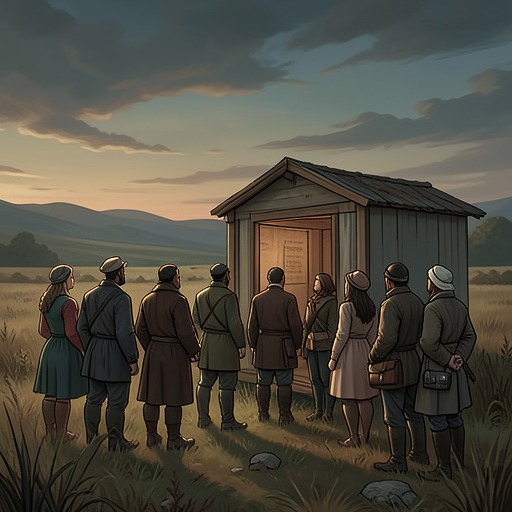
They always went home, and home was wherever Amy was
The Passage (Justin Cronin Edition)“They always went home, and home was wherever Amy was” is the expression through which the novel makes belonging inseparable from Amy. At the story’s end, it gathers years of unspoken connection into a reunion with Wolgast: the home they find is not a location but the bond that has endured between them.
Meaning and Context
The sentence follows Amy’s realization that she has felt Wolgast for years, from Milagro and the day when she could not speak, through the image of a big boat and the long span of time within her. She recognizes him as the one who has followed her, remained nearby, and shared the sadness of missing her. The wording makes that persistent attachment spatial: to go home is to return to Amy.
The Reunion
After Peter has spent much of the night reading from the old woman’s book, Amy leaves the house before dawn and finds the tunnel beneath the trunkline. In the trees, she sends her mind outward and calls Wolgast to her. Their meeting gives the expression its concrete fulfillment: she sees him crouched before her, touches his face where tears would have been, and embraces him. Though he cannot weep with his eyes, she feels his grief in her heart.
Memory and Recognition
The reunion is carried by shared memories rather than explanation. As Amy holds Wolgast, memories pass through her of a house in the snow, a lake, a carousel lit at night, and his large hand enclosing hers as they soared beneath the eaves of heaven. These particular recollections establish the history contained within the phrase: Amy is not merely the destination of a journey, but the person through whom their past remains present. She recognizes Wolgast as the one who loved her, and tells him she had always known.
Secrecy and Significance
Dawn breaks over the mountain while Amy holds him as long as she dares. Alicia watches from the catwalk, but Amy understands that the reunion will remain secret, something to know without speaking of it; she believes Alicia also understands Peter’s hidden nature. Against this guarded silence, the expression offers a plain, intimate definition of home. Its recurrence at the close turns physical return into emotional recognition: the lost one is found, and belonging is restored in Amy’s presence.