Jonas Abbott Lear
The Passage (Justin Cronin Edition)Jonas Abbott Lear is a Harvard molecular and cellular biologist assigned to the United States Army Medical Research Institute of Infectious Diseases, whose Bolivian expedition links the novel’s ancient imagery to its emerging viral catastrophe. Introduced through emails to his friend Paul, Lear appears as a scientist drawn toward the mystery of death by both professional conviction and personal grief; the correspondence ends with the expedition under mortal threat and Lear resolved not to turn back.
Identity and Background
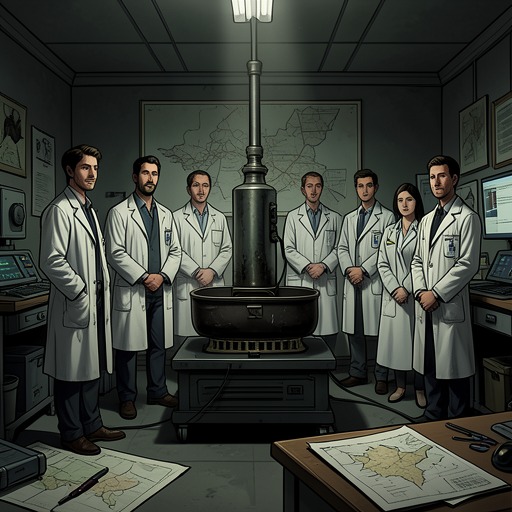
Lear’s computer files identify him as a professor in Harvard’s Department of Molecular and Cellular Biology, assigned to the paleovirology department at Fort Derrick. The expedition he joins is not simply an academic field trip: he has spent years trying to persuade others to take the underlying research seriously, and the Army institute’s resources make it possible to assemble a team in a month. He acknowledges misgivings about military involvement but regards its capacity to organize and fund the work as a practical breakthrough.
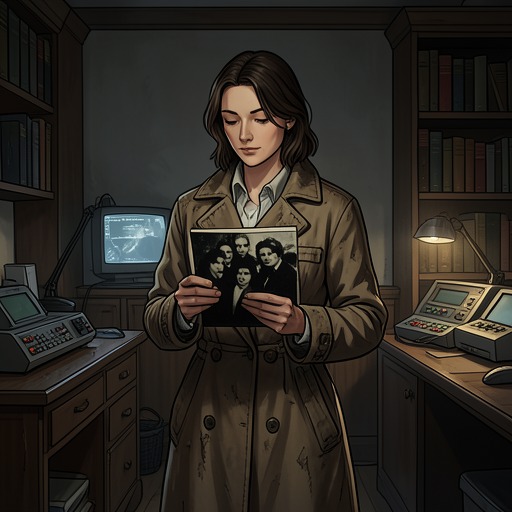
His emails also establish a life beyond the expedition. He writes to Paul as an intimate friend, congratulates him on receiving tenure, and looks forward to their plans to attend a baseball season opener. The casual details give their scientific correspondence the texture of an ongoing friendship, while Lear’s references to Liz make clear that his research has become bound up with loss. After her long illness and death, he had continued to imagine her returning home; he now recognizes that this imagined reunion will not happen.
The Bolivian Expedition
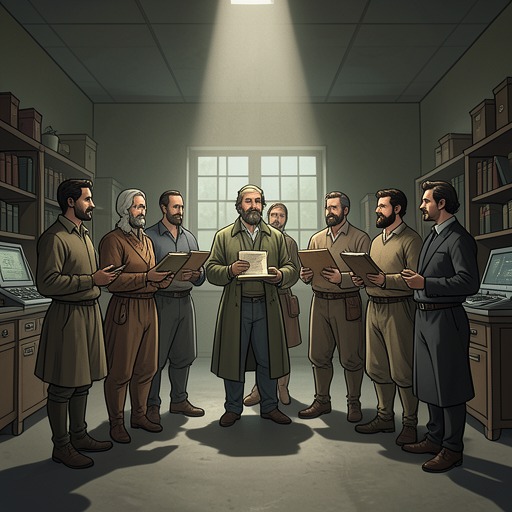
Lear travels first to La Paz and then by government transport to Concepción, in Bolivia’s eastern jungle basin. With roads giving way to backcountry, the team must continue on foot. Its members include researchers from UCLA, Tim Fanning from Columbia, and Claudia Swenson from MIT, alongside military support. Lear describes the military’s involvement as instrumental to bringing together a group that could not otherwise have been assembled so quickly.
After six days of difficult travel through dense tree cover and persistent rain, the team reaches a ravine along a river, still about twenty kilometers from the site it seeks. Lear notes limestone cliffs perforated with caves and a band of charcoal-black material in the rock, about four meters below the top. He connects this geological feature to a Chuchote legend of a great fire sent by the sun god Auxl to destroy demons and save the world. The legend does not settle what happened, but it gives the expedition’s physical evidence an ominous historical frame.
The team encounters a stone statue while following the ravine east. Lear describes a humanlike figure with an animal posture, clawlike hands, long teeth, and a powerfully built torso. He considers its resemblance to images from other places—including a temple, gravesite, and cave drawings—indisputable. The find gives the expedition a concrete object around which its wider investigation can gather: the threatening figure is not an isolated local curiosity, but part of a pattern Lear believes he has seen across cultures.
The Attack and the Expedition’s Collapse
The expedition’s progress is overtaken by a bat attack. Lear survives the first assault because he has walked upriver to find a GPS signal; returning to camp, he learns that four people have died, including Claudia. Several other team members have been bitten or scratched and develop a severe illness resembling an accelerated form of Bolivian hemorrhagic fever. The expedition contacts the Centers for Disease Control, but without tissue analysis the cause remains uncertain. Fanning, who had tried to pull the bats away from Claudia, is among the sickest.
A second attack comes the following night. Soldiers establish a defensive perimeter, but the swarm overwhelms it, killing three soldiers and Cole. The attacks also destroy equipment: a grenade belt goes into the fire, killing another soldier and taking out the generator and much of the supplies. Although the remaining team still has satellite communication and enough battery power to request evacuation, its planned extraction from the grave site has become doubtful. Lear writes that they are less than five kilometers away, but that too many people are ill or dead to proceed as planned.
The changing conditions leave the team with a practical choice between evacuation and continuing. Lear records the evidence he can observe, distinguishes the suspected illness from a confirmed diagnosis, and recognizes how little the surviving members can know without laboratory analysis. At the same time, the expedition’s immediate danger does not displace the question that brought him there. The losses and damaged equipment turn the investigation from a difficult field operation into a decision about whether any purpose remains in going on.
Grief, Resolve, and Narrative Significance
Lear’s answer is inseparable from Liz’s death. In the aftermath of the attacks, he recalls the life he had imagined resuming: Liz returning home, asking for Earl Grey, and walking with him by the Charles in the snow. He understands that this return is impossible, and says that, if Liz were still alive, the decision to abandon the expedition might look different. His determination is therefore not presented as simple scientific confidence. It emerges from the recognition that there is no longer a private homecoming waiting for him.
He writes that the last two days have clarified the stakes and that he is not sorry to be in Bolivia or afraid of what may happen. If necessary, he may continue alone. His final message to Paul calls him more than a friend, a brother, and describes Lear’s life as having entered a new era, carried into strange places and dark passages. The language makes the expedition both a scientific undertaking and a threshold in Lear’s personal life, without resolving whether his research will succeed or whether he will return.
Lear’s role is also shaped by the way the novel first presents him: not through a continuous, present-tense account, but through files and dated messages addressed to Paul. The documentary form preserves the ordinary scaffolding of his life—collegial news, travel logistics, jokes, and plans—alongside geological observations, deaths, and unresolved scientific questions. Its shifts in register make the catastrophe legible as a rupture in a familiar correspondence. Lear’s field notes establish an early link between ancient representations of monstrous figures, a cave-filled landscape, and the bats that attack the expedition, while leaving the relationship among them open to discovery.