Sanctuary School
The Passage (Justin Cronin Edition)Sanctuary School, formerly F. D. Roosevelt Elementary School, is the First Colony’s enclosed home for children. It shelters them until age eight, but its protection depends on keeping them ignorant of the Virals and the catastrophe outside the walls; the school is therefore both a refuge and an instrument of the Colony’s social order.
Building and Daily Function
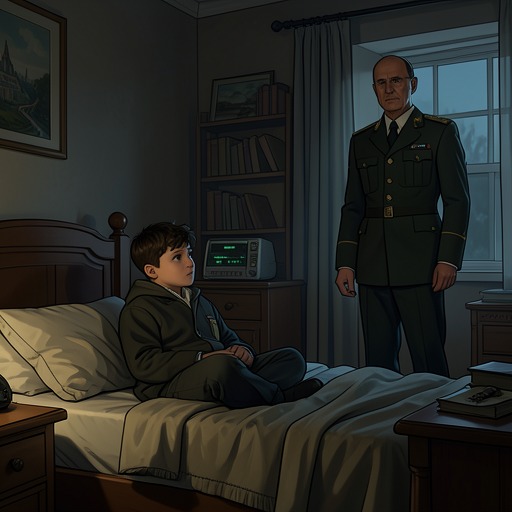
The school is a brick building with its former name carved in stone above the door. Its windows are bricked in, and concertina wire reinforces its barricades. The precautions do not erase the ordinary life inside: children still play in the courtyard, while the bell tower marks the school as part of the Colony’s daily rhythms. The Littles sleep together there, in a room remembered by residents across generations.
Rules of Shelter and Secrecy
The Colony’s law requires each child to remain within the Sanctuary until her eighth birthday. On departure, the child chooses a Trade, subject to the Colony’s needs and approval by the Household and Board of Trades; the child’s equal share then reverts to the Household and travels with the child upon marriage. The rule makes release from the school a formal passage into adult work and communal obligation, not simply a change of residence.
That protection is also enforced through censorship. Children must know nothing of the world beyond the walls in its present form, including the Virals, the Watch’s duties, or the Great Viral Cataclysm. Anyone who knowingly tells a minor child this information risks being put outside the walls. The school thus protects children from immediate knowledge by making ignorance compulsory, and ties the authority to teach to the authority to punish.
First Night and the Making of a Home
Ida Jaxon’s recollection traces the school’s founding role in the Colony’s life. After the evacuation, the children were brought to the Sanctuary and placed in the room where the Littles still sleep. Terrence Jaxon told Ida that the lights and walls would keep them safe until the war was over, comparing the place to Noah’s ark. He also promised to look after her, and extended the same offer to Lucy Fisher and her brother Rex. These childhood acts of care became part of the relationships linking the Jaxon and Fisher families.
The promised return of more children and soldiers never came. At dusk the gates were sealed; when the lights came on, they blotted out the stars. Ida and Terrence watched together, and the Sanctuary became part of the fixed geography of a life spent inside the Colony. Her account connects the building’s founding promise of safety to the lasting loss of the world beyond it.
Memory, Instruction, and Inheritance
The school’s control of knowledge is embodied in the office of Teacher. Different women hold the role, but the Colony understands them as one continuous figure. Teacher lives largely apart from adult society, among the Littles, and bears the responsibility—and resentment—of telling each generation the truth when the time comes. When Sara Fisher is released, Teacher guides her through a chain of questions that leads to the concealed reality, then brings her to her parents. Sara remembers the revelation as a split between the child who believed she was still a Little and the part of her that had somehow known more.
The institution’s secrecy stands beside other efforts to preserve what it excludes. Auntie records the old world and the Colony’s beginnings in a handmade memory book, while Sara later presents her journal as a historical document at a conference centuries after the events it describes. The Sanctuary gives children a shared childhood and an orderly threshold into adult life, but its rules cannot make the past disappear. Its walls contain both the community’s care for its youngest members and the burden of deciding when they are allowed to know what that care has been protecting them from.