Sara Fisher
The Passage (Justin Cronin Edition)Sara Fisher is a nurse and skilled rider whose story joins intimate care to the practical labor of keeping a scattered community alive. Raised in the Sanctuary alongside her brother Michael, she becomes one of the First Colony’s medical workers and a member of the expedition from the San Jacinto Mountains toward Colorado. Her unreturned love for Peter Jaxon gives way to a chosen partnership with Hollis Wilson; as the journey continues, she treats the wounded, writes its history, and discovers that she is pregnant.
Identity and Background
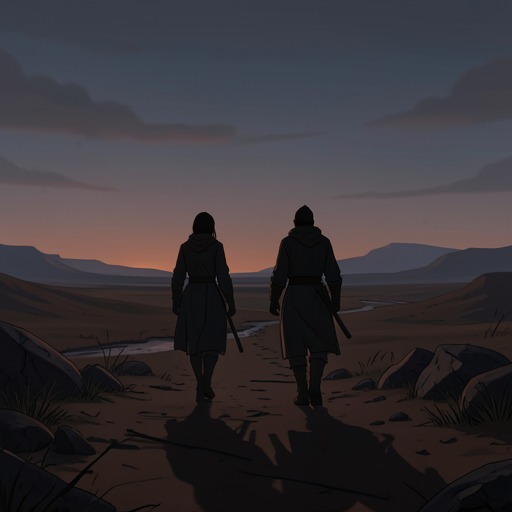
Sara is a nurse by trade, trained by Peter’s mother, and an accomplished rider. When she breaks from the group of riders, her appearance and equipment mark her practical readiness: patched-denim leggings, a leather bow guard, and a meter-long bow carried across her back. Her fifteen-year-old gelding, Dash, is said to prefer her to other riders. The combination of medical skill and horsemanship places her in two forms of service the community needs: caring for people and moving through exposed country.
Her childhood was shaped by the Sanctuary’s rules. Children were to remain within its walls until their eighth birthdays, when they would leave, choose a Trade, and have that choice approved according to the Colony’s needs and its governing bodies. Sara remembers herself and Michael as Littles in a world that seemed safe, even happy. Their parents visited at night and then left when Teacher said it was time; because Sara had never known another arrangement, she did not question where they went afterward. She recalls childhood concerns—friends, visits, and Teacher’s moods—against the adult knowledge that their family life had been organized around separation.
Family and the Colony
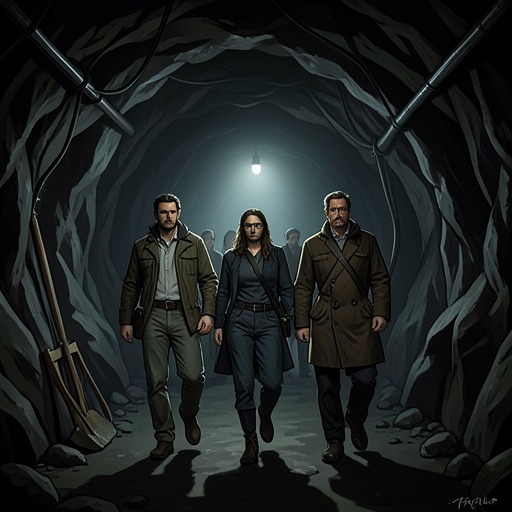
Michael is Sara’s brother, and their closeness persists into adulthood. He carries messages between her and others, and when he brings her to the Lighthouse to explain what he has learned about the signal associated with Amy, Sara listens and examines the words recorded in the logbook. She trusts his judgment: in her view, Michael may be exceptionally intent on being right, but he is not wrong. Her confidence is accompanied by concern about what might happen if his ceaseless effort to solve problems ever failed. A childhood game of building and dismantling towers supplies her image for that possibility: once the lower supports are removed, the whole structure may fall at once. Sara imagines that Michael might need her then, as he had needed her before.
Her medical work becomes especially consequential when members of the expedition are injured. After a raid kills the battalion’s two medical corpsmen, Sara and Amy take over care of the wounded and prepare them for the journey south. Sara later rides in the crowded rear compartment of a large truck, where injured men are carried in slung bunks among supply crates; she wedges herself into the remaining space to offer comfort. Her care is not limited to people she knows well. When Sancho’s condition worsens, she takes his bandaged hand and tries to find words of kindness, though she knows little about him beyond his name. The gap between that limited acquaintance and the intimacy of bedside care is central to her role: need, rather than personal history, determines whom she serves.
Peter and the Limits of Love
Sara’s feelings for Peter reach back to their childhood in the Sanctuary. She describes her love as an invisible thread that has bound them for as long as she can remember. She believes she understands a sadness in him that other people do not see, and hopes that if she could reach it and take it from him, he would love her in return. Her attachment is therefore not simply attraction: it is also a conviction that she recognizes an inner loneliness and might relieve it.
That hope does not become a mutual romance. Peter has kissed Sara, but afterward he feels guilt and recognizes that he cannot give her the love she offers. He does not dismiss her or deny that she is an obvious choice; the difficulty is that he cannot make himself feel what he does not feel. Sara’s devotion is real, but it cannot repair what Peter carries or compel him to reciprocate. The asymmetry is made plain in a later moment when Peter sees Sara and Hollis share a private look and realizes that he is happy for them. He understands that he had his chance, while Hollis is prepared to love her as she deserves.
Amy and the Work of Care
Sara becomes one of the people who assess and care for Amy when the girl arrives in the Colony. After Amy wakes, Sara sits beside her on a narrow cot, examines the wound, and reports that it is nearly healed. Since Amy’s knapsack and its contents have been burned but a signal remains, Sara searches for its source on Amy herself. She explains what she intends to do, asks Amy to hold still, and examines her from feet to head, including her limbs, hands, neck, and hair. Amy complies without movement, watching the room with neutral curiosity.
Sara’s care combines method with restraint. She does not treat Amy as an ordinary patient whose condition is already understood: she concludes that Amy is neither a viral nor an ordinary human being, given the way she heals. Later, when Sara and Amy are placed together after the order separating them is lifted, they work side by side among the expedition’s wounded. Their partnership turns an earlier uncertainty about Amy’s body into a concrete collaboration in care. During an attack, Amy is found crouched at the base of a wall while Sara is on her knees with blood on her face; the scene records the danger they have shared without making their work together reducible to Sara’s earlier examination of her.
Hollis, Marriage, and Parenthood
Hollis becomes Sara’s partner after the expedition’s losses and hardships have given their companionship room to deepen. In her journal, she describes a night watch in an empty school, taking second shift with Hollis. They talk about home and what they miss. Sara names soap first; Hollis laughs and says he thought she would say the lights, then admits that what he misses most is the Littles. The exchange links their present journey to the Sanctuary children and to the ordinary comforts that have disappeared.
Sara decides to marry Hollis. Peter later recognizes that Hollis’s commitment was visible when Sara was taken at Milagro: Hollis had been willing to go after her, and Peter understood that the decision came from courage and love. Peter does not contest their bond; he accepts that Hollis can offer Sara the reciprocal affection he cannot.
Pregnancy gives Sara’s sense of the future a new and literal form. Before leaving for Colorado, she understands that she is carrying Theo’s child and thinks of a baby not as an idea but as a fact: a new being whose existence demands belief in a future. Later, after the journey has brought the group to a farmstead, her journal describes sleeping in a room with a baby and listening to the small sounds he makes. She has not yet told Hollis her news, wanting to be sure, though she suspects he already knows; Mausami notices her expression and asks whether there is anything she wants to share. Sara’s private happiness becomes unmistakable when she describes sitting quietly and sensing a hopeful presence within her, too early for movement, but already making her feel happy.
The Book of Sara and Narrative Role
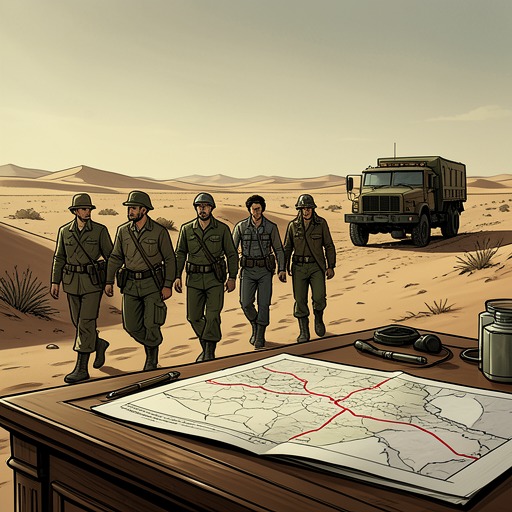
Sara records the expedition in a journal that becomes known as The Book of Sara. One excerpt identifies her as a First Family member writing from an army bunker north of Twentynine Palms, California, while traveling with seven others from the San Jacinto Mountains to Telluride, Colorado. She explains that Peter believes someone should keep a record so that a future reader might know what happened to them. The journal shifts her from participant to witness: details such as the school desks, paired watches, missing comforts, and private conversations preserve the texture of travel that a bare account of the expedition’s destination would omit.
The journal’s later presentation at a conference in 1003 A.V. places Sara’s personal record inside a much longer historical frame. That framing makes her domestic observations part of a record meant to survive its immediate moment. She writes of marriage and pregnancy as well as danger and loss; her account holds together the expedition’s public undertaking and the life that continues within it. In Sara, the novel makes survival more than reaching a destination: it also depends on medical attention, memory, affection freely returned, and the possibility of a child who will live in a future the travelers cannot yet see.