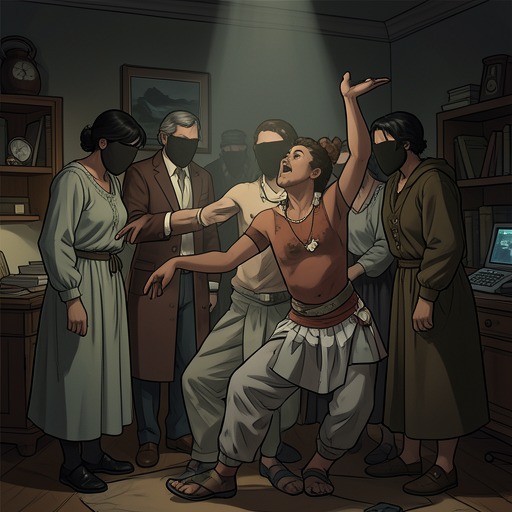
Sara and Hollis’s relationship
The Passage (Justin Cronin Edition)Sara and Hollis’s relationship joins intimate hopes for an ordinary family life to the perilous work of fighting the remaining Twelve. Its defining tension is not a lack of love but the knowledge that choosing one another cannot simply mean turning away from the danger: even while Sara and Hollis imagine marriage, a child, and a home, they remain committed to the struggle Peter has asked them to undertake.
Commitment and the choice to fight
Peter articulates the conflict between survival and living. Being alive, he argues, cannot be enough by itself; what he wants is a real life with Sara, away from lights and walls and the duty of standing the Watch. That life may belong to someone else someday, he admits, but he cannot refuse Peter’s request while there is still a chance to act. He believes Sara cannot refuse either, placing their shared commitment alongside their private future rather than treating the two as separable choices.
The decision is explicit: they will fight the remaining Twelve as themselves, as people. Peter promises Sara that this will not change. The vow gives their relationship a public and ethical dimension: their bond does not exempt them from the danger facing others, and the fight is not framed as a sacrifice of their humanity but as an action they will take while holding on to it.
Sara’s silence becomes part of the exchange. Peter feels understanding pass between them, and when Hollis breaks his gaze away, Peter knows what his friend is about to say. Hollis offers to go next if their plan works. His words extend the promise beyond the couple: the future they hope to claim depends on surviving the mission, but Hollis is willing to risk that future in order to help make the larger undertaking possible.
A hoped-for family
Sara’s private journal reveals a future she has not yet told Hollis about: she believes she is pregnant. She waits to be certain, although she suspects Hollis may already know. When Mausami catches her smiling and asks whether she has anything to tell her, Sara tries to look innocent and denies it; Mausami laughs and makes clear that the news would be welcome. The secret is therefore both intimate and already perceptible to someone close to them, even before Sara shares it with Hollis.
The expected child makes the couple’s hopes concrete. Sara considers names drawn from her parents, Joe for a boy and Kate for a girl. The thought brings happiness, but it also sharpens grief: being happy about one thing, she reflects, can make her just as sad about another. The prospect of a new family does not erase what Sara has lost; joy and sorrow occupy the same thought.
During the journey toward Roswell, the possibility of ordinary domestic life appears amid makeshift shelter and continual danger. Sara describes the strangeness and pleasure of sleeping in a room with a baby, listening to his small noises even while he sleeps. This quiet experience gives her imagined child a place within the group’s precarious daily life, while her attention to the others’ safety shows that private anticipation remains bound to communal concern.
Danger, marriage, and an uncertain future
At Hondo, the danger surrounding the group makes Sara fear that her journal entry may be her last. The pursuers are outside the bunker, and Mausami holds Caleb against her chest, crying that they have come for him. In that moment Sara turns to Hollis with regret: she wishes they had never left the farmstead and could have had the life they wanted. Her repeated declaration of love is both a personal assurance and a response to the possibility that their future may be cut short.
They survive the night, but survival does not immediately resolve the relationship’s uncertainty. At Roswell Garrison, Sara writes that Hollis is so exhausted she has not had the chance to tell him her news. She imagines that they might marry there, yet wonders whether anyone can perform the ceremony. She considers asking the commanding officer, then decides she should wait until Michael is with them in Kerrville; he should be the one to give her away. The imagined wedding is therefore a specific hope, but it remains deferred, dependent on reunion and on circumstances that the narrative does not promise.
Sara describes the pregnancy as a warm, hopeful presence within her body, though she is careful not to mistake it for movement: it is too early for that. Her happiness is physical and inward, held alongside the exhaustion and military surroundings of the garrison. Then shots sound outside, and she goes to investigate. The entry breaks at the point where domestic anticipation meets immediate danger; it does not establish what happens to Sara, Hollis, or the hoped-for marriage afterward.
Meaning within the larger struggle
The relationship’s recurring contrast is between the life Sara and Hollis want and the uncertain work they believe they must do. A home at the farmstead, a shared future beyond the Watch, a wedding, and a child all represent more than mere survival. Yet their promise to fight the remaining Twelve prevents those hopes from becoming an escape from responsibility. The relationship is therefore shaped by a double commitment: to each other and to the possibility that other people may still be saved.
Sara’s journal gives that tension a distinct emotional scale. The larger journey is measured through concrete signs of danger and endurance: a bunker at Hondo, a baby held through the night, Hollis too worn out to hear the news, and a garrison where Sara wonders who could marry them. Against those circumstances, names for a child and the hope of being given away at a wedding are not proof of a settled future; they are acts of imagining one. The narrative leaves that future unresolved, with love affirmed but marriage and family life still exposed to the violence around them.