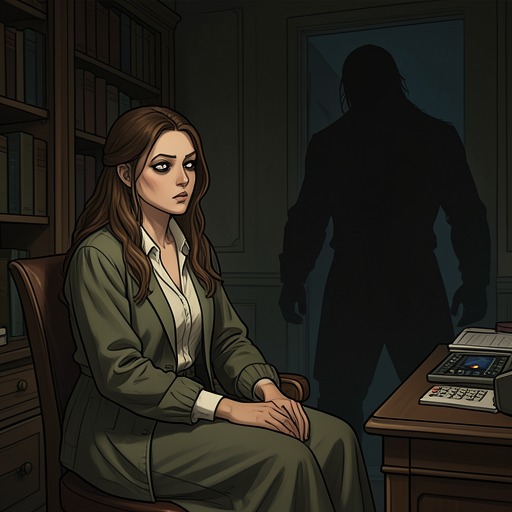
The Fat Lady Dream
The Passage (Justin Cronin Edition)The Fat Lady Dream is a recurring nightmare in which a heavyset woman talks in a kitchen in the Time Before. What begins as Theo’s disturbing vision becomes a shared image that others recognize, and its details lead back to Giles Babcock’s childhood and his abusive mother. The dream turns private terror into a sign of collective reach: its voice and figure cross the boundaries between sleeping minds, memory, and the present.
Image and First Appearance
Theo’s nightmare is sensory and oppressive. He sees an awful woman in a close, hot room, her loose form spilling over a chair; smoke, body odor, and the cramped atmosphere crowd his awareness as he struggles to wake. Instead of escaping the dream, he feels himself drawn deeper into it, as though his mind were a well and he were falling into its darkness. The scene leaves him with the stain of fear even after he jolts awake in his cold cell, sweating so heavily that his skin is glazed with it.
The woman’s speech makes the vision more unsettling. The dream gives Theo the words that he is not merely dumb but has been struck dumb, a phrase that later returns in another character’s recollection. The image therefore carries both a recognizable setting and a repeated verbal trace: the kitchen, the talkative woman, and the judgment about the boy’s silence.
A Shared Dream and an Intrusion
The nightmare stops being solely Theo’s when a voice outside his cell asks whether he likes the fat lady and refers to the woman inside his head. The voice knows the precise figure that has appeared in Theo’s dream and speaks as though the image is familiar. Theo recognizes that someone beyond the door has access to his sleeping experience; the encounter makes the dream evidence of a connection that reaches into his mind.
The motif resurfaces among Peter’s companions. Alicia says the heat has kept her awake and given her nightmares, and Hollis identifies the woman in the kitchen as belonging to the Time Before. Sara completes the phrase about the boy being struck dumb and says she has been dreaming about the woman too. Peter, however, does not recognize what they mean. Their exchange distinguishes the shared dreamers from an observer who remains outside the experience, while confirming that the image is not confined to Theo.
Michael also recognizes the reference when Billie promises that a treatment will bring relief and end the fat lady. He thinks specifically of the woman in the kitchen in the Time Before and begins to ask how Billie could know. The dream’s recurrence thus accompanies a troubling asymmetry: characters can be addressed through an image they have not knowingly shared with one another, while another person appears to know what it means to them.
The Memory Behind the Woman
The dream’s kitchen has a history in Babcock’s memory. Before he became one of the Twelve and the Other, Zero, he lived as a boy in a little house in Desert Wells with his mother. His recollection fixes itself in concrete fragments: a square of golden sunlight on carpet, a worn place on the doorstep fitted to his sneaker, rust ridges on a rail, and his mother’s cigarettes and television. The kitchen voice of the dream belongs to this childhood world.
Babcock remembers his mother striking him and burning his hand with a cigarette while demanding that he be quiet and behave like a man. The words that had been associated with Theo’s nightmare recur in the memory of the boy’s silence. In the same kitchen, he eventually took a knife from a drawer and stabbed her in the throat. His recollection describes the act as a moment when the love he had felt for her lifted, and her ceaseless words became something he could see as part of a body of flesh, blood, and bone.
Recurrence and Significance
The dream joins separate plot moments through repetition rather than explanation. Its woman first appears as a frightening presence in Theo’s sleep, then as a phrase used by a voice that knows his dreams, and then as an image recognized by several other characters. Babcock’s childhood memory supplies a concrete origin for the kitchen and the woman’s voice, but the dream’s spread among others makes the image more than a straightforward recollection of one person’s past.
The recurrence also gives silence a particular weight. The remembered boy is called dumb and is forced into quiet by violence; the dream preserves the words and atmosphere that surrounded that enforced silence, even when the dreamer cannot initially recall the nightmare after waking. Across Theo, Sara, Alicia, and Michael, the woman becomes a shared and invasive sign: a past scene that returns in other minds, carrying the disturbing possibility that what seems private may already be connected.