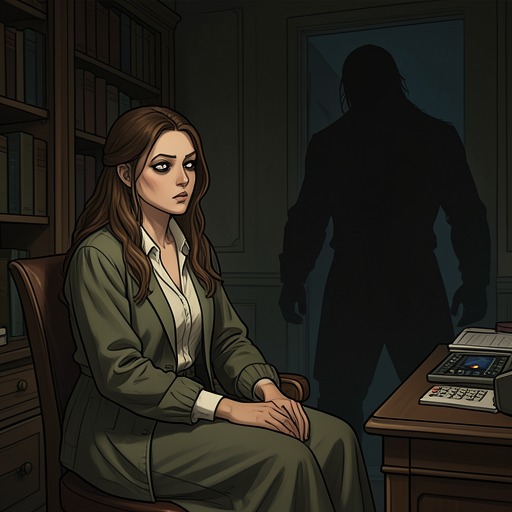
Theo’s Torture in the Cell
The Passage (Justin Cronin Edition)Theo’s torture in the cell is both bodily punishment and an assault on his grasp of reality. Held in an isolated room after virals carry him away from Peter’s group, he is left to endure disorientation, deprivation, and a voice that knows the contents of his dreams; when Theo lunges at the door to test whether that voice is real, a boot crushes his hand through the slot. The captor then releases him abruptly and promises that Theo will eventually become his friend, framing the violence as the beginning of a coercive relationship.
Captivity and disorientation
Theo wakes from a nightmare in a cold cell, his skin glazed with foul-smelling sweat. He cannot recall the dream itself; only its residue remains, a dark stain across his consciousness. The scene makes memory’s failure part of the confinement: Theo is awake, but cannot recover what his sleeping mind has experienced.
His days acquire a punishing routine. He shuffles to the hole in the floor and listens for the splash of his urine, a sound he has begun to anticipate like a visit from a friend. He waits for someone to explain why he is there, why he has not been killed, and what the captors want. Gradually he comes to expect pain, yet the boots outside the door only deliver meals and remove empty bowls, withholding both answers and violence. His repeated pounding and unanswered pleas make silence an instrument of control.
The room offers almost nothing to orient him: a cot, a hole, a dirty window high beyond reach, and a narrow glimpse of white sky by day or stars at night. Theo remembers virals dropping from the roof, Peter’s face receding as his name is called, and the snap of his neck as he is thrown upward. He also remembers the gun falling away in a slow pinwheeling descent. After that, his memory opens into a black gap, leaving him unable to account for how he reached the cell or what happened in the missing interval.
Food provides another measure of how captivity wears down resistance. A bowl slides beneath the door with watery soup, sometimes containing a small joint of meat and sometimes only a marrowed bone. Theo initially refuses to eat to see what his captors will do, but hunger defeats the experiment after a day. The sparse meals and the unanswered question of who controls the door keep his body dependent on the people who refuse to identify themselves.
The voice and the dream
The first contact comes through the food slot, where an unseen speaker asks Theo how he is feeling. Theo answers with hostility and demands to know how the speaker knows his name. The reply is more disturbing than a threat: the speaker claims Theo told him during an earlier conversation, one Theo cannot remember. The cell therefore contains a second uncertainty alongside the missing stretch of memory—whether Theo can trust the evidence of his own mind, or even whether the voice is real.
The speaker turns that uncertainty into a deliberate intrusion. He tells Theo to look around, making the familiar cell—the cot, the hole, the dirty window—part of the exchange, and remarks on an inscription Theo has noticed on the wall: “RUBEN WAS HERE.” When Theo asks who Ruben was, the voice dismisses him as ancient history and shifts to Theo’s sleep. Its knowledge grows unmistakably intimate when it asks whether Theo likes the fat lady from his dreams. The question brings back the kitchen dream and its oppressive figure; Theo realizes that the voice outside the door knows what he has dreamed.
The tormenter's script
The speaker does more than expose his access to Theo’s dreams: he supplies a future for them. He refers to a knife and asks whether Theo has reached the part where he carves up the fat woman, then insists that this moment will come and feel like relief. Theo has not described such a dream or act to him, and the prediction turns the nightmare into a script whose next steps the captor claims to know. By calling it a turning point, the voice presents anticipated violence as a route toward emotional release, while making Theo’s own sleeping mind seem compromised by an outside power.
The voice’s casual familiarity sharpens the threat. It claims that everyone has been through the same experience, speaks disparagingly of the woman, and treats Theo’s fear as material for conversation. Theo tries to deny knowing the figure, but his breath catches and nausea rises at the mention of the knife. The body reacts before he can make sense of the speaker’s claims: his breathing falters, his mind recoils, and the walls seem to press closer. The captor’s knowledge is therefore not merely information; it changes how Theo experiences the cell and his own dreams.
Theo finally tests the voice by lunging toward the door. His hand reaches through the slot, and a boot comes down on his wrist, crushing and grinding it against the floor as his face is forced against the cold metal. The pain confirms what argument could not: the voice is physically present, not an invention of isolation. In that instant the assault answers Theo’s question about reality by making his body the evidence, while also punishing the attempt to reach beyond the cell.
The pressure stops as suddenly as it began. Theo pulls his injured arm through the slot and cradles his wrist, and the abrupt absence of pain feels almost like pleasure after the violence. The speaker then tells him that there are things worse than the speaker himself and wishes him a good night before the slot shuts. This oscillation between inflicted pain and sudden relief is part of the coercion: the unseen captor controls both the violence and its ending, and leaves Theo alone with a warning that the crushing of his hand is not the worst thing awaiting him.
Coercion and the limits of resistance
The voice’s claims turn Theo’s private nightmare into a means of control. It does not simply say that the fat woman is familiar; it predicts that Theo will take up a knife and carve her, describing the act as a turning point and promising relief. Theo has not reached that moment, and the speaker’s certainty makes the dream feel less like an isolated mental image than a sequence whose next scene someone else already knows. When Theo denies knowing the woman, his body betrays the force of the intrusion: his breath catches, nausea rises, and the cell seems to close around him.
Theo’s lunge at the slot is an attempt to settle whether the speaker exists outside his mind. The boot that crushes his wrist answers with pain rather than explanation: the voice is real, and the person behind it can reach into the cell while Theo cannot reach back. His hand is pinned through the opening, his face forced against cold steel; only when the pressure is released can he pull his arm inside and cradle it. The sudden end to the torment feels almost like pleasure, exposing how completely the unseen captor controls both pain and respite.
The exchange closes not with an account of Theo’s capture or a clear statement of what is wanted from him, but with a warning that worse things exist than the speaker. The slot slams shut, returning Theo to the cell and its unanswered questions. The episode’s threat lies in that imbalance: his captor can name his dreams, injure him through the door, and promise a future intimacy, while Theo remains unable to see or identify him. The violence is thus both an assault on Theo’s body and a campaign to make the boundaries between dream, memory, and external reality unreliable.