
The Survivor’s Refusal
The ReaderMichael’s meeting with the surviving daughter tests whether remembrance, restitution, or recognition can become absolution for Hanna.
increasing Bearing strength in each event
 decreasing
Bearing strength in each eventdecreasingThe Final Instructions

A Bequest to the Survivor
Money in the Tea Tin
The warden reads Hanna’s instruction that Michael send her remaining money to the daughter who survived the church fire with her mother. Hanna asks that the daughter decide what to do with it.
No Private Message
Hanna leaves no personal message for Michael beyond a greeting. He cannot tell whether the omission is deliberate punishment or the result of exhaustion and a wish to write only what was necessary.
The Meeting in New York

Meeting the Survivor
A Matter-of-Fact Welcome
Michael travels from Boston to New York and meets the daughter over tea. She switches to German and asks why he has come, maintaining a measured distance.
The Question of Absolution
When Michael explains Hanna’s bequest, the daughter asks whether she is expected to absolve Hanna. Her question refuses to let the money define what justice or remembrance should mean.
The Past Named Aloud

A Relationship Disclosed
Michael’s Account
Michael explains that he read aloud to Hanna as a teenager and later sent recordings while she was in prison. He also reveals that they had a sexual relationship when he was fifteen.
The Daughter’s Challenge
She asks whether he ever got over Hanna’s brutality and whether Hanna understood what she had done to him. Michael answers indirectly, turning to Hanna’s later engagement with the crimes.
The Tea Tin’s Memory

A Survivor’s Possession
Childhood Treasures
The daughter recalls carrying a tin containing a piece of her poodle’s hair, opera tickets, and a ring into the camp. Someone stole it, not merely for its contents but for the useful object itself.
Meaning Without Forgiveness
She keeps Hanna’s tea tin but rejects a Holocaust-related donation if it would imply absolution. The object connects two private histories without making their moral positions equivalent.
The Literacy Donation
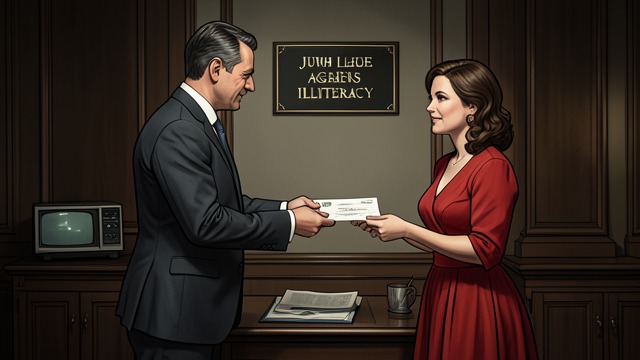
A Limited Act of Repair
A Practical Proposal
Michael suggests that the money support people learning to read and write. The daughter asks him to choose a suitable Jewish organization and make the donation in Hanna’s name.
Recognition Without Absolution
He gives the money to the Jewish League Against Illiteracy and receives a formal acknowledgment. The act honors Hanna’s final wish and her learned literacy, but cannot settle the daughter’s judgment or erase the victims’ suffering.
Immediately after Hanna’s death
Autumn, ten years after Hanna’s death
During Michael’s conversation with the daughter
Later in the same meeting
After Michael returns from New York
