Auschwitz concentration camp
The ReaderAuschwitz is the point of departure for the camp history at the center of Hanna Schmitz’s trial: Hanna serves there before being transferred to a satellite camp near Cracow, while prisoners judged unable to work are sent back from that camp to be killed. Recounted through Michael Berg’s retrospective account, the name links an administrative system of selection and deportation to the later church fire and to the postwar struggle to determine individual and social responsibility.
Place in the camp system
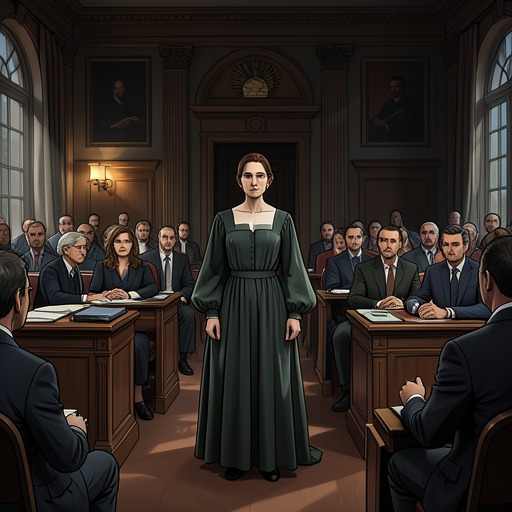
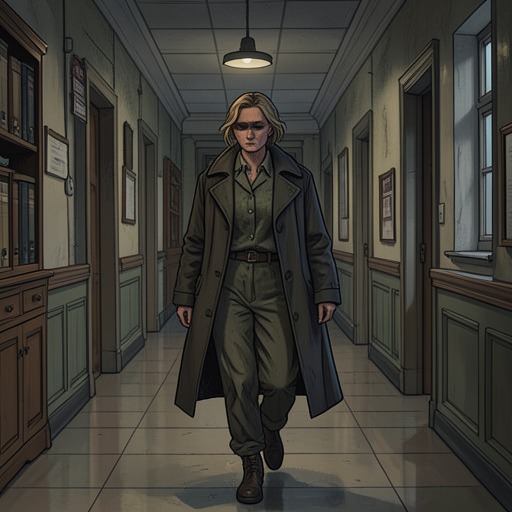
The indictment describes five accused women, including Hanna, as guards at a small camp near Cracow that was a satellite of Auschwitz. They had been transferred there in early 1944 to replace guards killed or injured in an explosion at the factory where the prisoners worked. The five were not in charge of the camp: a commandant, special troops, and other female guards formed part of the larger hierarchy. The distinction matters to the trial, where the prosecution’s central questions concern what these particular defendants did within a system whose authority and responsibilities were divided.
The prisoners’ movement between the satellite camp and Auschwitz was organized as a recurring selection. Each month about sixty women arrived from Auschwitz, and about sixty were sent back, less those who had died in the meantime. The returnees were those no longer able to perform useful work; it was clear to the people at the trial that they would be killed. The factory made munitions, but the prisoners spent much of their time repairing damage caused by an earlier explosion rather than doing the factory’s ordinary work. Auschwitz was therefore not merely a distant place named in testimony: it was the destination built into the monthly process of sorting prisoners by their capacity to work.
Prisoners’ experience and the westward march
In the daughter’s account, the camp near Cracow was the mother and daughter’s last stop after Auschwitz. Its conditions were comparatively better: work was easier, food was better, and six women shared a room rather than a hundred sharing a barracks. The women could gather wood on the way back from the factory, and the threat of selection, though constant, seemed less immediate than at Auschwitz. Around sixty of roughly twelve hundred women were sent back each month. That proportion made survival appear measurable, while leaving each prisoner dependent on the hope of being stronger than average or of the war ending before another selection.
When the camp closed, the prisoners were driven west in winter. Their clothing was inadequate for the cold, and what they wore on their feet—often rags or newspaper tied in place—could not withstand a long march over snow and ice. They were made not only to march but to run. The daughter’s account calls it a death trot or death gallop; after a week, almost half the women were dead. The phrasing makes the forced movement itself central: the women were not simply being relocated but driven through conditions that killed many before the column reached its destination.
The church fire and the question of responsibility
During the march, the guards and troops locked several hundred women in a village church overnight. The village was mostly abandoned, and the prisoners had been given shelter there after nights in barns or against walls. Bombs fell; one struck the priest’s house where the troops and guards were sleeping, and another hit the church steeple. The fire spread from the steeple to the roof, and the burning rafters collapsed into the nave. The doors remained locked. The defendants could have opened them, but did not; the prisoners inside died in the fire.
The surviving mother and daughter could testify to what happened inside the church, but not to events outside it. Other witnesses from the village remembered the defendants there, yet their own position complicated the evidence: if the guards had been the only people outside, villagers might have been asked why they had not overpowered them and opened the doors. The trial thus examines not only the defendants’ conduct but also the villagers’ possible capacity to intervene. It does not make their positions identical: the guards held the keys and had the direct opportunity to release the prisoners, while the villagers’ knowledge, power, and risk remained part of the legal dispute.
The fire also exposes the limits of what the survivors could know. The daughter later believed that the women might have saved themselves by gathering together and breaking down a door, but they initially could not identify the sounds and signs of the fire or know that nobody was coming to release them. Her mother fled to a narrow gallery because she could not bear to remain among the other prisoners, and mother and daughter survived there. Their survival supplied the testimony that brought the church episode into court; it did not give them a view of what the guards and villagers were doing outside.
Hanna, testimony, and the limits of knowledge
Hanna testified that she had served at Auschwitz until early 1944, then at the camp near Cracow until the winter of 1944–45, and had gone west with the prisoners. At trial, the daughter recalled that Hanna had taken young, weak prisoners under her protection: she arranged better sleeping space and food for them and had them brought to her in the evenings. The daughter had assumed that this attention concealed abuse, particularly because the girls were later sent on transports. She then remembered that the prisoners had read aloud to Hanna. The recollection complicates the evidence without undoing the danger of the selections: the girls could receive temporary care and still be sent to Auschwitz.
Michael’s later understanding of Hanna’s illiteracy connects it to several choices in her life, including her reluctance to accept promotion at Siemens and her inability to read the daughter’s book or the indictment. He wonders whether this inability also shaped her conduct at trial and whether fear of exposure affected her treatment of the prisoners who read to her. These are questions in his retrospective account, not established explanations for her crimes. The narrative keeps the distinction between understanding a constraint and excusing conduct: the possibility that shame shaped Hanna’s choices does not settle why she participated in the selections or failed to open the church doors.
Historical and ethical significance
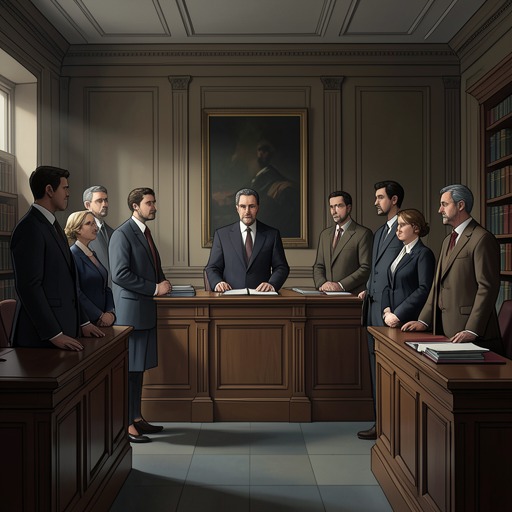
At the trial, Michael’s seminar debates the prohibition on retroactive justice: whether it is enough that legal prohibitions existed when crimes were committed, or whether law must also be understood through how it was actually interpreted and enforced at the time. The case makes that problem concrete. The charges concern specific acts by guards, but the evidence also reveals a hierarchy of camp authorities, the deportation system, and the choices of people who were not inside the church. Legal proceedings can establish responsibility for particular conduct; they also force questions about the wider institutions and postwar society that allowed perpetrators to remain among those they had served.
For Michael’s generation, Auschwitz and the trial become part of a broader reckoning with the Nazi past. Students in his seminar condemn their parents’ generation for having served the regime, watched crimes happen, or tolerated perpetrators after 1945. Michael later recognizes that such accusation does not free him from shame, and that his own love for Hanna draws him into a personal relation to the crimes he is trying to judge. Auschwitz consequently functions in the novel not as an isolated historical reference but as the point from which its connected questions of evidence, complicity, memory, and responsibility continue to unfold.