Understanding and condemnation
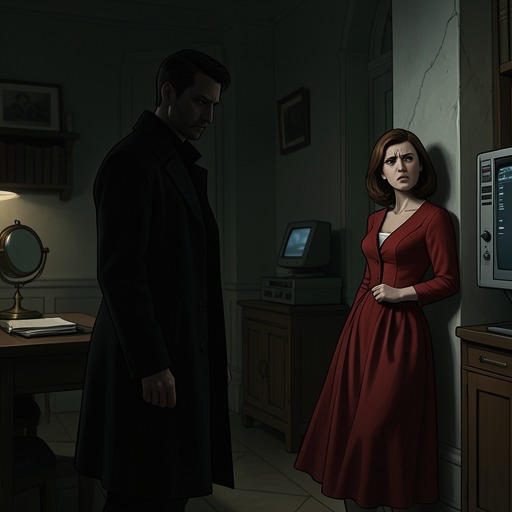
The ReaderUnderstanding and condemnation names the ethical impasse at the center of Michael Berg’s response to Hanna Schmitz. He insists on two obligations at once: to understand Hanna and to condemn her crimes. Yet understanding threatens, in his mind, to weaken condemnation, while condemnation seems to leave no room for understanding. The contradiction does not resolve into a verdict or an act of reconciliation; it drives Michael toward an indirect intervention that he recognizes as a way of keeping influence over Hanna.
The conflict between understanding and judgment
Michael describes the dilemma as an inability to perform two tasks together. When he tries to understand Hanna, he fears that he is failing to condemn her as fully as her crimes require. When he condemns her, he feels that understanding has been shut out. But abandoning the attempt to understand carries its own moral cost: he would, he thinks, betray Hanna again. The resulting tension is not simply uncertainty about what Hanna did. It is a conflict over whether moral judgment can acknowledge a person’s inner life without becoming an excuse for the harm she caused.
The terms remain deliberately unresolved. Michael wants both understanding and condemnation, but cannot make either one contain the other. His account therefore resists an easy moral synthesis: sympathy cannot cancel responsibility, and responsibility does not make the demand to understand disappear. His struggle is especially charged because Hanna is at once the woman he knew intimately and someone whose actions place her within the history of the concentration camps.
The camp visit and emotional distance
The visit to Struthof does not give Michael the inward recognition he appears to seek. On an earlier visit, he walked around the grounds until they closed, then sat beneath the memorial overlooking the camp. Instead of finding an insight within himself, he experienced an emptiness, as though the search for such a response had uncovered nothing. The landscape and memorial thus fail to turn historical knowledge into a clear personal feeling or moral resolution.
After the visit, Michael’s journey through Alsatian villages continues in ordinary, bodily circumstances. He finds a restaurant for lunch, later waits an hour for a ride in the bed of a small open truck, and spends the night in a village guest house, eating steak, french fries, and peas. These details do not erase what he has seen; they place the camp visit beside the practical routines of travel. When he gets back the next day, the city seems strange, but the camp world does not feel nearer. His impressions of Struthof join the few images he already has of Auschwitz and Bergen-Belsen, and freeze with them rather than opening into fuller comprehension.
The night between those journeys brings the crisis into his body. Wind, a creaking tree, and a banging shutter are not enough by themselves to keep him awake, but he grows inwardly restless until he is shivering with fear. The fear is not an expectation that a particular disaster will occur. It is physical and anticipatory: he cannot imagine how he will rise the next day, hitchhike back, resume his studies, and eventually have a career and a family. The ordinary future he lists becomes difficult to approach while his experience of the camp remains emotionally frozen.
From moral impasse to intervention
When Michael reaches the next chapter of his account, he has gone to the presiding judge after all, although he could not make himself visit Hanna. He presents the action as a refusal to do nothing, but his explanation complicates any claim that he acts only for justice. He tells himself that he must prevent a miscarriage of justice and ensure justice both for and against Hanna, despite her lifelong lie. Then he admits that justice is not his real concern: he cannot leave Hanna as she is, or as she wants to be, and wants to have some influence on her, if not directly then indirectly.
His decision follows from the same divided impulse that governs the attempt to understand and condemn. He does not approach Hanna face-to-face, and he does not simply let her remain beyond his reach. Instead, he intervenes through the judge, moving between the language of justice and the personal desire to affect the woman who has deceived and left him. The act does not solve the moral problem; it gives the impasse a practical consequence.
Narrative and ethical significance
The episode places Michael’s self-scrutiny beside scenes that unsettle his confidence in what a response to suffering ought to look like. At a village inn, four card players throw cigarette butts at a wooden-legged old man, who suddenly turns the apparent humiliation into a joke by bringing his leg down on their table; the men laugh together, while Michael’s outraged intervention is also laughed at. The scene is not equivalent to the crimes he is trying to comprehend, but it shows how uncertain the boundary can be between an observer’s moral response and the meaning an action has for its participants. Michael is left confronting not only what he feels, but whether his sense of how he should feel can be trusted.
The account makes no claim that bodily distress or historical encounter has yielded understanding. Instead, the frozen images of the camps, the fear of returning to ordinary life, and the decision to contact the judge remain distinct parts of an unresolved response. Understanding and condemnation matters because it holds these demands together without pretending they can be reconciled: Michael neither treats understanding as acquittal nor finds a way to judge Hanna that frees him from his attachment to her.