
The Memory That Will Not Stay Put
The Reason I JumpThis flow follows the book's account of fragmented memory as a source of repetition, delayed replies, flashbacks, and distress.
increasing Bearing strength in each event
 decreasing
Bearing strength in each eventdecreasingMemory as Separate Dots
Memory as Separate Dots
Disconnected recollection
Naoki Higashida compares his memory to a pool of dots rather than a continuous line. Information heard moments ago can feel no more available than something from the distant past.
Questions as retrieval
Repeated questions help him find the memory represented by a dot. The repetition is therefore a practical attempt to recover information, not proof that he failed to understand it.
Echoes as Search
Echoes as Search
Repeating the question
When asked something, Naoki Higashida may return the question to the asker rather than answer immediately. He describes this as a way to search his memories for a close matching experience.
The emotional risk
If no useful memory appears, the search can bring back an earlier sinking feeling and make speech harder. What sounds like evasion can be part of a difficult process of locating an answer.
The Lost Reply
The Lost Reply
A vanishing answer
Naoki Higashida explains that the answer he intends to give may disappear by the time it is his turn to speak. More questions can arrive while he is still trying to recover the first one.
Drowning in words
The result is not necessarily a failure to understand. It is a race between a fragile reply and the continuing flow of conversation, which can leave him feeling overwhelmed and unable to respond.
Old Scenes Return
Old Scenes Return
Unordered memories
Past events may return without a clear sequence, as though they had just happened. When they do, the emotions attached to them rise with the memory.
Distress in the present
Naoki Higashida says that these flashbacks can bring sudden tears or panic even when the remembered event is old. He asks others to stay nearby and allow the person to recover rather than dismissing the reaction.
A Loop of Action and Recall
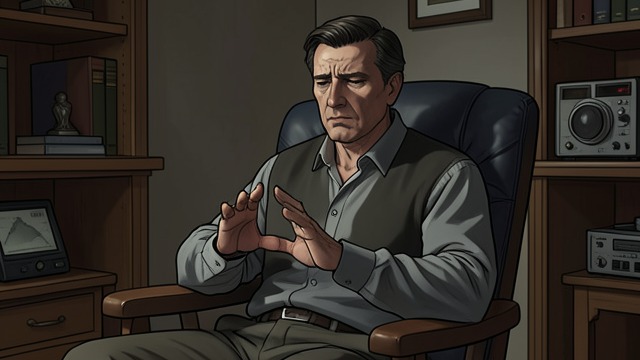
A Loop of Action and Recall
Repeated sequence
Naoki Higashida describes how an action, its consequence, and the resulting correction can become a sequence that the mind urges him to repeat. Knowing that he has been told not to do it does not necessarily break the loop.
Effort to interrupt
He says that resisting can consume enormous energy and create horror or distress. The memory thread therefore links repeated behavior with both comfort and an exhausting struggle for control.
early in the answers about repeated questions
early in the discussion of echoed questions
during the explanation of slow responses
in the answer about flashback memories
in the later answers about repeated behavior
