I’m right here
The Reason I Jump“I’m right here” is the promise at the emotional center of the closing story in The Reason I Jump. Spoken by Shun to his grieving mother in a dream, the words make continued connection imaginable after his death; the story’s final snowfall then gives that connection a quiet, visible form. The phrase also recalls the book’s larger concern with the distance between an autistic person’s inner experience and what others can recognize.
Story and Context
The story is introduced by Naoki Higashida as an attempt to convey the pain of being unable to express oneself to the people one loves. He hopes that a reader moved by the story may become better able to connect with the hearts of autistic people. “I’m right here” therefore belongs both to a family’s particular bereavement and to the book’s broader effort to make difficult-to-communicate feelings legible.
The surrounding introduction to the book places that effort against frequent misunderstandings of autistic behavior. Naoki Higashida describes communication as more than producing sounds: spoken words may fail to express what a person means, and listeners can misinterpret even simple answers. He also describes how someone who does not notice a person speaking may be taken for deliberately ignoring them, although the failure to respond is not intentional. These accounts establish a relevant distinction for the story: outward appearance does not reliably disclose inward feeling.
The introduction likewise rejects the assumption that autistic people lack emotional complexity or empathy. It presents Naoki Higashida’s writing as evidence of intellectual curiosity, spiritual questioning, humor, and concern for other people. In one of his accounts, the most unbearable aspect of autism is the thought that one’s life is making others unhappy. The closing story’s emphasis on love and distress thus resonates with a book that asks readers to look past apparent silence or disconnection rather than mistake them for an absence of feeling.
The Dream and Its Words
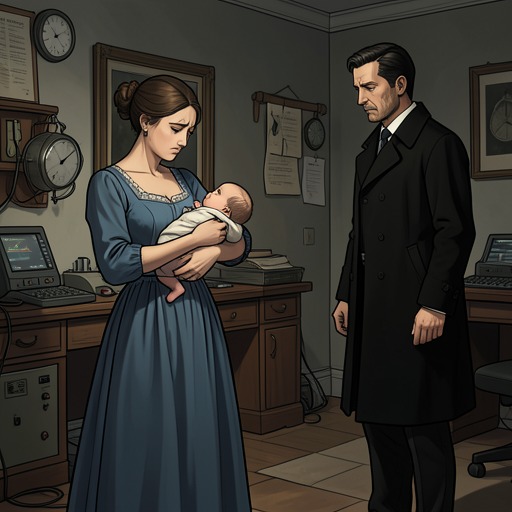
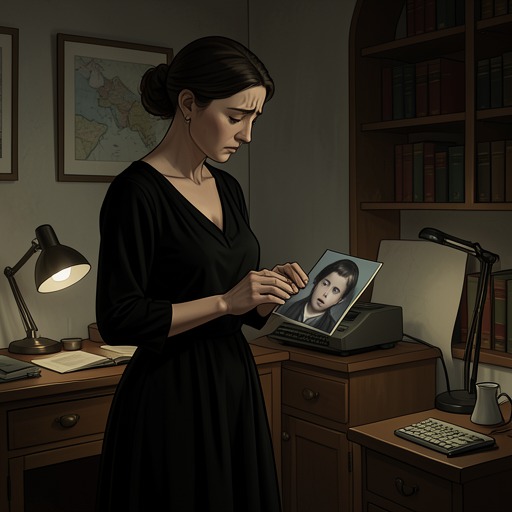
After Shun’s death, his mother is overwhelmed by grief. When she does not reply to her husband’s concern, he offers to fetch a doctor. She then explains that Shun came to her in a dream. The scene gives the title phrase its immediate setting: it is not a claim that the family’s loss has been undone, but a message received in a dream by a mother struggling with that loss.
In the dream, Shun reassures his mother that he remains with her and asks her not to cry any more. He appears terribly unhappy about the state she is in. His words do not erase grief or restore him to ordinary life; instead, they turn her attention toward what his distress might mean for her own next steps. She recognizes that she needs to pick herself up and put the pieces back together. The comfort is inseparable from the work of surviving bereavement.
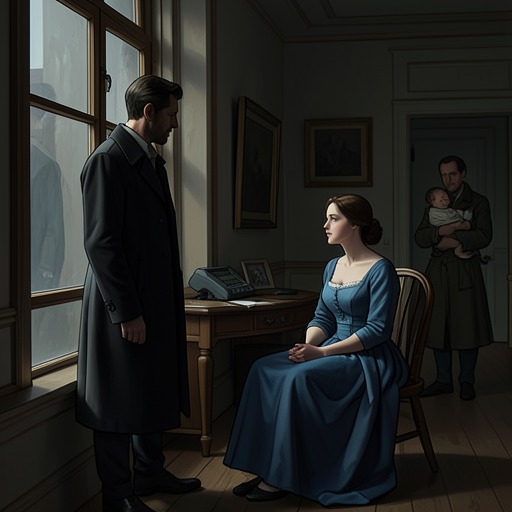
Shun’s father takes his wife’s account seriously. He holds her hand, acknowledges what she has said, and agrees that Shun is watching over them. Together they approach the possibility of beginning again. His response makes the reassurance shared rather than solitary: the dream becomes something the parents can use to orient themselves as a couple, without making either parent’s grief disappear.
Snow and the Ending
The scene closes at the window as the first snow of the year falls lightly. The story imagines the snow crystals as formed from Shun’s tears and as God’s proof that a boy called Shun once lived in the world. This image holds loss and remembrance together: the snow does not return Shun, but makes his existence and the parents’ continuing bond with him newly present in the scene.
His mother sees the snowfall as beautiful, and his father calls it the first snow, recalling that Shun loved snow. The exchange gives the ending a concrete family memory rather than an abstract consolation. A seasonal event at the window becomes a point where the parents can speak of Shun together; the story ends not with grief solved, but with a shared recollection and the possibility of a fresh start.
Meaning and Narrative Function
“I’m right here” condenses the story’s movement from death and isolation toward continuing attachment. Its reassurance is carefully limited: Shun appears in his mother’s dream, and the story frames the snow as a sign of remembrance, not as proof that ordinary separation has been reversed. That restraint allows consolation and bereavement to remain present at once. The final image offers the parents a way to carry Shun’s memory into a future they must rebuild.
The phrase also echoes the book’s communicative purpose. Naoki Higashida explains that people with autism can have difficulty making their intentions understood, even when they can produce words or sounds. He describes the misery of being misread, the difficulty of apologizing after being misunderstood, and the intense distress that can follow a small mistake. Against that background, a story about a loved one making himself understood across the gulf created by death takes on added force: the reader is asked to attend to feeling that might otherwise be overlooked.
That connection does not make the fictional story a clinical account or a universal explanation of autistic experience. The book’s introduction emphasizes that autistic people vary, and Naoki Higashida acknowledges that he is one young writer offering his own account. The story instead gives emotional form to the specific hope stated in its foreword: that understanding the pain of not being able to express love may help readers connect more attentively with autistic people. Its title phrase is both a personal assurance within the family narrative and an invitation to recognize presence where communication is difficult.